Denver's deck builder, from the ground up
Haka Decks builds custom decks across Denver and the whole metro around it. Our shop sits just south of the city in the Denver Tech Center, which puts every Denver neighborhood inside our everyday working radius — Wash Park, Hilltop, Cherry Creek, Congress Park, Berkeley, Sloan's Lake, Park Hill, and the newer builds out in Central Park (Stapleton). This page is about deck building inside the city itself: the neighborhoods, the permits, and what it costs. For the custom decks we design and build across the whole Front Range, start at the front door.
Different Denver homes, different decks
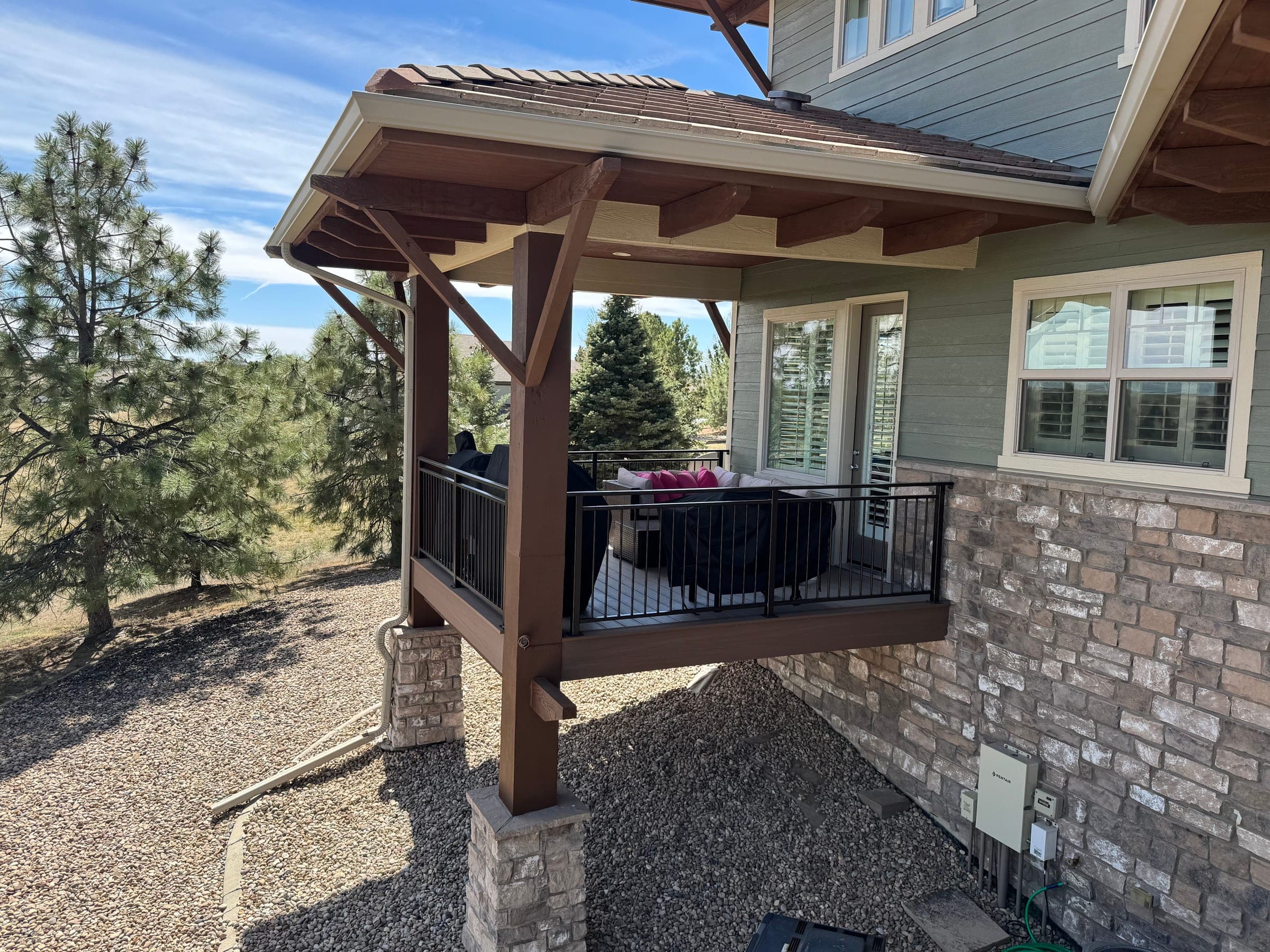
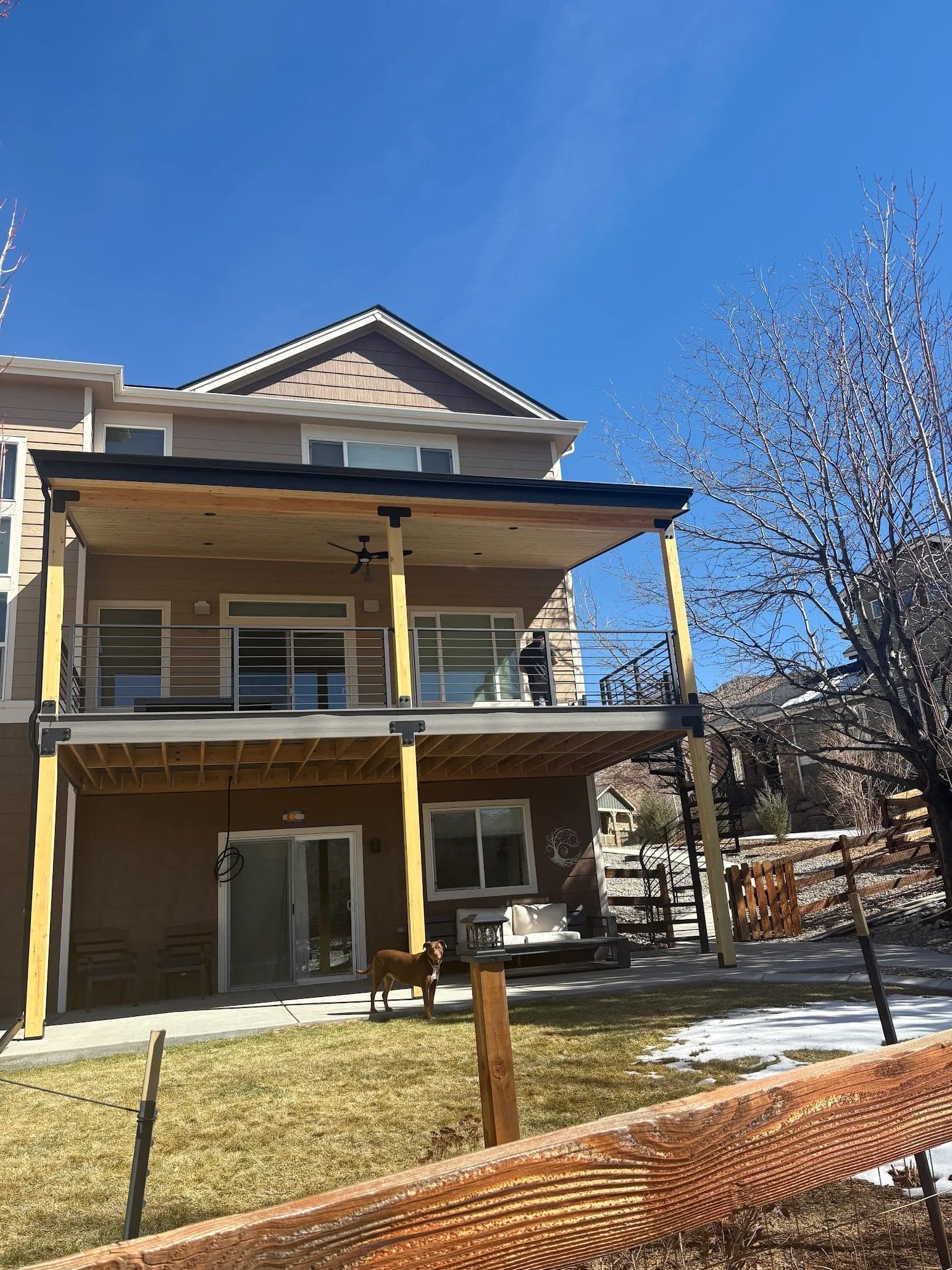
Denver's housing stock varies block to block. In the older core — Wash Park, Congress Park, and Platt Park bungalows and Denver Squares — the job is usually a tight-lot rebuild that respects the architecture. In Hilltop, Crestmoor, and Cherry Creek, the briefs get larger: multi-zone decks, outdoor kitchens, and pergolas and patio covers. And in Central Park and the newer northwest neighborhoods, we do a lot of ground-up composite builds on homes whose builder-grade decks are already failing.
Whatever the neighborhood, the material answer here is the same: Denver sits a mile up with 300-plus days of sun, hard hail, and freeze-thaw that destroys flatland-standard builds. We lead with capped composite decking — it simply outlasts wood here — while still building cedar and hardwood decks for homeowners who want natural material and know the upkeep.
What deck building in Denver has to handle
Deck building in Denver isn't flatland work. A deck here carries loads most builders never design for:
- Snow and live loads — framing sized for real Front Range snow, not the code minimum of somewhere warmer.
- Frost-depth footings — caissons that reach below the freeze line, so the deck doesn't heave when the ground does.
- UV at altitude — a mile closer to the sun, surfaces fade and finishes fail faster; capped composite and powder-coated railing are answers, annual re-staining is a chore.
- Hail — the metro's storms pit stained wood and dent cheap aluminum; the material list has to assume them.
- Freeze-thaw movement — hardware and fastener choices that tolerate fifty-degree day-night swings without backing out.
That's the engineering baseline under every deck we build, in the city or the suburbs. The custom part — the levels, the curves, the kitchen, the cover — goes on top of it, never instead of it.
A deck builder for every Denver neighborhood
Denver's neighborhoods were built in different decades for different lives, and the deck that fits differs too:
- Wash Park, Platt Park, Congress Park — 1900s–1920s bungalows and Denver Squares on narrow lots with alley access. Decks here are tight-footprint rebuilds: a raised composite deck off the kitchen, stairs to a small yard, railing that doesn't crowd the space, and a design review if the block carries a historic overlay.
- Hilltop, Crestmoor, Belcaro — bigger lots, mid-century ranches beside new custom builds. This is multi-zone territory: a dining deck, a lounge level, an outdoor kitchen, and usually a cover for the afternoon sun.
- Cherry Creek, Highlands, LoHi, Berkeley — townhomes, pop-tops and duplexes where the deck is often on the roof or the second story. Rooftop decks mean load review, railing chosen for the view, and careful waterproofing at the house connection.
- Park Hill, Sloan's Lake, Virginia Village — 1920s–1960s brick homes with real backyards, where a ground-up composite deck replaces a patio slab or a tired wood platform. Our deck over a concrete patio guide covers the slab question.
- Central Park (Stapleton), Lowry, Green Valley Ranch — 2000s-and-newer homes whose builder-grade decks are already failing. The usual job is a deck replacement sized for how the house is actually used, with the HOA's architectural review handled.
Wherever you are, the first visit is the same: we walk the yard, check the structure if there's an existing deck, and come back with an itemized design and quote.
How to compare Denver deck companies
Denver has no shortage of deck companies, and the bids on one backyard can come from a handyman, a general remodeler, and a specialist builder in the same week. The prices differ for real reasons. Five questions sort them out:
- Do they build decks and nothing else? A dedicated deck contractor has done your exact framing, stair, and railing details hundreds of times. A remodeler fitting a deck between kitchens usually hasn't.
- Are they certified by the brands they install? We're a Trex Platinum Pro — the top tier of Trex's installer program — a Deckorators Pro Elite installer, and an authorized TimberTech dealer. Those tiers are earned on install volume and training, and building to the manufacturer's spec is what keeps a Trex deck's 25-to-50-year material warranty clean.
- Who pulls the permit? If the answer is "you," or "you don't need one," keep looking. Denver requires a permit and inspections for most decks, and so does every suburb around it.
- Is the workmanship warranty in writing? Ours is a two-year written warranty on the build, on top of the manufacturer's coverage on the boards.
- Is the quote itemized? A single lump sum hides the stairs, the railing upgrade, and the lighting. An itemized quote lets you compare bids line by line.
Our questions to ask your deck builder guide has the full list, with what a good answer sounds like for each one.
What a Denver deck costs
Deck pricing in Denver moves with size, material, height, and site access. Our team has published honest, Denver-specific breakdowns: what a composite deck costs in the Denver area, what deck labor runs locally, and what a full deck replacement costs in Denver. If you want a ballpark before you ever talk to us, run the numbers yourself in our deck cost calculator.
Permits, zoning, and HOAs — handled
Deck work inside Denver runs through the City and County of Denver's development services, with zoning setbacks and, in many neighborhoods, historic or design overlays on top. In the suburbs it's a city building division plus an HOA architectural review. Either way, the drawings, permit submission, and inspections are part of every Haka build — not an add-on and not your problem to chase.
Denver metro areas we serve
Denver proper is the hub, but most of our work happens across the suburbs that ring it — each with its own page, its own neighborhoods, and its own permit office we already know:
- Centennial — our home base, off Easter Lane
- Greenwood Village — large-lot, multi-zone outdoor living
- Lone Tree
- Highlands Ranch
- Littleton
- Parker
- Castle Rock
- Aurora
Anywhere in the metro, it's the same crew, the same materials, and the same warranty. Tell us about your Denver deck and we'll set up a free on-site walkthrough.