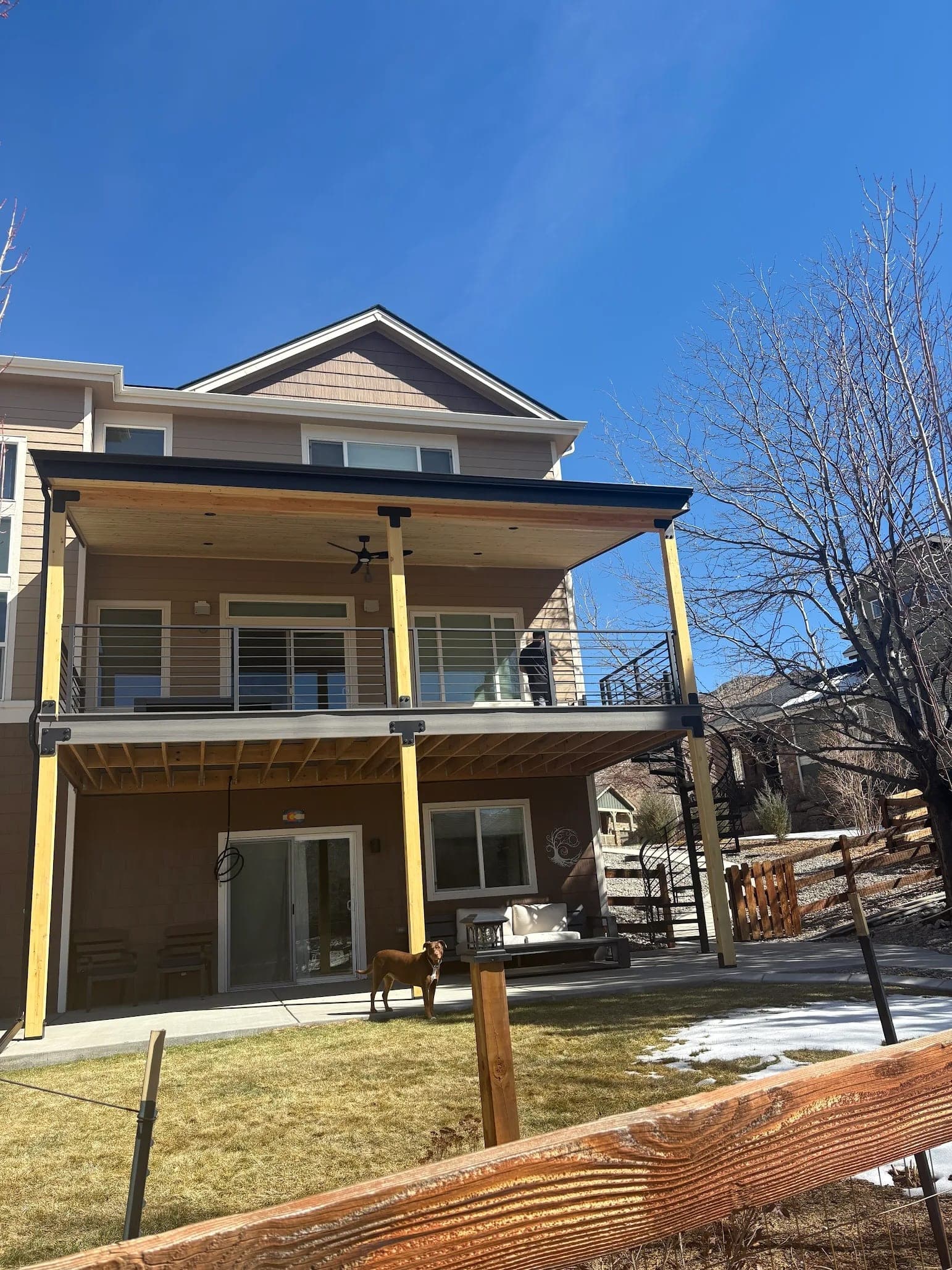
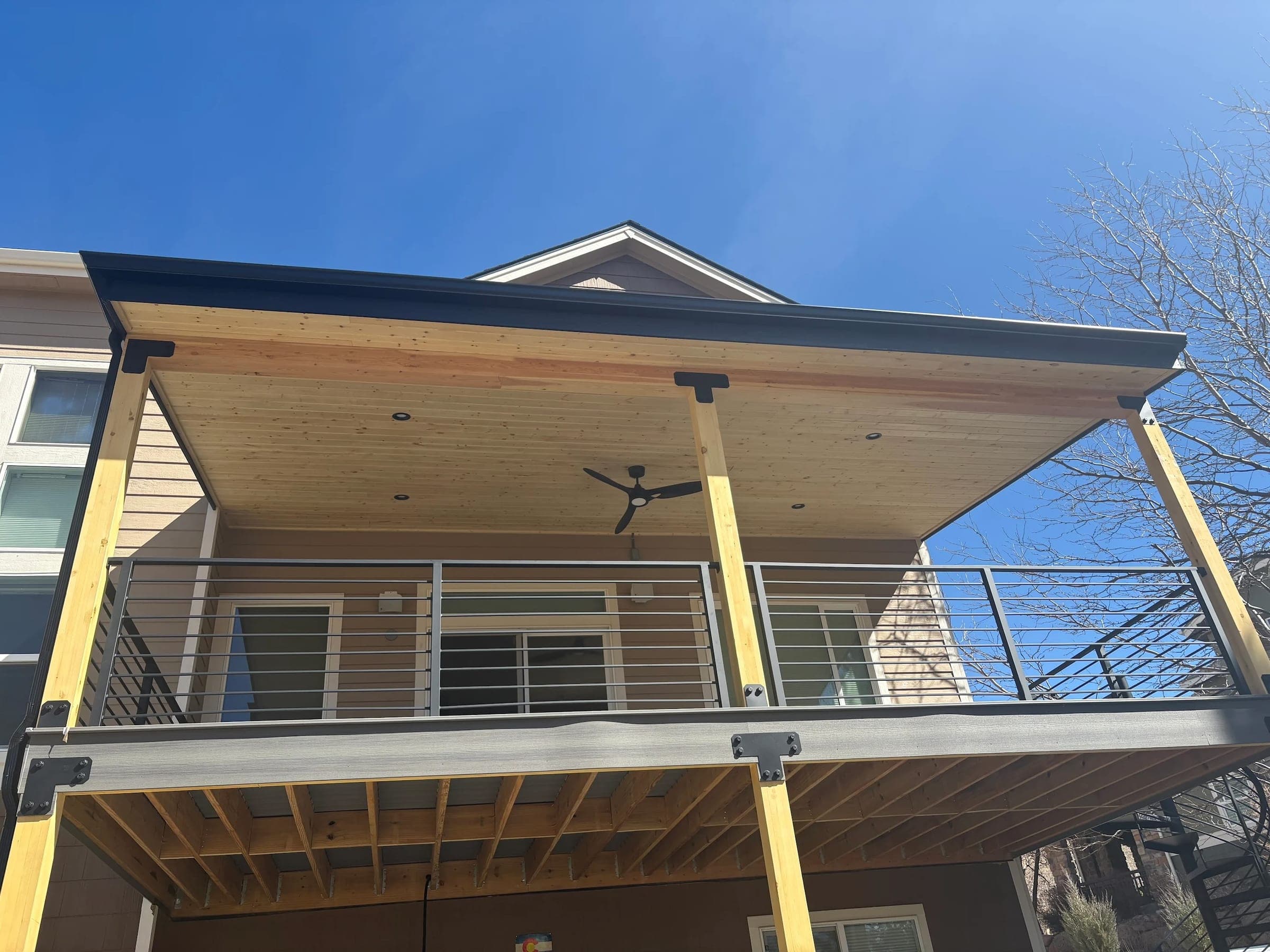
Room to actually build something
Wheat Ridge kept what most of the inner metro sold off: space. Deep lots, wide setbacks, a semi-rural streak along the Clear Creek corridor, and trees that have been growing since the Eisenhower administration.
That changes what we design. On a tight lot, the question is how to fit a deck without swallowing the yard. Here it's the opposite — how to shape outdoor space that's genuinely proportioned to a big yard rather than a small platform floating in one. Multiple zones, a lower patio level, a covered section flowing into an open one: things that simply don't fit two suburbs east.
Mid-century houses, late-life decks
Wheat Ridge is largely mid-century — brick ranches and split-levels from the 1950s through the 1970s — and the decks attached to them have usually been replaced once, decades ago, and not looked at since.
High-altitude UV bleaches and dries the boards, freeze-thaw works the fasteners loose, and the ledger connection where the deck meets the house was built to whatever practice was standard at the time. The ledger fails expensively, so it's the first thing we look at.
We inspect before quoting. Sound framing gets a re-deck in new capped composite, which is meaningfully cheaper than starting over. Framing that's genuinely done gets a proper replacement built to current code. Either way you get a straight answer in writing.
Designing with the canopy
A good Wheat Ridge deck works with the canopy — stepping around trunks with split levels, wrapping a corner to follow the shade line, using the existing shade so you only build what the trees don't already give you.
Where the canopy has gaps, a pergola or patio cover fills them — here it's more about hail and afternoon storms than raw sun. Protecting the root zone during construction matters as much as the finished layout: footings get placed and equipment access planned around the trees, because a beautiful deck under a tree you killed installing it is a bad trade.
On the sloped parcels toward the creek, railing does real work too — slim aluminum or cable keeps the sightlines through the trees rather than boxing the view in with pickets.
Permits without the usual maze
Deck work inside the city runs through the City of Wheat Ridge, while the Applewood area and adjacent unincorporated pockets answer to Jefferson County — different counters, different submittals. We check the parcel, produce the drawings, pull the permit, and manage inspections.
Wheat Ridge also has far fewer blanket HOAs than the newer suburbs, so there's often no architectural review committee standing between you and a start date — which tends to make the calendar shorter than in a planned community.
Close by
Wheat Ridge is a straightforward run across town from our shop in Centennial — call it thirty minutes most of the day. We work this whole western arc, from Lakewood and Arvada up into Golden, and everything we build carries our written guarantee.
If you want a number first, the cost calculator and the composite deck cost guide will get you close. Then tell us about the yard — on lots this size, it's worth walking it together.