
Eight thousand feet changes everything
Conifer sits at 8,262 feet — genuinely high. That elevation is the design brief: heavier snow loads that size every beam and footing, deeper and more frequent freeze-thaw cycles working every fastener, and UV intense enough to destroy wood finishes in a couple of seasons. The housing runs from 1970s cabins to large newer customs across Kings Valley, Aspen Park, Conifer Mountain, Pleasant Park, and Evergreen Meadows — almost all of it on forested acreage, on steep lots with small building envelopes.
The wildfire code is now the starting point
Jefferson County's Wildfire Resiliency Code took effect July 1, 2026, and it matters more in Conifer than almost anywhere: this is among the highest wildfire-risk terrain in the county, and most forested neighborhoods here are WUI-mapped. On mapped parcels, new and replacement deck surfaces must be noncombustible, with ignition-limiting framing details underneath. We verify your parcel with the county first, but on most Conifer lots, capped composite or mineral-based decking is now the code-aligned way to build, and untreated softwood is off the table.
We were building fire-aware in the mountains before the code required it: framing bays closed or screened against embers, undersides kept clear of stored fuel.
Snow load is a structural number, not a vibe
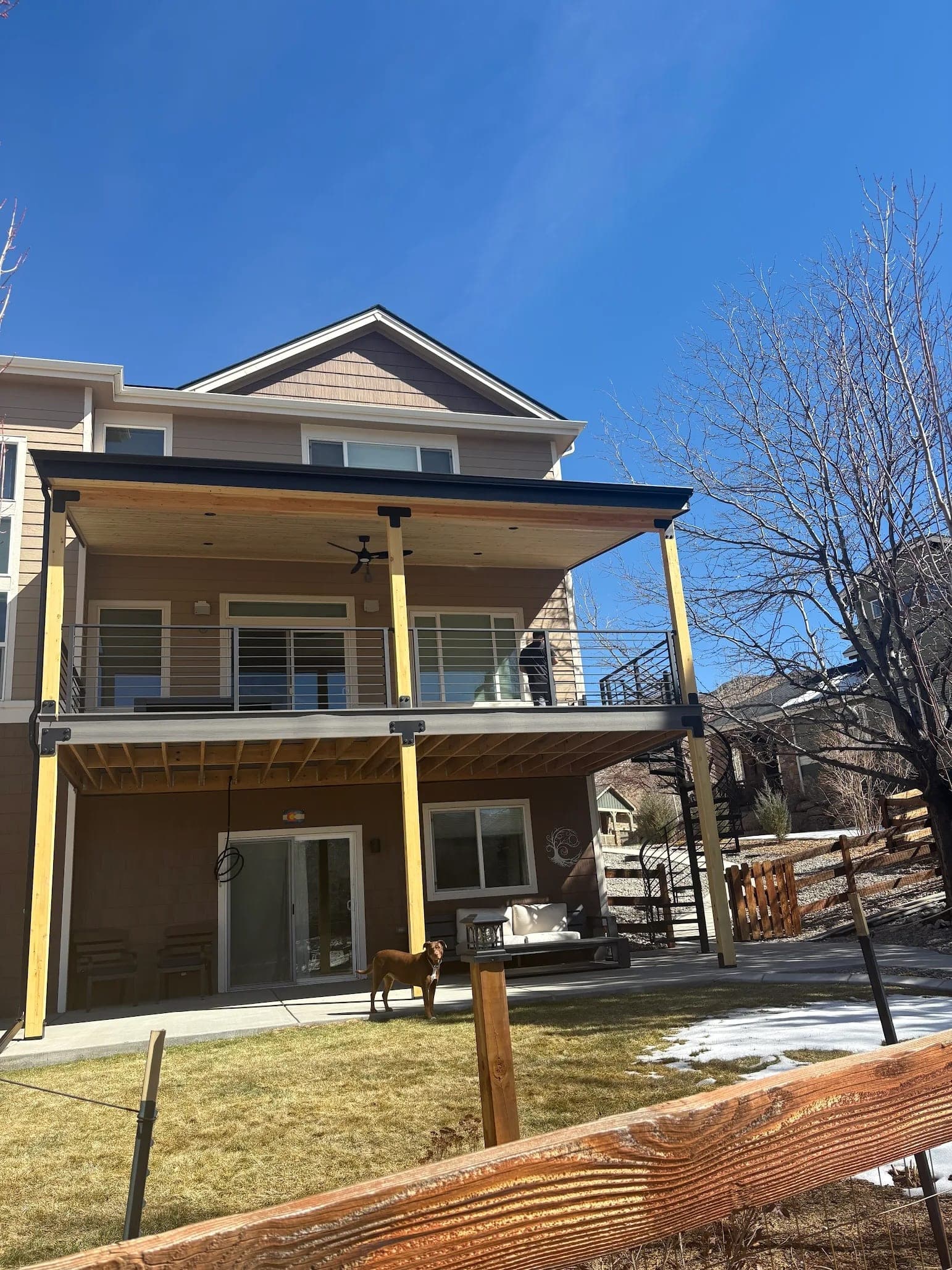
At this elevation, a covered deck or solid patio cover has to carry real snow — the engineering is not generic. Beams, posts, and footings get sized for the actual load at your site, with frost-depth footings below Colorado's 30-to-36-inch line. Done right, a covered section makes a Conifer deck usable ten months a year instead of five; the covered deck cost guide has the numbers.
Steep lots, small envelopes
Forested acreage sounds roomy until you find the buildable envelope. Conifer lots are steep and rocky, and elevated walkout decks are often the best square footage on the site — with the budget's center of gravity in the structure below. We design from the actual grade, and choose railing that keeps the trees in view rather than caging the deck.
Repair versus replace, at altitude
Plenty of Conifer decks date to the cabin era, built to snow loads and hardware standards the county no longer accepts. We inspect the frame and answer plainly: sound structure gets a repair; aged-out structure gets a replacement plan — which on mapped parcels must meet the noncombustible surface requirement anyway. Our composite vs. hardwood comparison is a good place to start.
Forty-five minutes, honestly
From our shop in Centennial, Conifer is about forty-five minutes up US-285 — a bit past our Evergreen work. The drive shapes scheduling, not price or the guarantee — though fall timing still matters, per our best time to build in Colorado guide.
Run the cost calculator for a real planning range, then tell us what you are planning — we will bring the WUI map answer for your parcel.