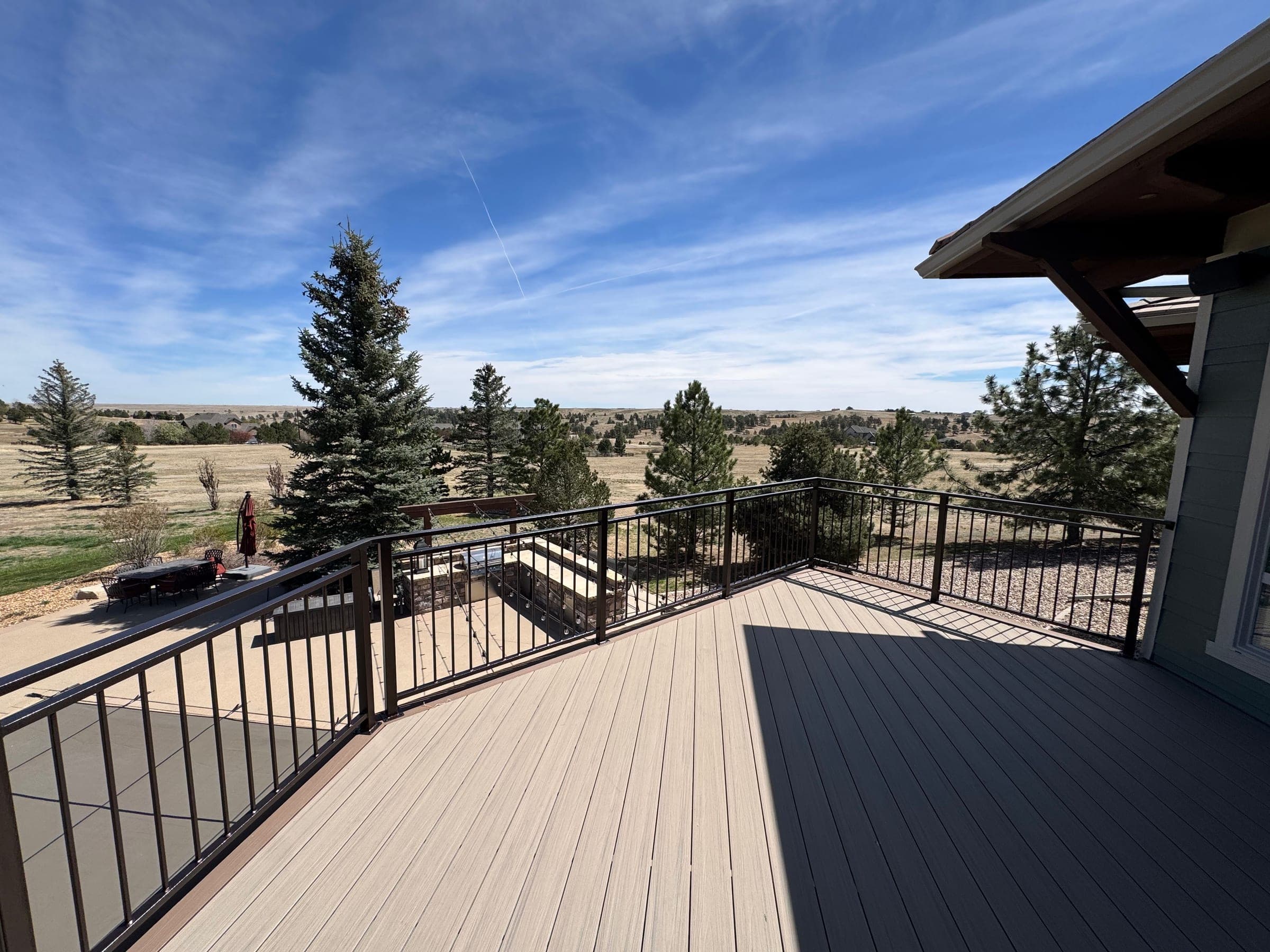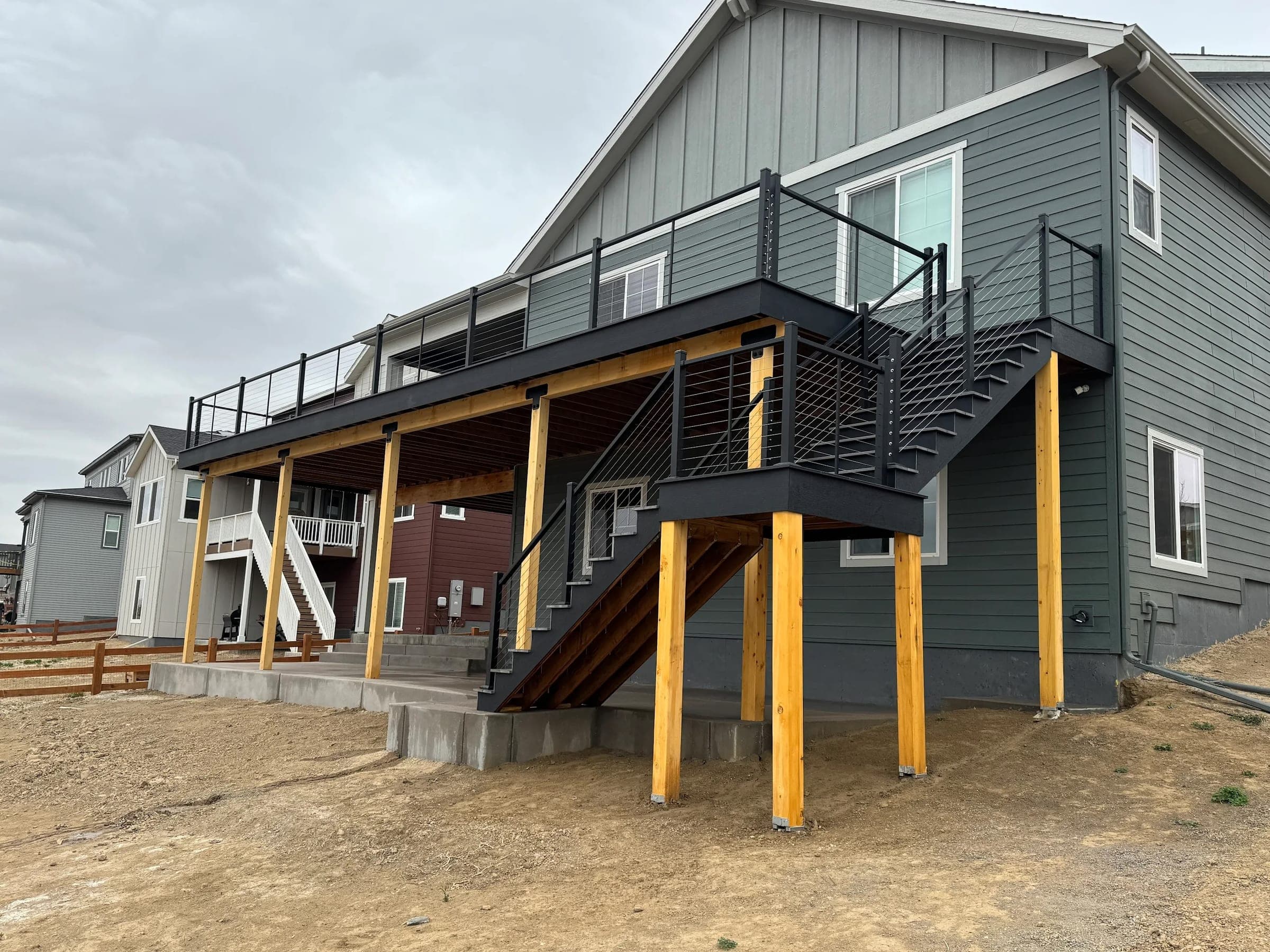
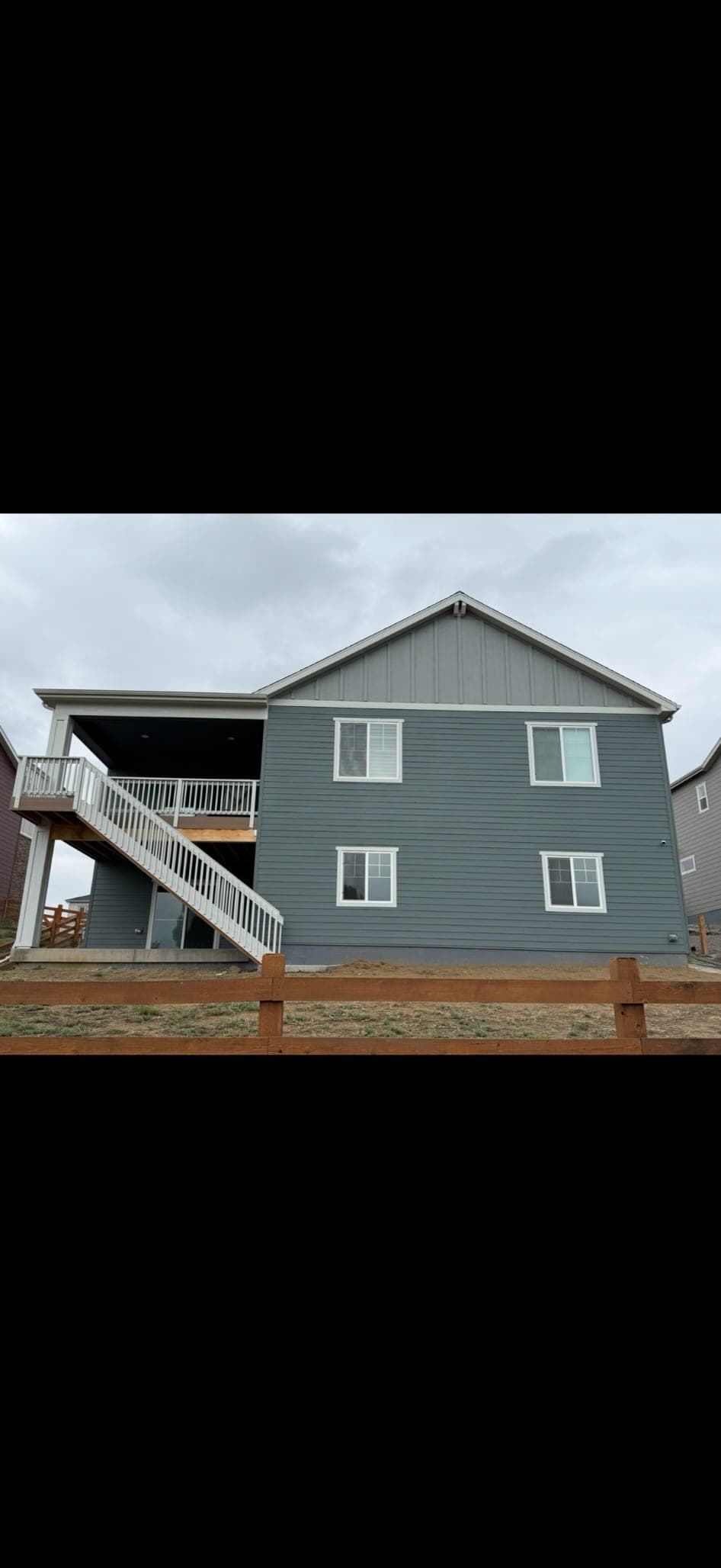
The best time to build a deck in Colorado is fall or winter. Lead times from signing to crew drop to 3–5 weeks in November–January and 3–6 weeks in August–October, versus 6–10 weeks in the April–May rush, and materials cost the same year-round. Homeowners on a new deck by Memorial Day almost always signed by February.
Every April, our phone starts ringing with the same sentence: "We'd love to have the deck done by summer." And every April, we have to explain the same math — a deck signed in late spring is usually a deck finished in mid-summer.
The short answer
Decks can be built nearly year-round in Colorado. The real bottleneck isn't weather — it's everything that happens before the crew shows up. City permit review runs 1–3 weeks in most south-metro jurisdictions, HOA architectural approval can add a few days to a month on top, design takes a conversation or two, and materials have lead times. Add it up and the calendar looks like this:
| You sign in… | Typical wait, signing → crew on site | You're using the deck by… |
|---|---|---|
| November–January | 3–5 weeks | Early–mid spring |
| February–March | 4–8 weeks | Late spring / Memorial Day |
| April–May | 6–10 weeks | Mid-summer |
| June–July | 5–8 weeks | Late summer |
| August–October | 3–6 weeks | Fall — with the best build weather of the year |
Most builds take three to ten days on site once we break ground. The other 90% of the timeline is paperwork and planning — which is why when you start matters far more than when we build.
Season by season, builder's honest version
Fall: the sleeper pick
September and October might be the best deck-building weather Colorado offers — stable temperatures, low humidity, hail season winding down, and ground that's still easy to excavate for footings before frost sets in around late November. Lead times drop back to 3–6 weeks after the summer crush, and you get a full winter of the permit-and-design process happening while you're not in a hurry. A deck finished in October is also a deck that's ready on the first nice day of spring, not the fiftieth.
Winter: yes, really
We build through Colorado winters, and capped composite is a big part of why. Composite doesn't need a staining window — there's no finish waiting on warm, dry weather the way a wood deck's oil or sealer does; the only cold-weather adjustment is board gapping, which manufacturers spec by installation temperature. Front Range winters are also drier than most of the country's springs; between storms we get long stretches of workable weather. Footings already go below the 30–36" frost line on every build regardless of season, and cold-weather concrete practice — blankets and accelerated mixes once temperatures sit below about 40°F — is routine for us. The trade-off is honest: an occasional snow-day pause. The upside is real: the shortest lead times of the year (3–5 weeks from signing to crew), and a finished deck before the spring rush even begins.
Spring: the rush
Spring is when everyone calls — which means permit offices are at their busiest, build calendars fill fastest, and the weather is at its least cooperative. March is Denver's snowiest month on average, May is its wettest, and hail season opens in between — all of it visits the job site. Lead times stretch to 6–10 weeks, and permit reviews drift toward the three-week end of the range. We build plenty of great decks in spring; you'll just wait longer for the same result. If your target is "deck by summer," spring is when the deck should be under construction, not when the first phone call happens.
Summer: great decks, peak demand
Summer builds are straightforward — long days, warm nights for concrete, predictable afternoon-storm rhythms we plan around. It's peak season, though, so expect 5–8 weeks from signing to crew, and a deck finished in August gets a few weekends of use before fall — the same deck signed the previous winter would have had the whole season.
The permit math nobody does
Whatever the season, the approvals pipeline runs at its own speed. City and county review runs 1–3 weeks and costs $150–500 in fees across the south metro; HOA architectural review adds anywhere from a few days to a month on top, because some committees only meet monthly. Net result: most Front Range projects carry two to four weeks of approvals before a post hole gets dug — longer in spring when the counters are slammed. We handle all of that paperwork on every build, and we order materials during the wait so the crew hits the ground running the day approvals land. But we can't compress a review committee's meeting schedule, and neither can anyone else.
Does the season change the price?
What changes with the season is scheduling pressure — off-season projects get more calendar flexibility and first pick of build slots, and you're never paying a premium to squeeze into a packed month. If you're putting numbers together, our composite deck cost guide has real 2026 ranges for the Denver metro, and the deck cost calculator will give you a planning figure in thirty seconds.
Can you build a deck in winter in Colorado?
Yes — every year. The projects that fit winter best are the smaller ones: repairs, railing swaps, covers over existing decks, and small and ground-level builds that wrap in a week or two between weather windows. If your deck needs work, winter isn't the reason to wait — it's the reason to book.
One more Colorado-specific reason to build off-season
Hail season runs roughly May–September, squarely over the traditional "deck season" — but a capped composite deck doesn't care when it was built; the polymer cap takes hail strikes year-round. If your project includes a pergola or solid-roof cover, having it standing before hail season starts protects the furniture, grill, and outdoor room underneath for the whole summer instead of the back half of it.
The bottom line
The paperwork is the longest part of this project — start planning now, whatever the month, and you could be the one relaxing on a finished deck in May while the spring callers are still waiting on permits.
Ready to run your timeline? Tell us about your project and we'll map the schedule backward from the day you want to be outside — free on-site consultation, permits and HOA paperwork handled, real dates in writing.