
Small decks & platforms
Small decks, built like big ones.
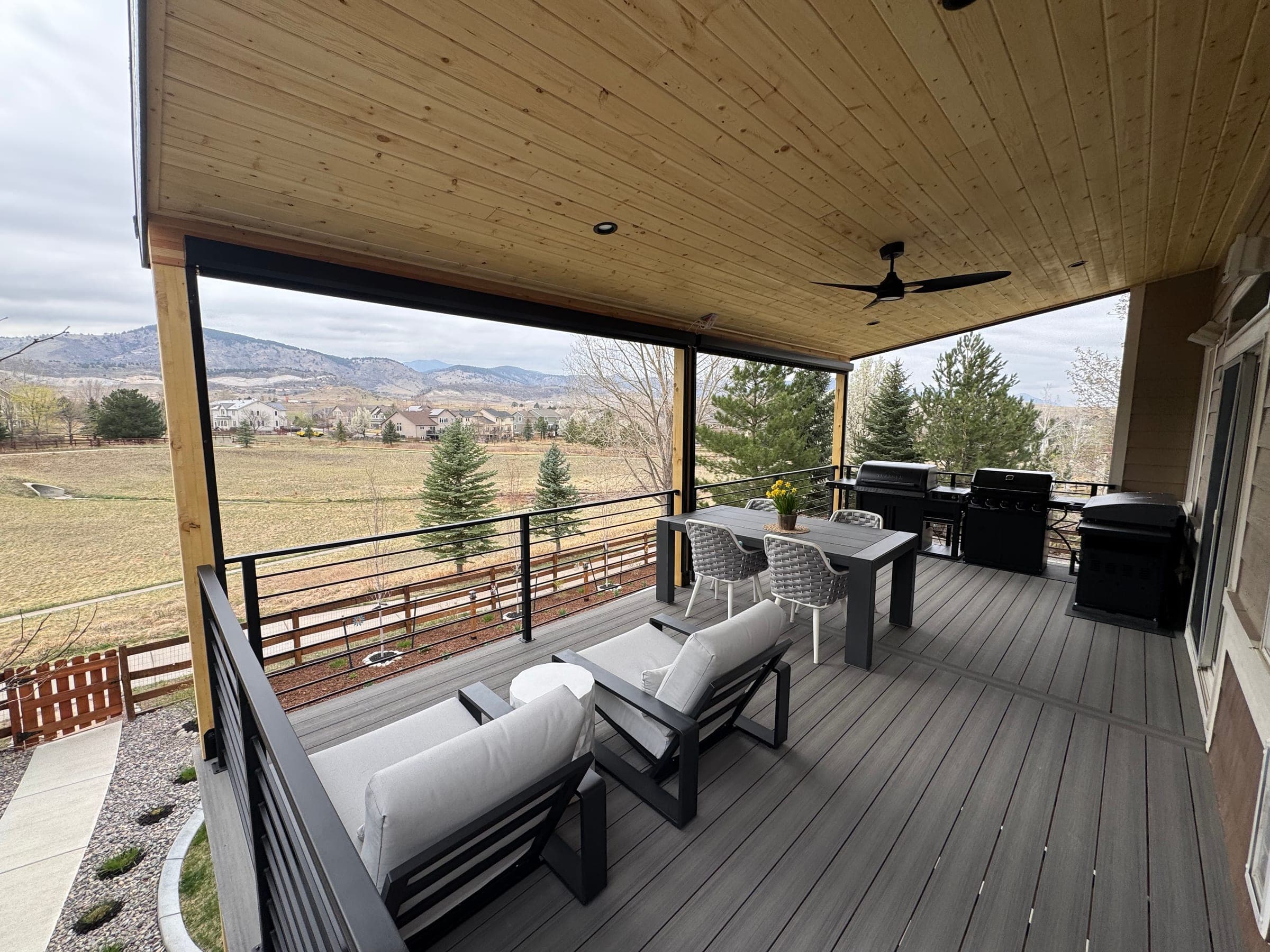
Ground-level platforms, landings and steps, balcony re-decks, and sub-200-square-foot builds — the projects most “custom” builders won't return calls for. We schedule them all fall and winter.
The permit math
Under 200 square feet, the paperwork can disappear.
Most Front Range codes exempt a deck from permitting when it clears three tests at once: under 200 square feet, under 30 inches above grade, and freestanding — not bolted to the house. A 14×14 platform floating in the yard can skip the permit queue and the guardrail requirement entirely, which is real money: railing runs $30–90 per linear foot that a ground-hugging deck never spends.
What doesn't disappear is the structure. Colorado frost depth runs 30–36 inches, and a small deck set on blocks-on-dirt turns into a gentle wave within a few winters. We build small decks on proper frost-depth footings — the full argument is in our floating deck guide, and the permit guide covers who requires what, city by city.
What small projects look like
The fall & winter project list.
Ground-level platforms — a 120–300 square foot outdoor room at yard height, typically $8,000–$16,000 built properly, footings included. Landings and steps — the back-door rebuild that fixes the wobbly stair nobody trusts. Balcony and small deck re-decks — new composite surface over sound framing at $20–35 per square foot. Spa and hot-tub platforms — engineered for the real load, which is the part that matters.
Small builds fit fall weather windows nicely. Our guide to the best time to build in Colorado explains why off-season contracts win on both price and schedule — and a hot tub platform built now is ready for the first snow soak.
The cost calculator gives you a range in thirty seconds, and our composite deck page covers how we build every surface we install.
Small-deck questions, answered straight.
How much does a small deck cost in Denver?
The same honest math as any deck we build: capped composite runs $40–$70 per square foot installed, so a 120–200 square foot deck typically lands between $7,000 and $16,000 depending on height, railing, and stairs. Ground-level floating decks trend toward the bottom of that range because they often skip railing entirely. Our calculator gives you a planning range in thirty seconds.
Does a small deck need a permit?
Often not — and that's one of the small deck's quiet advantages. Most Front Range jurisdictions exempt a deck under 200 square feet, under 30 inches above grade, and freestanding from the house. Miss any one test and it's a normal permit. We confirm the rules for your specific city either way, because a few metro towns regulate lower structures too.
How long does a small deck take to build?
Most small builds are one to two weeks on site, and permit-exempt projects can start without the 1–3 week review window a permitted build waits through. That's why fall and winter are realistic build seasons for small projects in Colorado — the timeline fits between weather windows, and our crews have more room in the calendar than they do in June.
Is a small project worth a custom deck builder's time?
It's worth ours. They get the same crew, the same engineered footings below frost line, and the same 2-year written workmanship warranty as a $60,000 build. The structure math doesn't shrink with the square footage — Colorado frost heave doesn't care how big the deck is.
Ready to Talk About Your Deck?
Tell us what you're thinking — even if it's just a rough idea. We'll come take a look, talk through options, and give you an honest estimate. No pressure, no sales pitch.