A capped-composite deck costs $40–$70 per square foot installed in the Denver metro in 2026 — materials, substructure, labor, permits, and cleanup included. A typical 16×20 (320 sq ft) deck runs $13,000–$25,000; a 12×16 lands at $8,000–$13,000 and a 20×24 at $19,000–$37,000. Height, railing choice, and board tier move the number most.
Homeowners across Centennial, Highlands Ranch, and Lone Tree ask us the same first question: what's a composite deck going to run me? It depends on size, height, and how the yard sits — but "it depends" is a useless answer when you're budgeting. Here are real 2026 numbers for the Denver metro, what moves them, and how to read a bid so you know what you're paying for.
The short answer
That $40–$70 per square foot installed figure is all-in — materials, substructure, fasteners, labor, permits, and cleanup. Here's how it runs against the most common deck sizes:
| Deck size | Materials alone | Typical installed cost |
|---|---|---|
| 12×16 (192 sq ft) | $4,500–$6,500 | $8,000–$13,000 |
| 16×20 (320 sq ft) | $7,000–$10,500 | $13,000–$25,000 |
| 20×24 (480 sq ft) | $10,500–$15,500 | $19,000–$37,000 |
| 700+ sq ft (multi-level / wraparound) | — | $30,000–$55,000+ |
For calibration: the 2025 Zonda Cost vs Value report puts the national-average 16×20 composite deck addition at about $25,000, with roughly 68% recouped at resale. Denver runs a little above that average because our builds carry heavier structural requirements than decks in milder climates (more on that below).
Where the money actually goes
People assume the boards are most of the cost. They're a fifth of it. Composite boards run $8–$14 per sq ft; all-in materials land around $20–$30 per sq ft; installation adds $15–$35 per sq ft on top — labor is roughly 40–60% of the finished number. On a typical deck the bill splits like this:
- Substructure and its labor (~38%) — footings, posts, beams, and joists. In Colorado this is where cost gets added, not saved.
- Decking and railing labor (~30%) — framing the surface, board install, and finish work at code height and spacing.
- Decking boards and fasteners (~20%) — the composite surface and matching fascia.
- Railing material (~12%) — and the variable line item that swings a bid the most.
What drives your number up or down
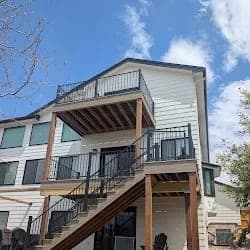
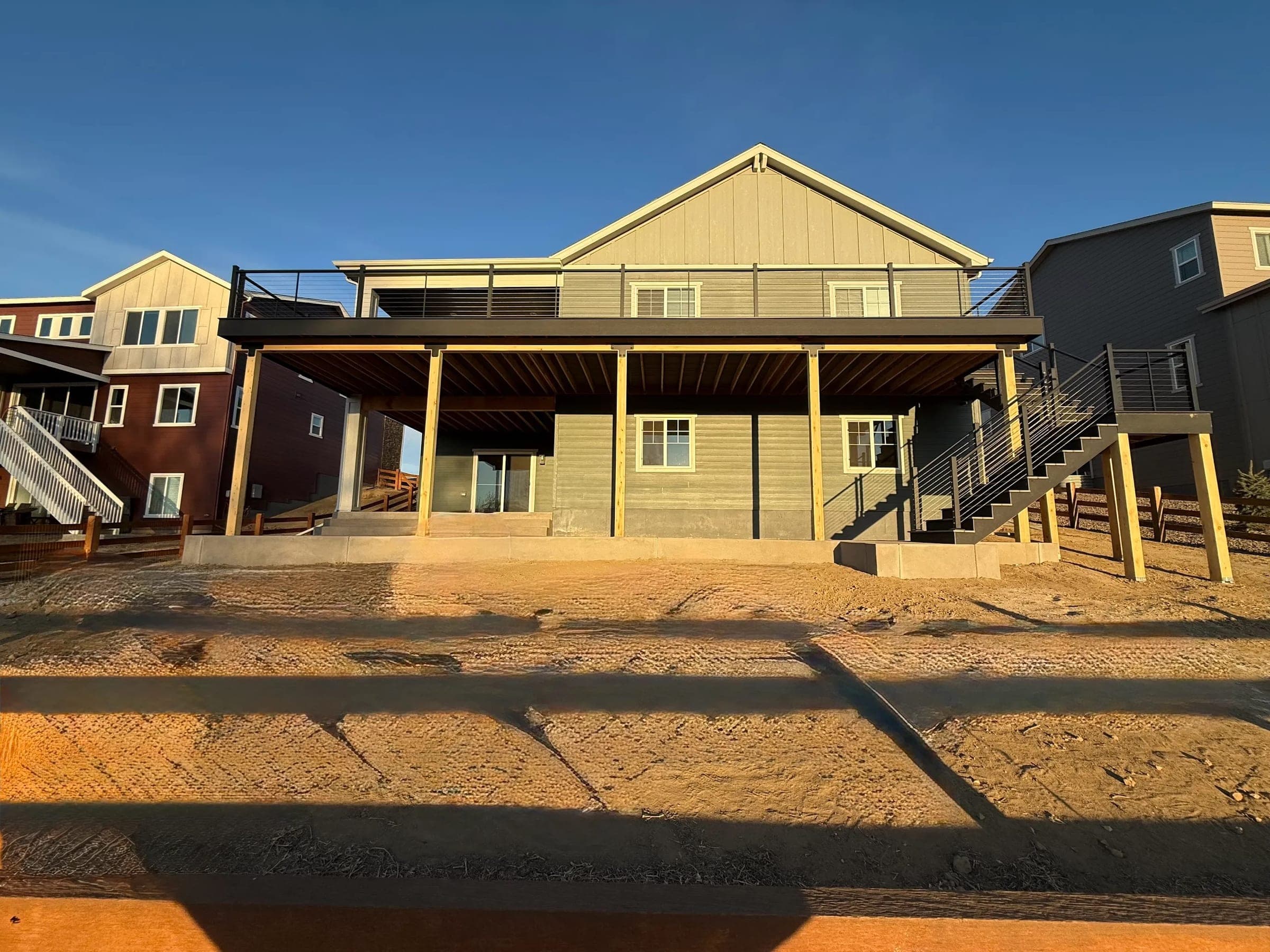
Height. Biggest multiplier on the list: a walk-out or second-story deck runs +20–40% over the same deck at grade — taller posts, bigger footings, engineered railing loads, and often a full staircase at $150–$400 per step ($1,500–$4,000 for a typical run). Our second-story deck cost guide works the math.
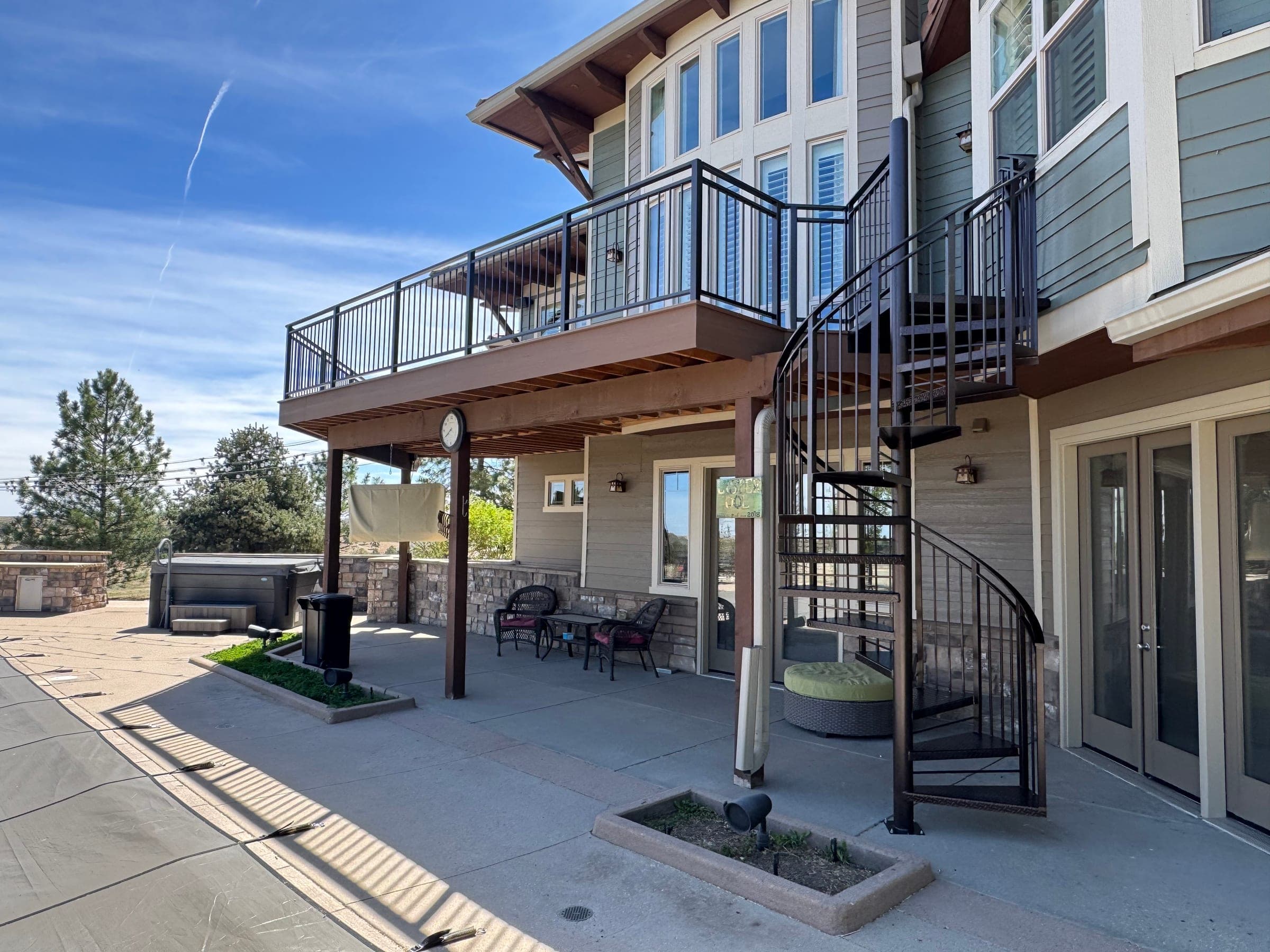
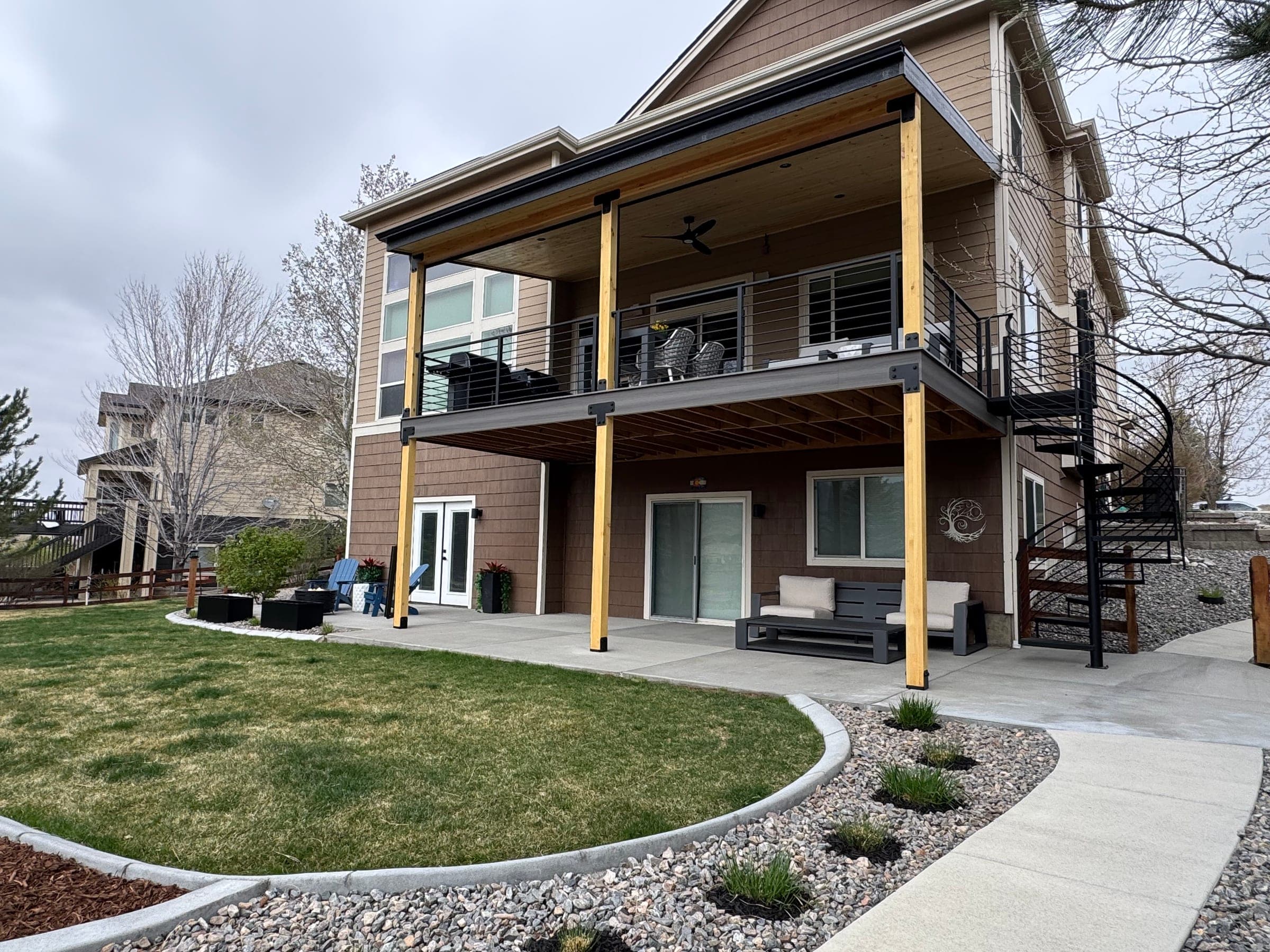
Railing choice. The single biggest swing after size and height. Installed railing runs $30–$90 per linear foot depending on style — on a deck with 60 linear feet, that spread alone is $3,600, and glass panels can push past the top of it. Premium rail on the view side, standard aluminum elsewhere, splits the difference.
Board tier. Entry composite (Trex Enhance, TimberTech Edge) sits at the low end of $40–$70. Premium capped and PVC lines (TimberTech AZEK, Deckorators Voyage) push toward the $50–$85 PVC/mineral-board range — worth it for cooler surface temps and 25–50 year warranties, which matter in our sun. We break down the tradeoffs in our Trex vs. TimberTech vs. Fiberon comparison.
Site conditions. Tight access — side yards a machine can't reach — adds 10–15%. Sloped lots (common in Castle Rock, Ken Caryl, and the foothills-adjacent neighborhoods) and rocky soil add engineering.
Shape and levels. Rectangles are cheap. Angles, curves, multiple tiers, and picture-frame borders add 15–25% in cutting, waste, and framing hours. These multipliers stack — it's how two 320 sq ft decks can honestly bid at $14,000 and $27,000.
Why Denver decks cost a bit more to build right
Colorado's climate is a line item here: UV 25% stronger than sea level, hail, and 35–90 freeze-thaw cycles a year that work fasteners loose and heave footings. Built right, that means:
- Deeper footings poured below the frost line — 30–36 inches in our metro — so the deck doesn't shift as the ground moves.
- Corrosion-rated, hidden fasteners that won't back out over years of thermal movement.
- Joists at 16 inches on center with proper flashing — composite's span requirement, and the detail that keeps snowmelt draining instead of pooling against the house.
A cheaper bid that skips these isn't a better deal — it's a deck that needs rework in five years. Our composite deck page walks through how we frame for it.
How to read a composite deck bid
A real bid should spell out, at minimum:
- Board brand, line, and color — not just "composite."
- Substructure material and footing depth — pressure-treated vs. steel.
- Railing type and linear footage.
- Whether permits and engineering are included (they should be — figure $150–$500 in south-metro permit fees and three inspections).
- Warranty terms — both the manufacturer's 25–50 years on the boards and the builder's on the labor.
If a quote is a single lump-sum number with none of that detail, you can't compare it to anything, and you can't hold anyone to it. Push for the line items — our deck cost guide shows a real bid broken down line by line.
Composite vs. wood — is the premium worth it here?
If resale is part of the question, our post on whether a deck adds value to a Denver home has the sourced cost-recouped figures for wood and composite.
Upfront, composite costs more: a 320 sq ft pressure-treated deck runs about $9,000 against $16,000 in capped composite. Then the decade happens. Wood wants a $400–$900 clean-and-restain every 2–3 years plus repairs as UV and freeze-thaw do their work — call it $3,000–$5,000 over ten years — while composite needs soap and water. The gap narrows to a few thousand dollars by year ten, and past it composite is simply ahead. We ran the full math in our composite vs. wood guide.
The bottom line
Budget $13,000–$25,000 for a typical 16×20 backyard composite deck in the Denver metro, more if you're going tall, large, multi-level, or into premium railings. The cheapest bid is rarely the best value — the savings almost always come out of the substructure, the one part you can't see or fix later.
If you want a real number instead of a range, run the deck cost calculator for a planning figure, then reach out for a free estimate. We'll walk the site, measure, talk through material and railing options, and give you a fixed, itemized quote — not a ballpark.