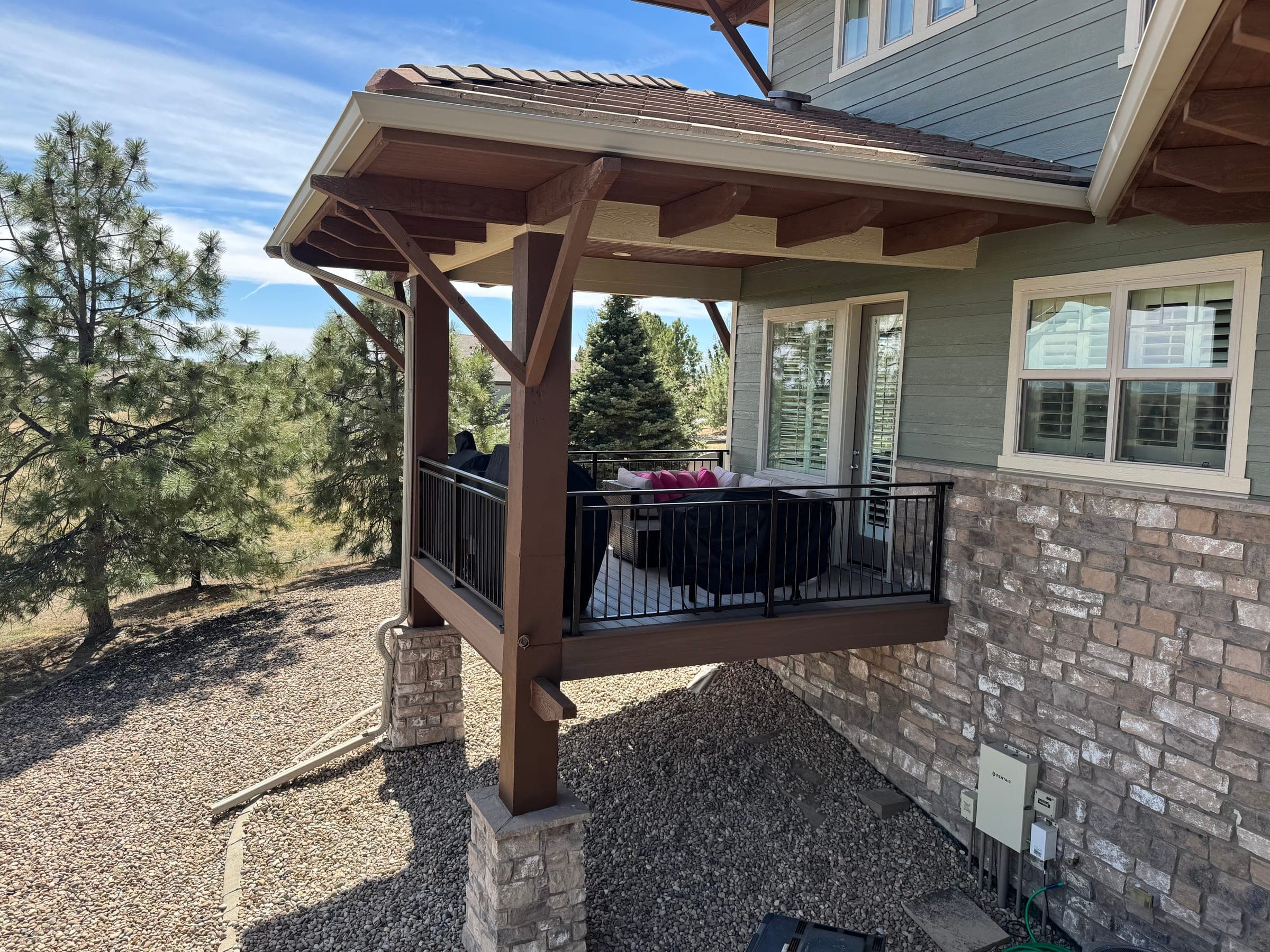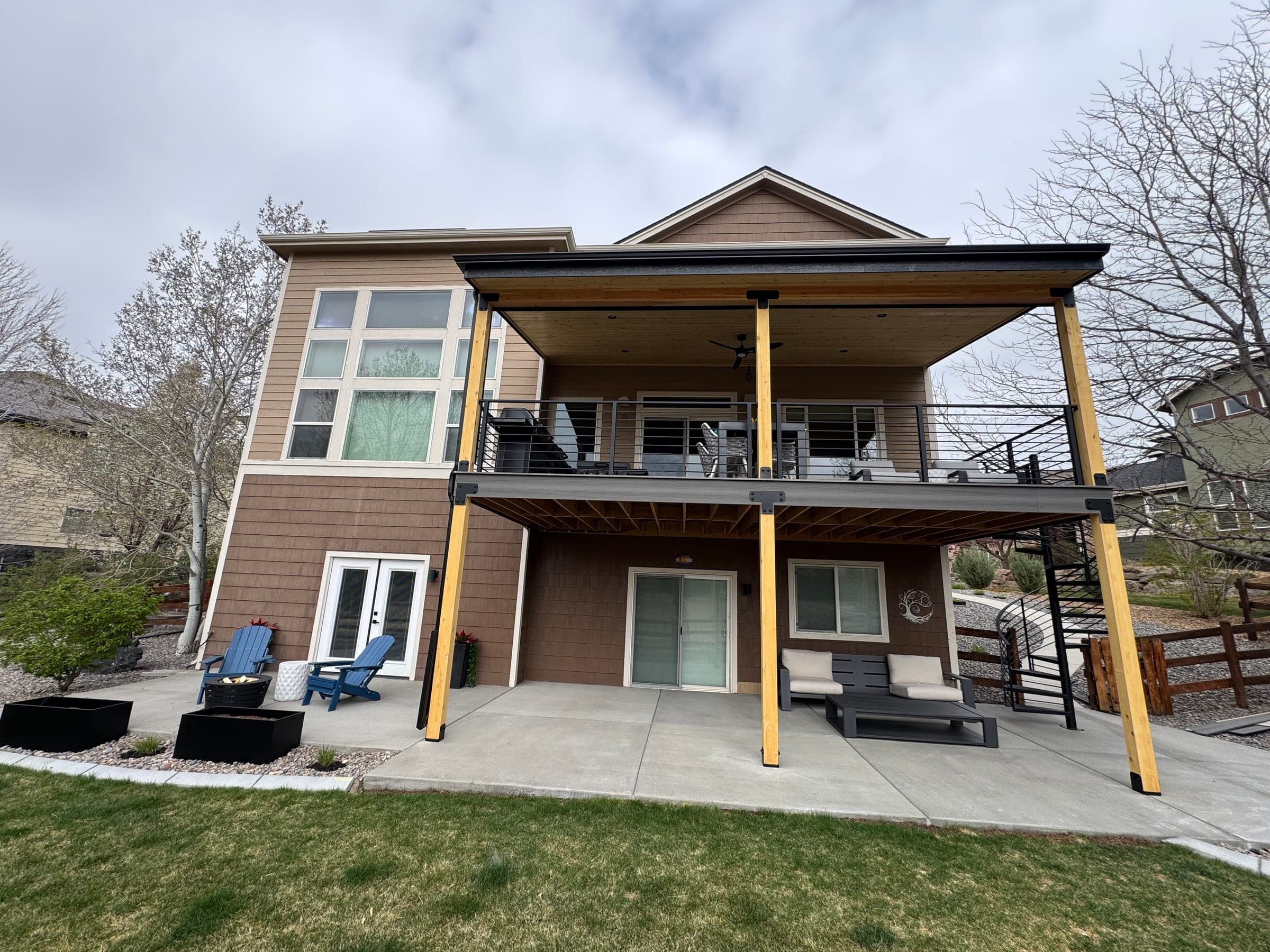
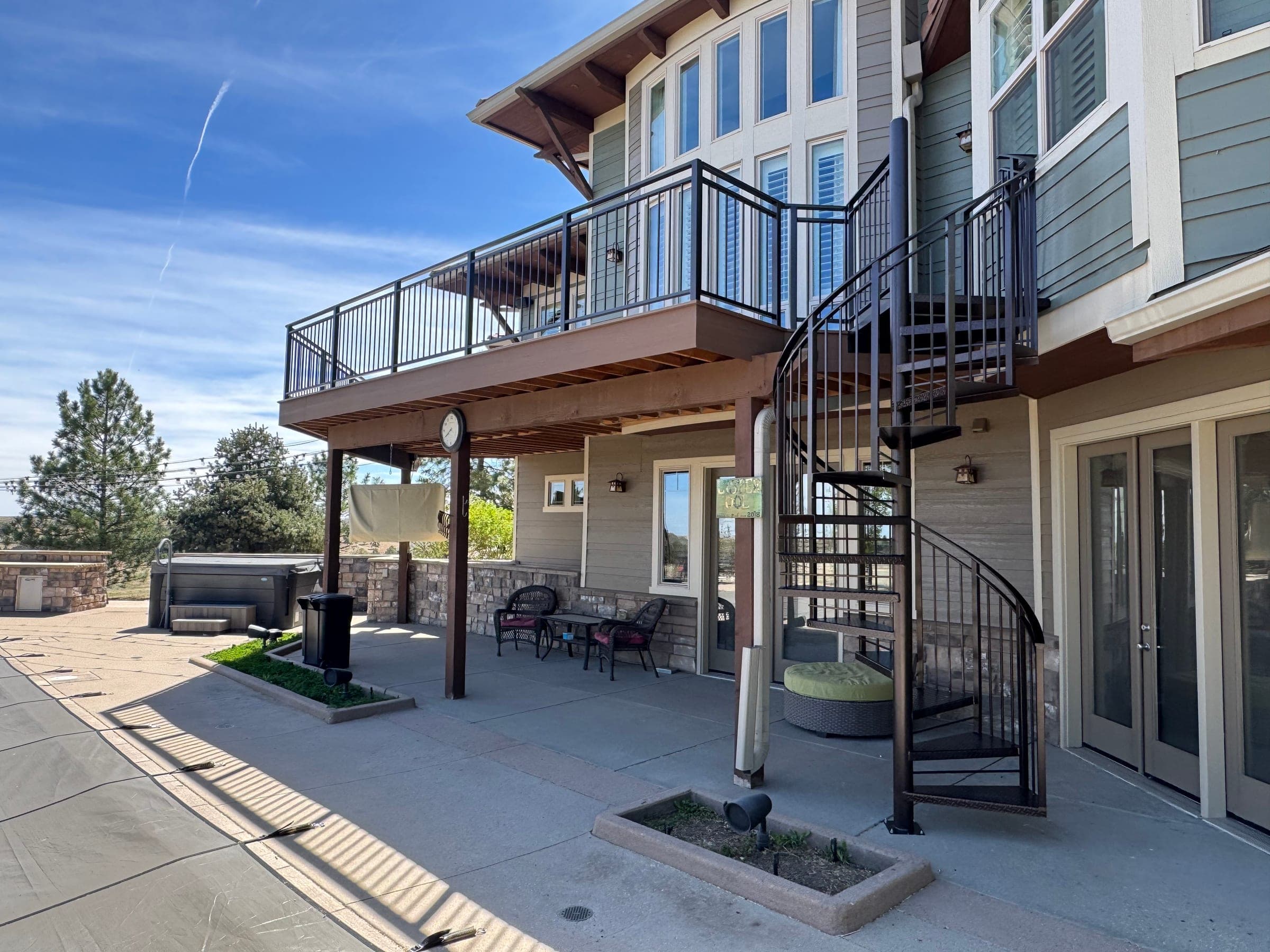
Polycarbonate is the right roof cover for most Colorado patios: multiwall panels block 99%+ of UV, pass 30–90% of visible light, carry roughly 200 times the impact strength of glass against Front Range hail, and last 15–20 years. An engineered cover over a metro deck runs $10,000–$22,000 installed, with the structure, not the panels, driving the cost.
A patio cover is one of those upgrades that quietly doubles how much you actually use your outdoor space — you stay out longer, stop watching the forecast, and your deck's finish lasts years longer without getting cooked or rained on. Polycarbonate is, for most homes, the best material for that cover.
What Is Polycarbonate, Really?
Polycarbonate is a high-impact thermoplastic — the same family as bullet-resistant glazing and motorcycle helmet visors. For roofing, three forms matter:
| Form | Typical thickness | Insulation (R-value) | Character |
|---|---|---|---|
| Corrugated (single layer) | 0.8–1 mm | ~R-0.8 | Cheapest, utility-grade; carports and budget covers |
| Multiwall (twin-wall to 5-wall) | 8–25 mm | ~R-1.6 (8mm) to ~R-3 (25mm) | The residential standard — hollow ribs trap insulating air |
| Solid sheet | 3–12 mm | ~R-0.9 | Glass-look clarity at a fraction of glass weight |
Multiwall is the dominant residential choice: 8mm twin-wall insulates roughly like a single-pane window, 16mm five-wall approaches double-pane performance — and the thicker panel also spans farther, needing support purlins only every 3–4 feet versus about 2 feet for 8mm.
Why It's the Default for Patio Covers
Light without sunburn. Quality panels block 99%+ of UV radiation while letting 30–90% of visible light through, depending on tint. You get a bright space without UV damage to deck, furniture, or skin — no small thing at Denver altitude, where UV runs about 25% stronger than sea level.
Hail-proof, for practical purposes. Polycarbonate has roughly 200 times the impact strength of glass and 30 times acrylic's, and name-brand panels warranty against hail breakage. On the Front Range — where hail is the number-one killer of skylights, greenhouse glass, and fiberglass panels — that matters.
Light. Really light. An 8mm twin-wall panel weighs about 0.3 pounds per square foot — roughly a tenth of equivalent glass — meaning a smaller, cheaper support structure and less load on an existing deck or wall. That makes it the most common choice when you're adding a roof to an existing deck.
Long-lived. Quality panels (Palram, Polygal, SunSky) carry 10–15 year warranties against yellowing and breakage; real-world life is typically 15–20 years before the UV layer degrades.
The Honest Drawbacks
It's noisy in heavy rain. Less so with thicker multiwall, more so with corrugated. If the cover sits outside a bedroom, factor it in.
Cheap panels yellow. Bargain polycarbonate without a co-extruded UV layer turns yellow and brittle in 5–7 years. Spec a name-brand panel with a written UV warranty.
Thermal expansion is real. An 8-foot panel moves about a quarter inch between a winter night and a summer afternoon. Panels need oversized fastener holes and the right gaskets, or they crack at the screws within a few years.
It's not glass. From below you can see the ribs in multiwall, and open channel ends collect dirt and bugs unless properly sealed. Done right, a non-issue. Done cheaply, ugly.
Tint and Light Transmission
Common options:
| Tint | Light Transmission | Best For |
|---|---|---|
| Clear | 80–90% | Maximum brightness, plant-friendly |
| Opal / Diffused | 30–50% | Even light, no harsh shadows — most popular for patios |
| Bronze | 35–50% | Warm tone, reduces glare, hides dirt |
| Solar Control / IR-Reflective | 50–70% visible, blocks 60–80% IR | South/west exposure |
| Smoke / Gray | 25–40% | Modern look, glare reduction |
For most Colorado patios, opal or solar-control bronze is the sweet spot — bright enough to feel open, cool enough to use in July. On a west-facing deck, clear panels recreate the greenhouse you were trying to escape.
What It Costs
Two numbers matter. The panels are cheap: roughly $2–4 per square foot for corrugated, $3–6 for 8mm twin-wall, $6–10 for 16mm multiwall, $10–18 for solid sheet. The structure is the project: a Front Range cover must be engineered for a 30-psf snow load and real wind uplift: posts, footings, beams, flashing, a permit. A typical engineered polycarbonate roof cover over a metro deck or patio lands at $10,000–$22,000 installed — the full breakdown by cover type is in our covered deck cost guide. Utility-grade corrugated carports on light framing can come in for a few thousand.
Polycarbonate vs. The Alternatives
vs. Aluminum solid roof. Aluminum is quieter in rain but blocks all light. Darker "indoor room" feel: aluminum. Bright outdoor space: polycarbonate.
vs. Glass. Glass is clearer and quieter but 5–10x the installed cost, ten times the weight, and hail bait. In Colorado, glass overhead is rarely right.
vs. Fabric / shade sail. Cheaper and removable, but sheds no snow, stops no rain, and lasts 5–8 years against polycarbonate's 15–20.
vs. Wood-and-shingle solid roof. The full outdoor-room effect — and the top of the cost range at $15,000–$35,000, with more weight and a bigger permit package. Sometimes exactly right; it's the route our tongue-and-groove pavilion work covers.
The Bottom Line
Pick polycarbonate for a bright, year-round-usable patio, UV protection, hail resilience, and a structure light enough to attach to an existing wall without major reinforcement. Pick something else if rain noise will drive you crazy, you want a fully insulated space, or your HOA prohibits translucent roofing (some do — check first).
For most Colorado homes the answer is multiwall polycarbonate from a name-brand manufacturer, opal or solar-control tint, on an aluminum or properly sized wood structure engineered for our snow and wind.