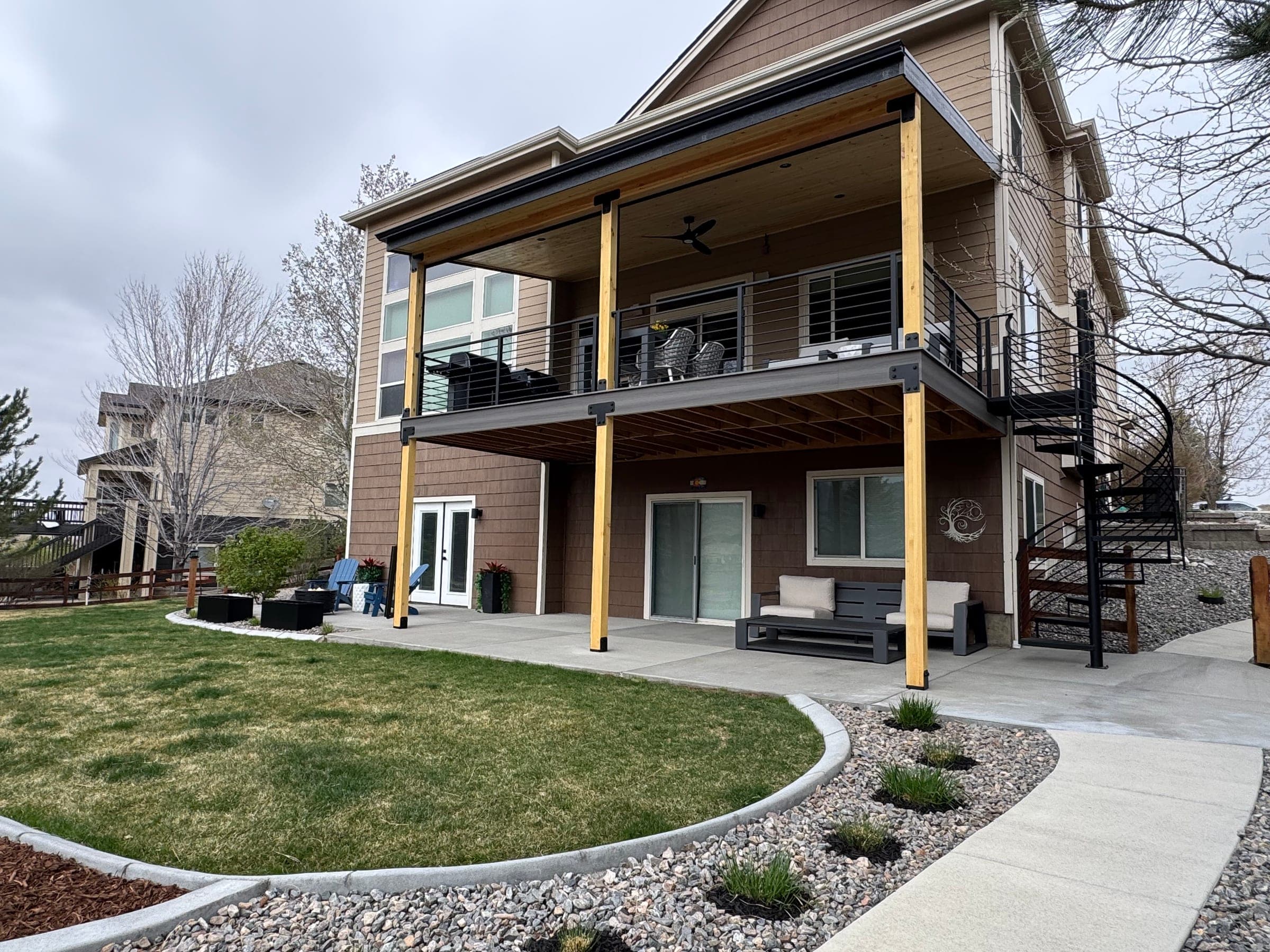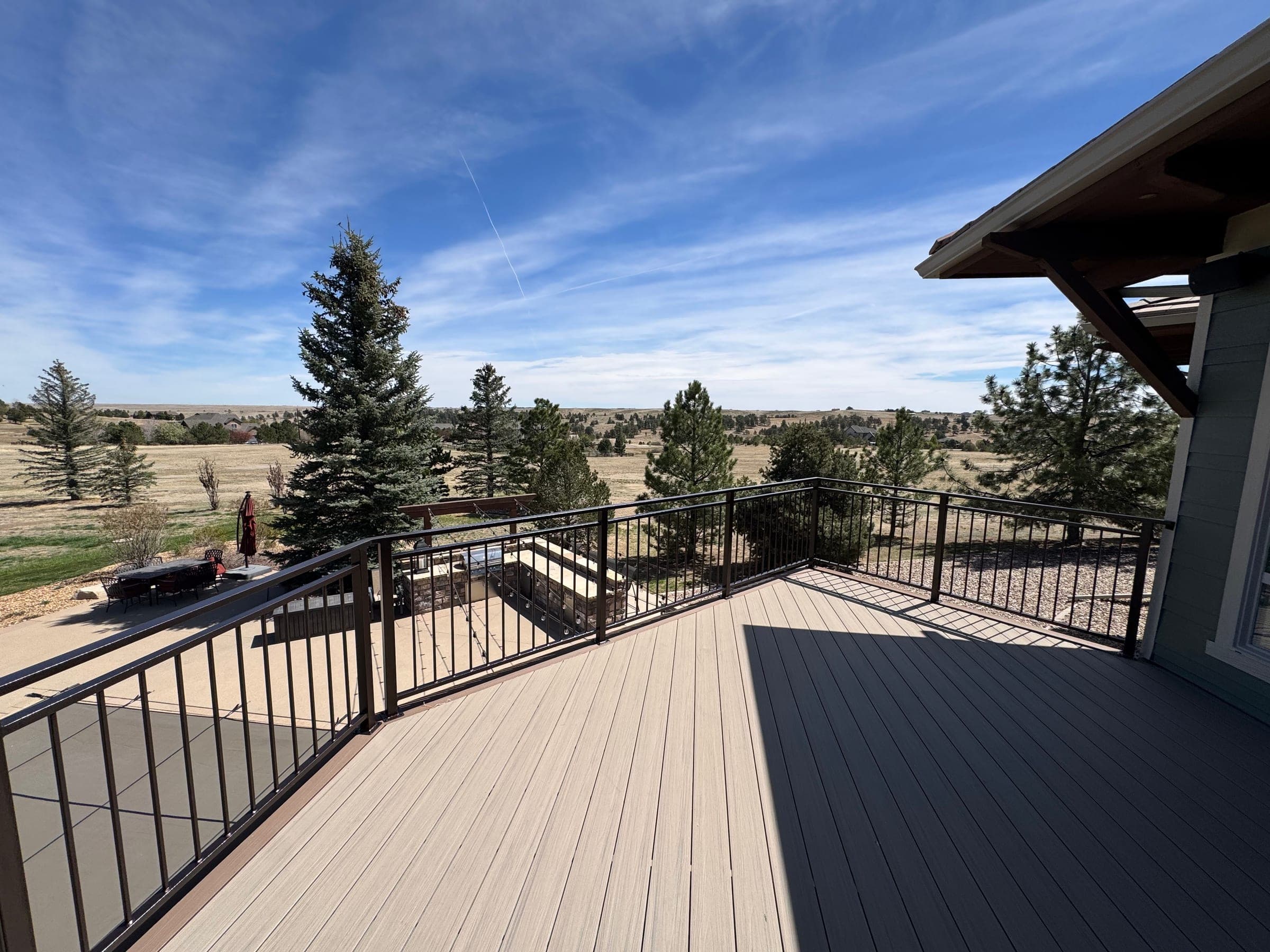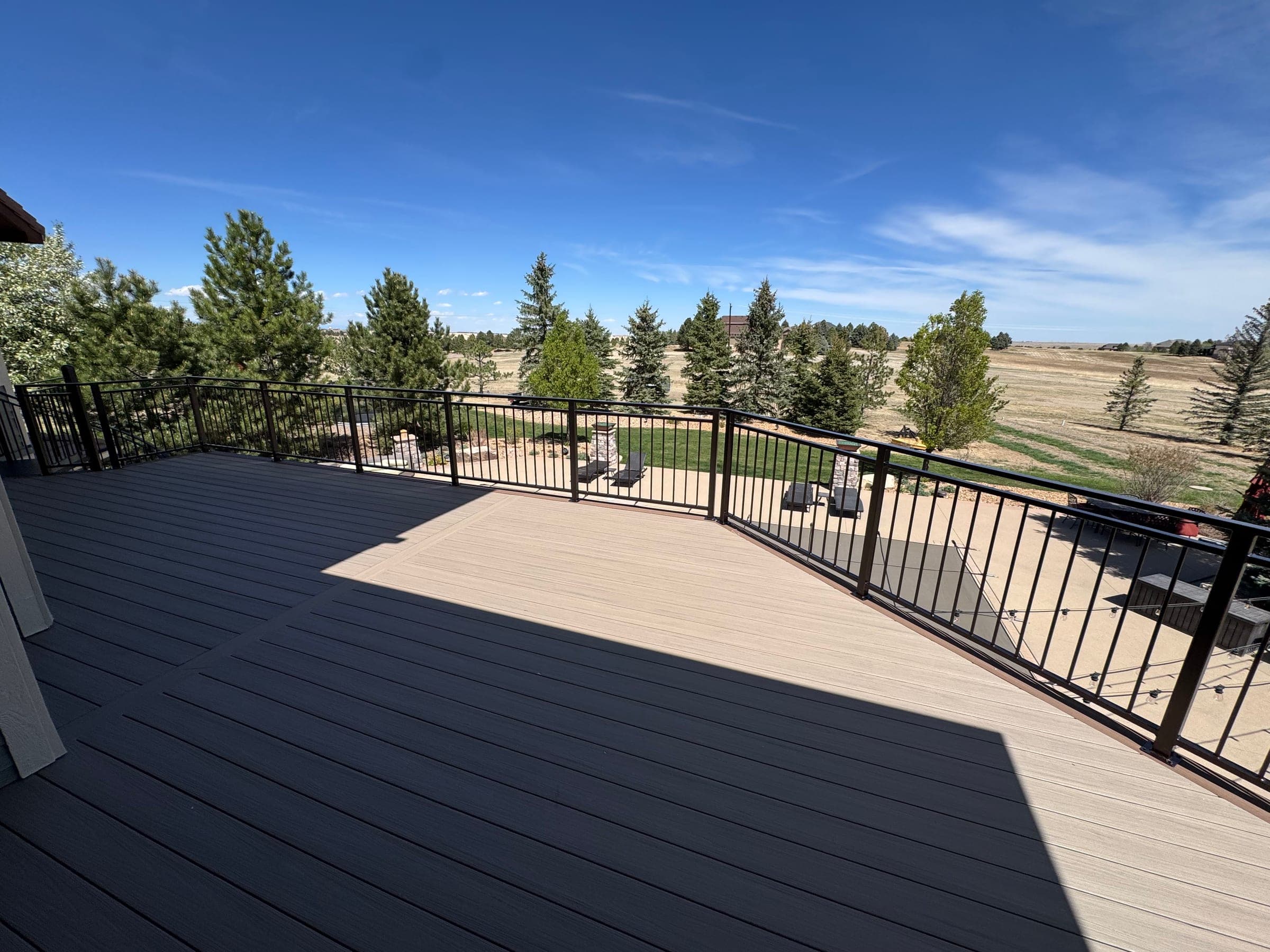
Yes, most existing decks can carry a roof — after a structural check, and often with new footings — and in the Denver metro the retrofit runs $6,000–$12,000 for an open pergola up to $15,000–$30,000+ for a louvered system or solid roof.
How much does it cost to add a roof to an existing deck?
Adding a roof to an existing deck costs $6,000–$12,000 for an open pergola, $10,000–$22,000 for a polycarbonate roof, and $15,000–$30,000+ for a louvered system or solid roof in the Denver metro in 2026 — before the retrofit extras below, which usually add $1,000–$4,000.
| Cover type | Typical installed cost | What it solves |
|---|---|---|
| Open-rafter pergola | $6,000–$12,000 | Sun |
| Polycarbonate roof | $10,000–$22,000 | Sun, hail, rain — keeps the daylight |
| Adjustable louvered pergola | $15,000–$30,000+ | Sun and rain, on demand |
| Solid roof / tongue-and-groove pavilion | $15,000–$28,000 | Everything; a true outdoor room |
| Screened enclosure (on a covered structure) | +$3,000–$8,000 | Bugs and wind |
Those are the same structure prices as our full covered-deck cost guide, which digs into what moves each number. What's different about a retrofit is everything underneath — the lines a retrofit quote adds on top of the cover itself:
| Retrofit line item | Typical cost | When it applies |
|---|---|---|
| New roof-post footings (caissons) | $150–$600 each | Almost always — roof posts rarely land on existing deck footings |
| Structural reinforcement | $150–$400 per sistered joist or beam; $500–$1,200 per added post and footing | Where the deck framing carries roof load and needs help |
| Permit and engineering | $150–$500 in fees | Every roofed structure in the south metro |
| Lighting, fan, or heater wiring | $1,200–$3,000 | Optional, but cheapest while the structure is open |
A worked example: a polycarbonate roof over a 12×16 deck at the middle of its range (about $16,000), four new footings (about $1,500), and the permit (about $350) puts the retrofit near $18,000 before electrical.
Can my deck carry a roof?
Nobody can answer that from the driveway. A roof adds real load — dead load from the structure itself, and the standard 30 psf design snow load a Front Range cover is engineered for, which is two feet of wet spring snow parked over your dinner table. Your deck was designed to hold people and furniture, not a building.
So the retrofit starts with a structural evaluation: are the posts sized and braced for the new load path, do the footings reach 30–36-inch frost depth and have the bearing area for the added weight, and is the framing sound where the roof loads land? Sometimes the answer is yes as-is. Often it's yes with reinforcement — sistered beams, added posts, upgraded hardware. You can preview most of what we'll check with our 10-minute inspection guide.
New footings are the retrofit's signature move. Roof posts usually need their own caissons at $150–$600 each, and on an existing deck those get cut through the decking or set just outside the frame — done cleanly, the boards go back and you'd never know. For attached roofs, the house-side connection is its own engineered detail: a ledger or wall connection that transfers roof load into the house framing and stays flashed watertight. That's fussier than building new, which is why doing deck and cover together costs less when you have the choice.
What if the deck itself needs work first?
Sometimes the deck is the project. If the evaluation turns up a failing ledger, rotted posts, or footings heaved out of position, bolting a roof on top makes a marginal structure worse — now with a snow load on it. In that case repair comes first, or, if the framing is far enough gone, replacement, which gets designed for the roof from day one.
Which cover fixes your actual problem?
| The problem | The right cover | The budget |
|---|---|---|
| Sun only — July afternoons are brutal | Open-rafter pergola | $6,000–$12,000 |
| Hail and rain, but keep the light | Polycarbonate roof | $10,000–$22,000 |
| Want sun some days, shelter others | Louvered pergola | $15,000–$30,000+ |
| All-season outdoor room | Solid roof / pavilion | $15,000–$28,000 |
Once you know which cover, shape is next: our patio cover styles guide compares gable, shed and flat roofs by house type. Sun only, a pergola solves it — anything more is over-buying. Hail (the top roof risk on the Front Range) and rain but you still want light? Multiwall polycarbonate is the middle path; our polycarbonate guide breaks down the panel grades. Bug-free September dinners are the screened enclosure on a solid roof play.
Do I need a permit for a deck roof?
Yes — a roofed structure is its own engineered, permitted build in every jurisdiction we work in. Figure $150–$500 in fees and a 1–3 week plan review, with the engineering showing the 30 psf snow load and wind uplift resistance an inspector expects to see. A cover quote that doesn't mention the permit is telling you who they expect to handle the county. Our permits guide covers what each south-metro city wants; we handle the whole process on every cover we build.
What should I add while the crew is there?
Electrical — lights, a ceiling fan, an infrared heater — turns a cover into a room, and it's a modest line item now versus an ordeal retrofitted later. Budget $1,200–$3,000 for lighting, more with fans and heat. Tight budget? Wire the boxes now and add fixtures later — a financing strategy in its own right.
Why build the cover in fall?
Two reasons. Cover crews have more room in fall between the summer rush and spring, so permit review and the build move faster. And a cover finished in October is already up when spring hail season opens — the storm season the polycarbonate and solid-roof options exist for.
Thinking about a roof over your deck? Tell us about it — we'll evaluate the structure honestly, walk the cover options against your actual problem, and give you an itemized quote, footings and all.