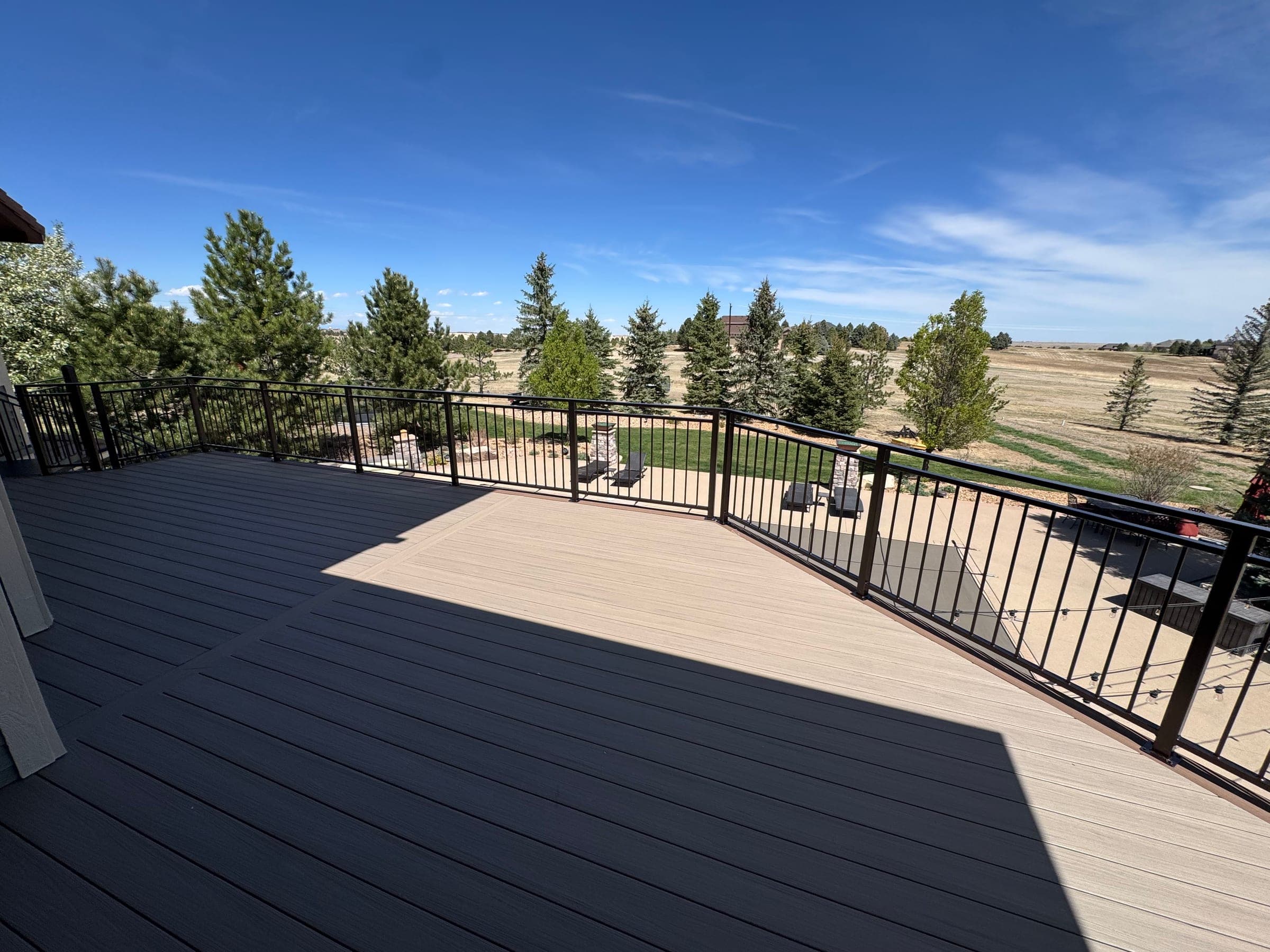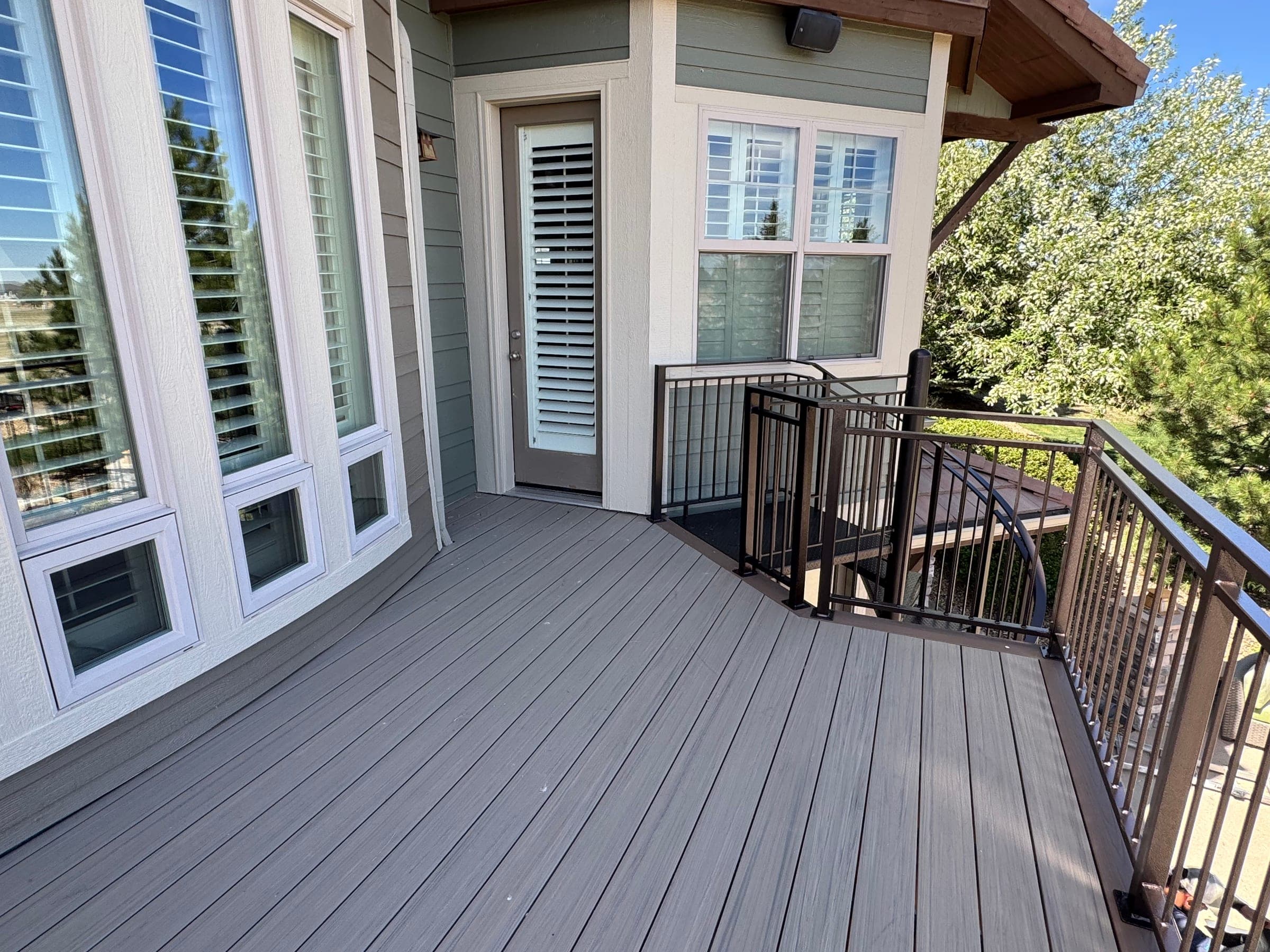
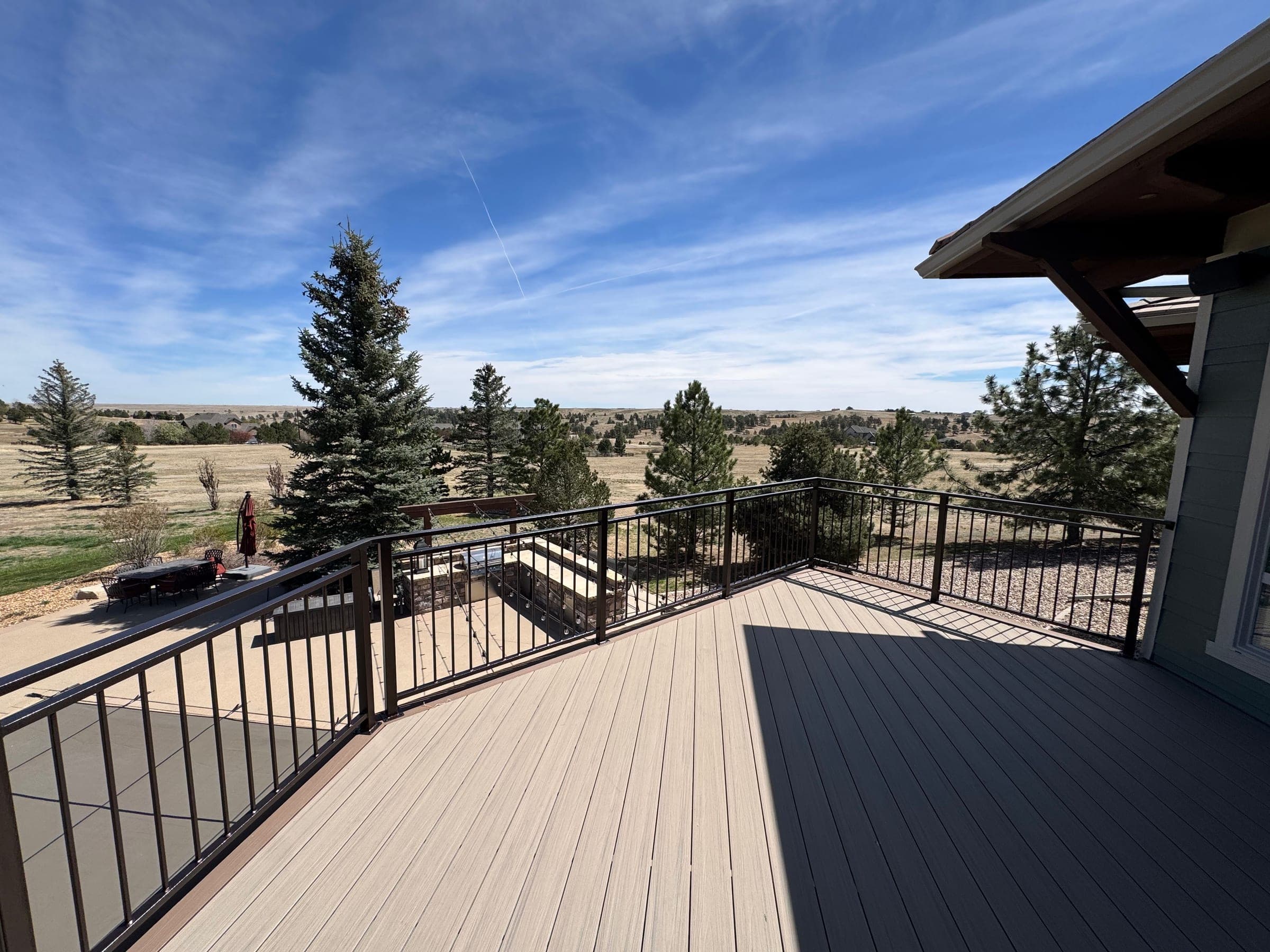
A bouncy deck usually isn't about to fall down — it means the framing is flexing more than it should. Common causes: joists spanned near their limit, missing blocking, hardware working loose, or a post going soft at grade. Most fixes run $300–$1,200.
Bounce is a stiffness problem. Strength is whether it can carry the load; stiffness is whether it moves while doing it. A deck can be safely strong and still trampoline under a full patio table — but the same symptom can also be an early warning on a connection that matters.
What makes a deck bounce?
Four causes account for nearly all of it:
- Undersized or overspanned joists. A 2x8 spanning 14 feet will hold you — and flex like a diving board doing it. Common on older decks and builds that skipped the span tables.
- Missing blocking. Blocking is short lumber between joists that makes them act as one system instead of individual boards; decks built without it feel springy and often wobble side-to-side.
- Failing hardware. Denver's freeze-thaw cycles back fasteners out every winter. Loose joist hangers and post connections turn a tight frame into a loose one — movement you feel as bounce and hear as creaks.
- Post rot at grade. A wood post that meets soil or sits on a shallow footing softens from the bottom up. The deck settles onto a slowly failing support, and the whole structure gains play.
What does each fix cost?
| Fix | Typical cost (Denver metro, 2026) |
|---|---|
| Blocking rows added between joists | $300–$800 |
| Joist sistering (new joist fastened alongside) | $150–$400 per joist |
| Post replacement with frost-depth footing | $500–$1,200 each |
Blocking is the best value in deck repair — a day's work that transforms how a springy deck feels. Sistering fixes the overspanned-joist problem without reframing, and a proper post replacement includes a new footing to Colorado's 30–36-inch frost depth. Full repair menu: our deck repair service page.
While a crew is under there, a hardware refresh — re-driving hangers, replacing corroded fasteners — is cheap insurance and part of a good inspection checklist.
When is bounce dangerous?
Location is the tell. Bounce in the middle is a stiffness problem. Bounce, sag, or any sense of movement near the house is a different animal — that's the ledger zone, the bolted connection that carries about half the deck's weight, and ledger failure is the leading cause of deck collapse. If the deck moves at the house side, or you can see a gap opening between deck and wall, stop diagnosing and get it inspected now.
Age matters too: a springy five-year-old deck probably just needs blocking, while a springy twenty-year-old deck may be flexing because several things are wearing out at once — worth a conversation about repair versus replacement rather than fixing symptoms one at a time. A new composite frame is engineered stiff from day one; bounce is one complaint a modern composite build simply doesn't have.
Get a real answer, not a guess
Bounce has four look-alike causes and four different fixes — telling them apart means getting under the deck with a flashlight and a probe. (Every fix here is priced in our repair cost guide.) Schedule a free structural inspection — we'll crawl the framing, check every connection, and hand you a written verdict on the cause and the cost. If it's a $400 blocking job, we'll tell you that, too.