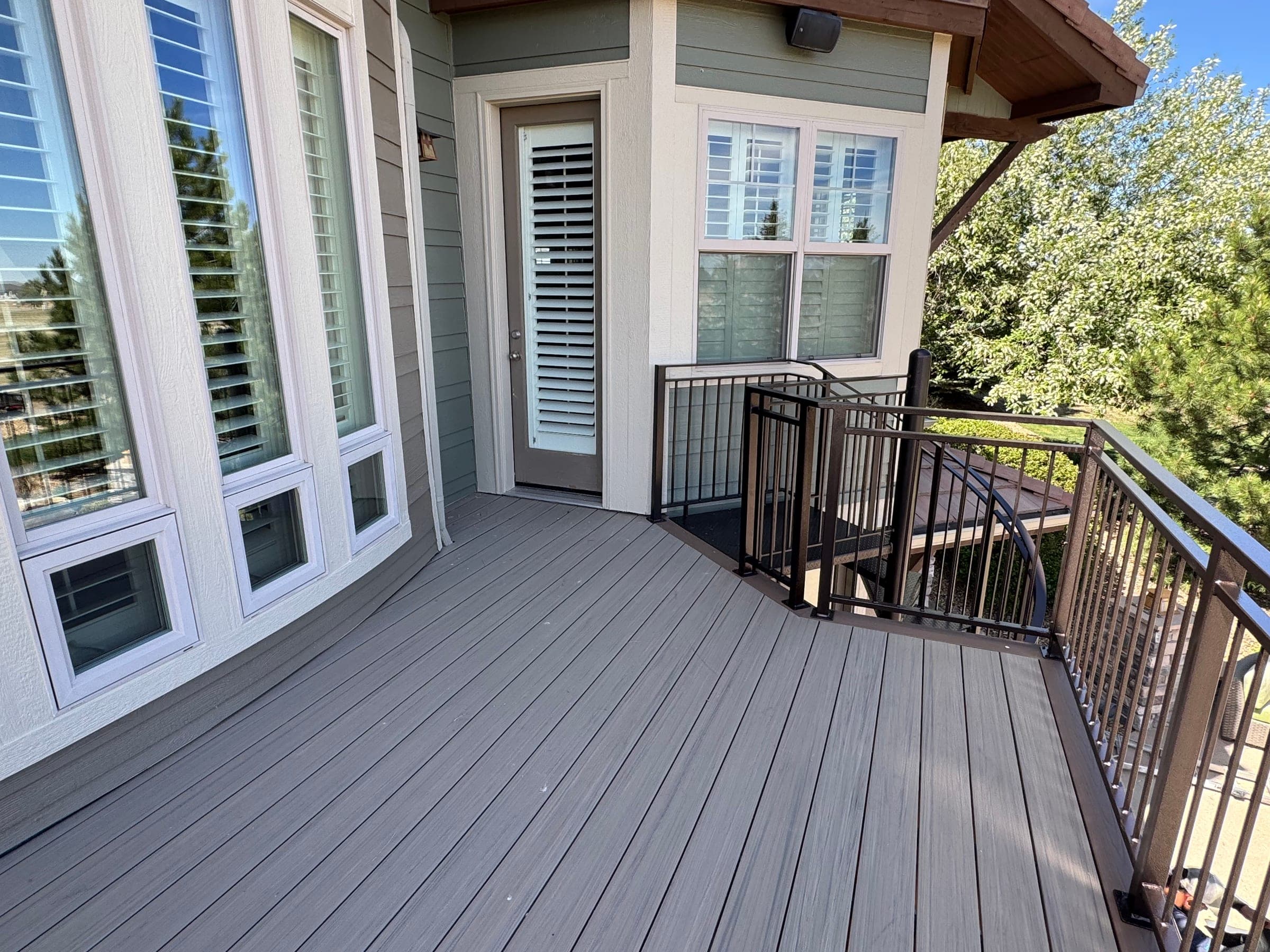
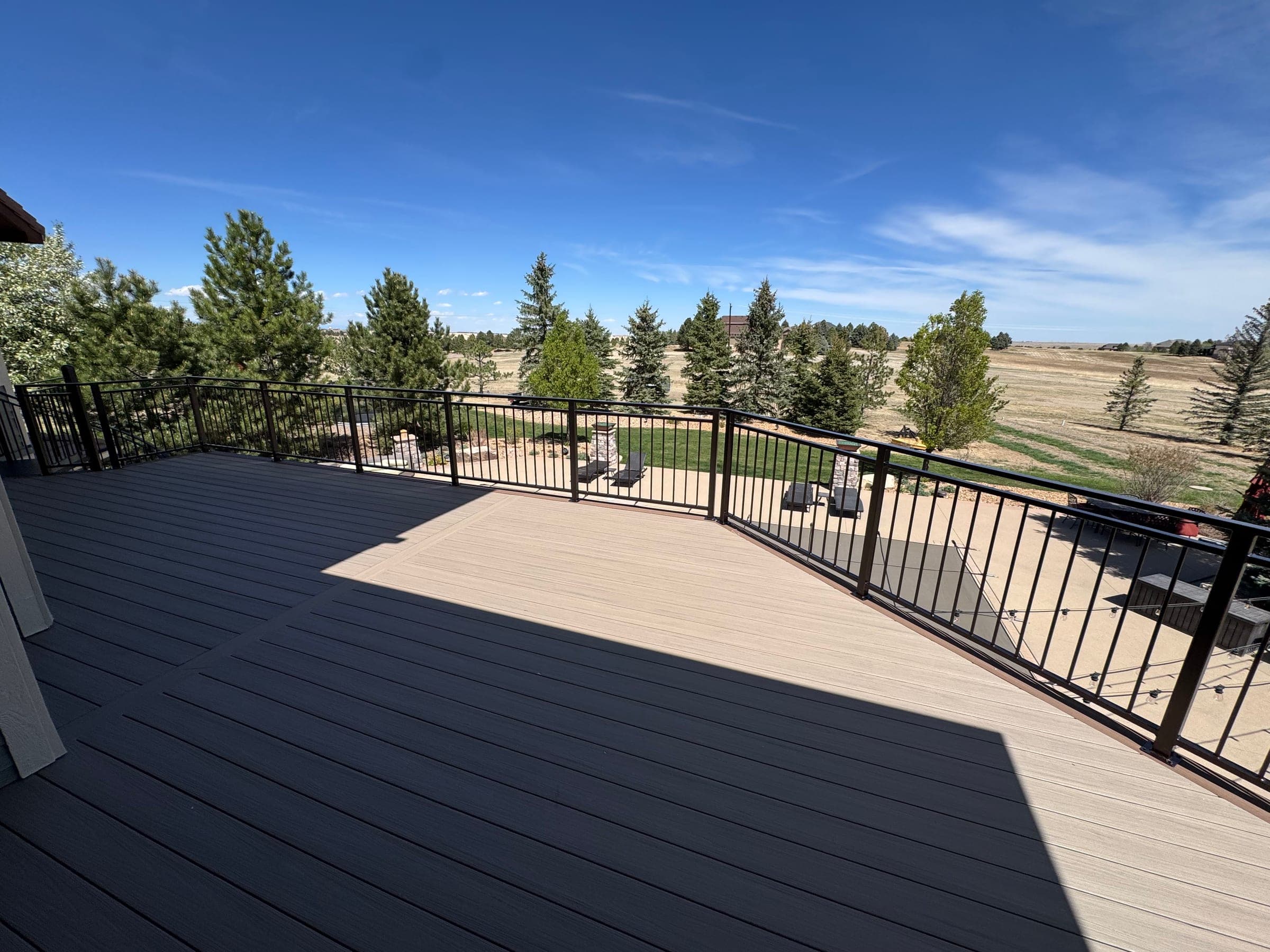
If your deck is visibly pulling away from the house, the ledger connection — the board tying the deck to the structure, carrying roughly half its weight — is failing. This is the number-one cause of deck collapse. It's fixable, usually for $800–$2,500, but it needs an inspection now, not after winter.
That's not fearmongering; it's just what the failure statistics say. When decks come down, they overwhelmingly come down at the house — the ledger lets go, the deck hinges away, and everything on it goes with it. The good news: ledger failure is slow, visible, and repairable if you catch it at the gap stage. Which, if you're reading this, you may have.
Why decks pull away
Three causes, and most failing ledgers have at least two of them:
- Nailed-only ledgers. Plenty of older decks were nailed instead of bolted. Nails hold fine in shear — until decades of load cycles and seasonal wood movement slowly withdraw them. A nailed ledger doesn't fail suddenly; it backs away a millimeter at a time.
- Missing or failed flashing → rot. Flashing is the metal barrier that keeps water from running behind the ledger. Without it, water sits in exactly the joint you can't see, rotting the ledger and the house rim the fasteners grip. A perfectly bolted connection into rotted wood is not a connection. Our guide to deck ledger board rot and flashing shows what failing flashing looks like from below.
- Freeze-thaw working the fasteners. Colorado's winter cycles expand trapped moisture in every gap and thread. Each cycle loosens the hardware a fraction; every spring the deck hangs on a little less than the year before. This is why a gap you noticed in October is wider by April.
What to check today
Ten minutes, no tools beyond a screwdriver:
| Check | What you're looking for |
|---|---|
| The gap itself | Any visible daylight or widening seam where deck meets house — even a quarter inch matters |
| Rust streaks | Orange staining bleeding from the ledger or its fasteners; rusting hardware is losing section |
| Soft wood | Probe the ledger and the trim above it with a screwdriver — sound wood resists, rot gives |
| Flashing | Look for metal lapping over the ledger's top edge; no visible flashing is a finding in itself |
| Movement | Gentle rocking at the house side of the deck — any movement at the ledger is a stop sign |
And what not to do: don't load the deck while you wait. No parties, no hot-tub refills, no thirty-person barbecue. Ledger failures go from gap to collapse under crowd load. A deck that's separating can likely hold you walking across it; don't ask it for more than that. Our full inspection guide covers the rest of the structure while you're down there.
The fix and the cost
The repair depends on what the inspection finds behind the ledger:
- Re-fastening — if the wood is sound and the attachment is the problem, the fix is structural lag screws or through-bolts, replacing whatever nails were doing — the cheapest outcome, and common on decks caught early.
- Re-flashing — new flashing integrated with the housewrap so water never reaches the joint again. Almost always done alongside re-fastening, since the deck boards near the house come up either way.
- Ledger replacement — where rot has claimed the board, it's cut out and replaced, along with any damaged rim framing behind it. All-in, ledger repair and re-flash runs $800–$2,500 in the Denver metro.
- Conversion to freestanding — when the house rim can't reliably hold a ledger (rot, brick veneer, cantilevered floors), the fix is a new beam on posts and footings at the house side, so the deck stands on its own. It costs more than a re-fasten, but removes the failure mode entirely.
If the inspection finds rot beyond the ledger — joists, beams, posts — you're in repair-versus-replacement territory; math's in our replacement cost guide. A properly repaired ledger also doubles as step one of any future re-deck or rebuild, so the money isn't wasted. Our repair service page covers how we handle structural work.
Don't guess on this one
A separating ledger is the one deck problem where "keep an eye on it" is the wrong advice — severity is invisible, and the downside is the whole deck. Schedule a free structural inspection and we'll open it up: fasteners, flashing, rot probing, the works. You'll get a written verdict the same visit — re-fasten, replace, or convert to freestanding — with a real number attached: fix it this fall, not worry about it all winter.