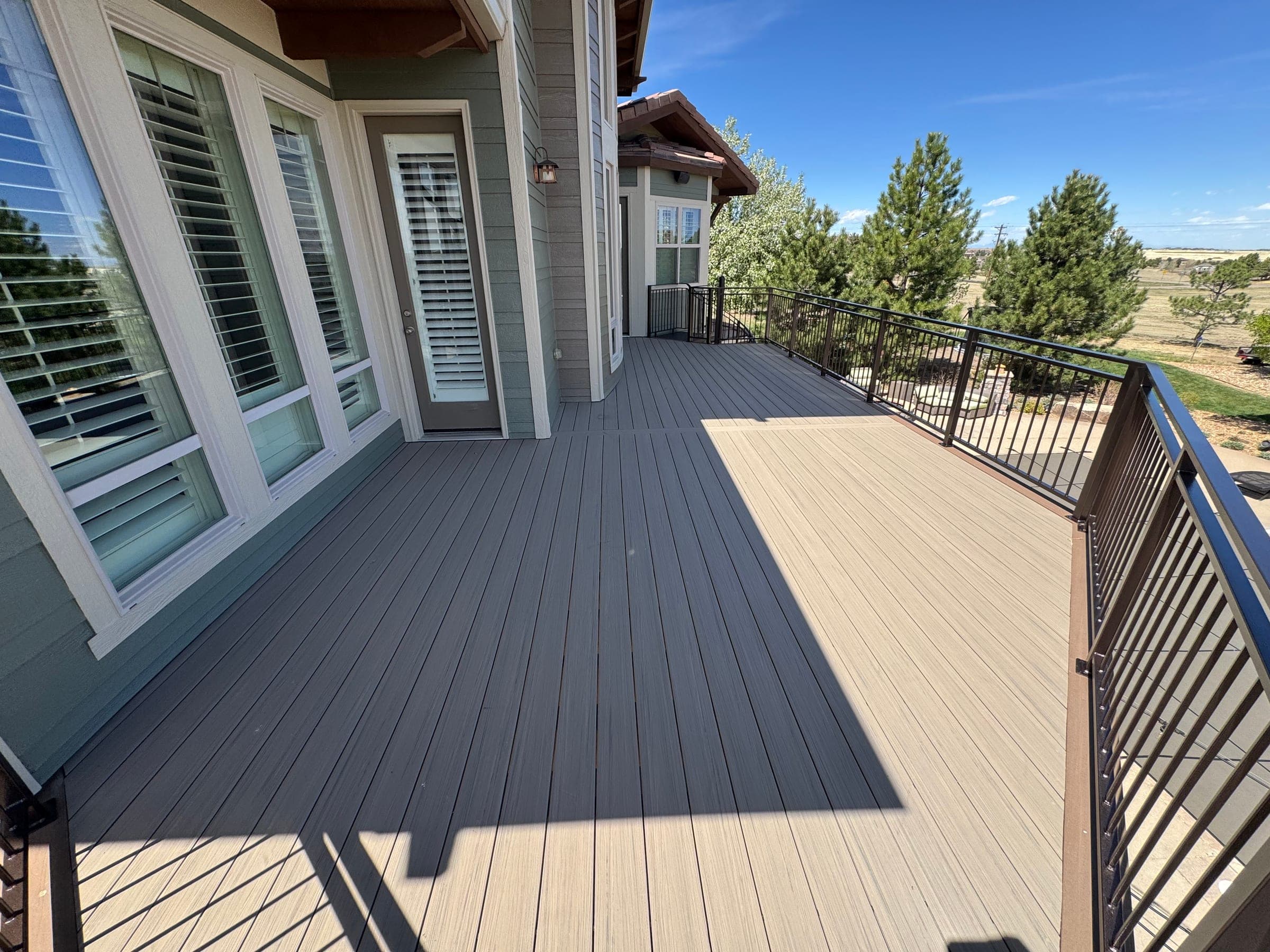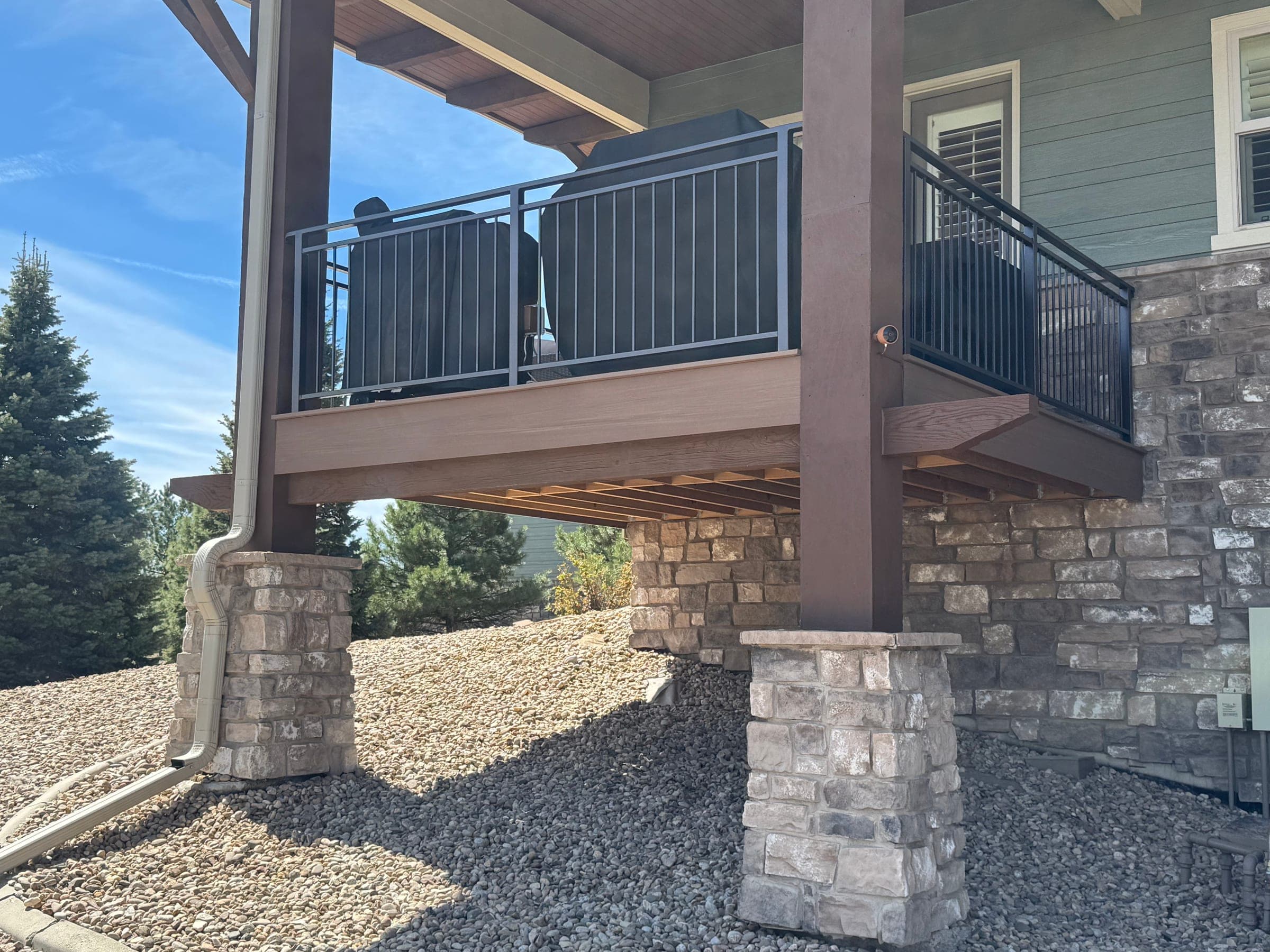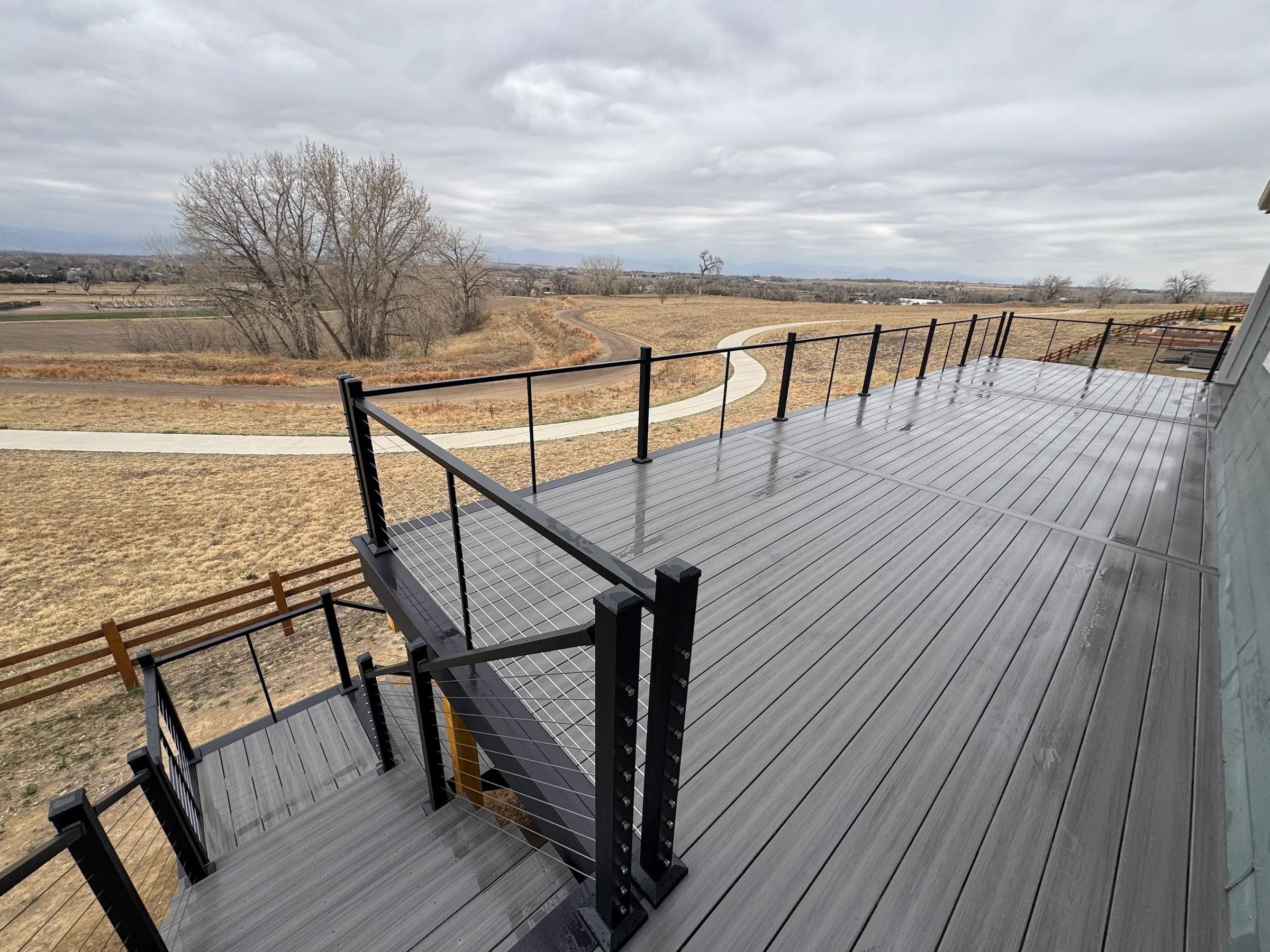
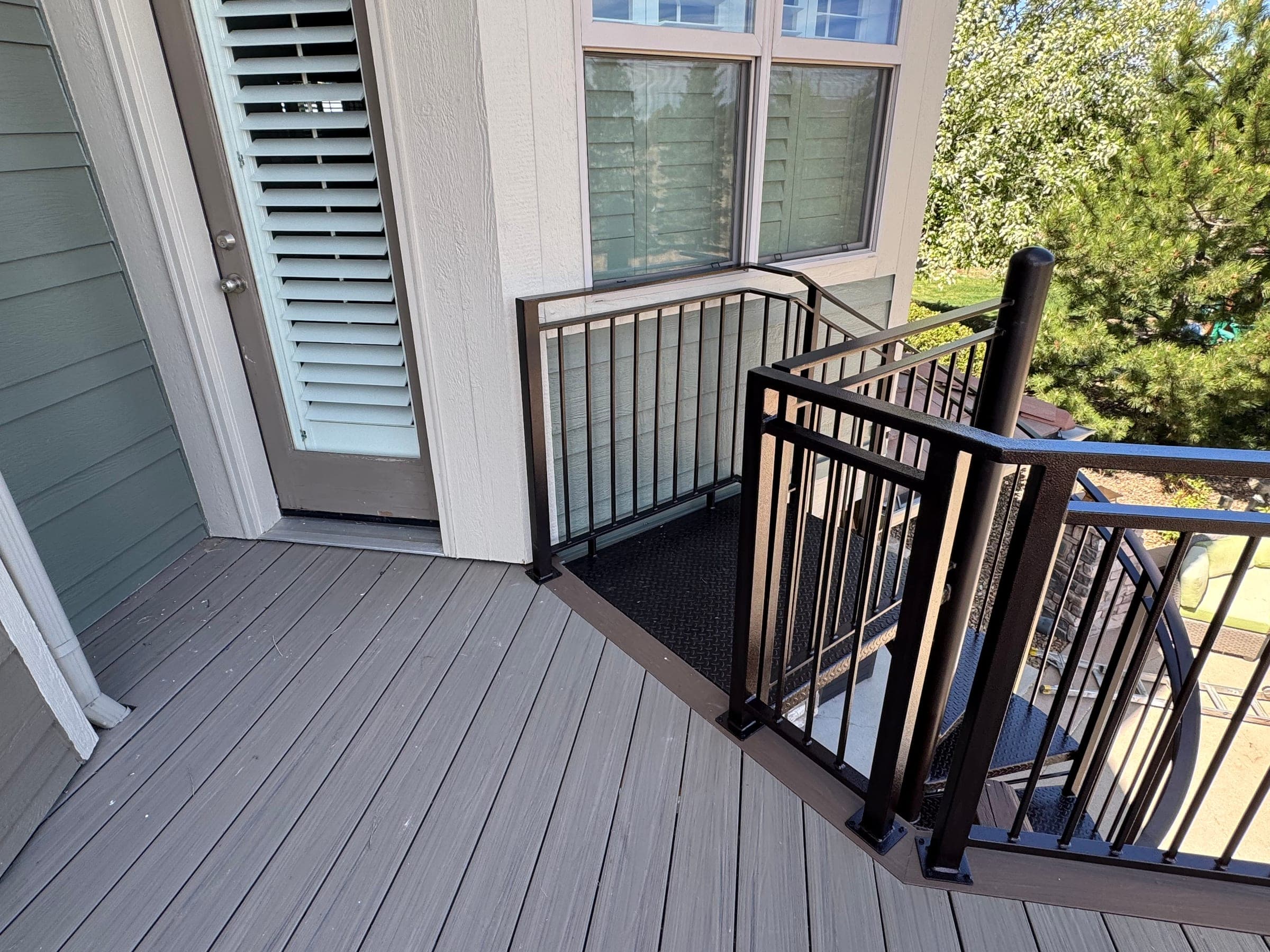
The deck ledger board is the long board fastened to your house that carries the house side of the deck, roughly half its weight. It rots from behind, where nobody looks, when deck ledger flashing is missing, rolled, or never installed. Anything touching the ledger deserves a professional inspection before you spend a dollar on boards, stain, or railing.
What does a deck ledger board do?
The ledger ties the deck's joists to the framing of the house. On an attached deck the house wall takes the place of a row of posts, so this one board and its fasteners hold up the house side. That is why the ledger connection is the single most common cause of catastrophic deck collapses: when it lets go, the house side of the deck comes away from the wall.
A ledger fails in two ways, and they usually arrive together. Either the fasteners lose their grip, or the wood they grip rots. Older decks were often nailed on rather than bolted, and nails back out under years of load cycles and seasonal movement. Water is the bigger story. Wood that stays wet against a wall rots from the inside out, and a bolt through soft wood holds very little.
How do you tell a deck ledger board is failing?
Most warning signs show from the ground or from under the deck. You need a flashlight and a screwdriver.
| Check | What it means |
|---|---|
| Screwdriver probe from below | Push the tip into the underside of the ledger and the trim just above it. Sound wood resists. If the blade sinks in, that is rot |
| Gap or daylight at the house wall | Light between the ledger and the wall means the connection is backing out |
| Nails instead of bolts | Rows of nail heads and no bolt or lag heads means the ledger is nailed |
| Missing or rolled flashing | No metal along the top edge of the ledger, or metal that is curled, dented, or stuck flat on the siding |
| Staining or soft siding at the rim | Dark streaks, peeling paint, or siding that gives under a screwdriver just above the ledger means water has been running behind it |
| A deck pulling away | A deck that shifts at the house side, or a gap wider than last year. Our guide to a deck pulling away from the house covers that stage |
Probing is looking, not repairing. Don't pull siding, pry at the ledger, or hang weight from it. If you find any of these signs, keep gatherings off the deck until someone qualified has inspected it.
What does good deck ledger flashing look like?
Good flashing runs continuously along the top edge of the ledger and ties into the housewrap, so water coming down the wall drains past the board instead of behind it. Three things do not count as flashing:
- A bead of caulk along the top of the ledger. Caulk cracks, and a crack lets water in.
- Metal stuck on the face of the siding with its top edge left exposed. Water gets behind it.
- Flashing that was never tied into the housewrap. It looks right from below and leaks at the edges.
Colorado makes every one of these worse. Water that gets behind a ledger freezes, expands, and pries the joint wider each winter. A small leak found in October is a much smaller job than the rot that builds up behind it by spring.
What does deck ledger repair cost, and when does replacement win?
Ledger repair and re-flashing runs $800–$2,500 in the Denver metro. That covers removing deck boards near the house and sometimes siding, cutting out rot, re-fastening into the house rim, and new flashing. Where you land in that range depends on how much is rotted behind the ledger and whether siding has to come off. Our Denver deck repair cost guide prices the rest of the common repairs.
If the house rim is too rotted to hold new fasteners, the realistic alternative is a freestanding deck on its own posts and footings. That costs more than a re-fasten, but it takes the house out of the load path.
A nailed ledger is not automatically a replacement. When the rim and joists are sound, bolting or lagging the ledger back into place is a repair. Rot in the rim, the joists, or the posts is what moves the job toward replacement, and the inspection is what tells you which one you have. Our deck replacement cost guide shows where we draw that line.
What should you do next?
- Keep crowds, heavy furniture, and hot tubs off the deck until the ledger has been looked at.
- Hold off on cosmetic spending. A board swap or a fresh stain on top of a rotting ledger is money burned.
- Take three photos: the underside of the ledger, the flashing or the wall above it, and any gap. Send them with your inspection request and we can give you a straight answer on what you're seeing.
- Get it inspected. Our deck repair inspection checks the ledger connection along with footings, posts, and framing, and the deck safety inspection guide walks through the rest of the structure.
If you're not sure what you're looking at, schedule a free structural inspection. We'll probe the ledger, check the fasteners and flashing, and give you a written verdict on what's safe, what's worn, and what's actually dangerous.