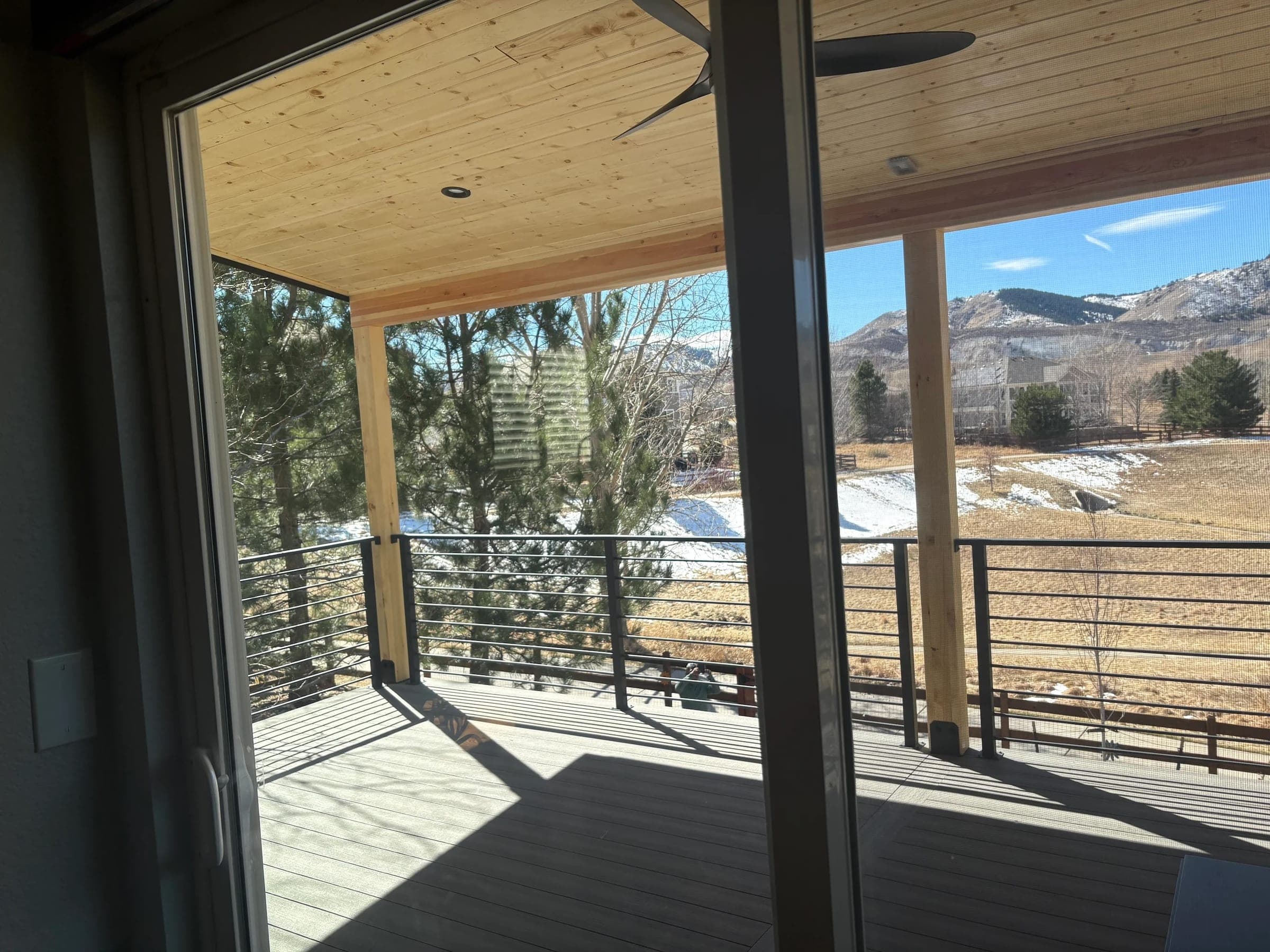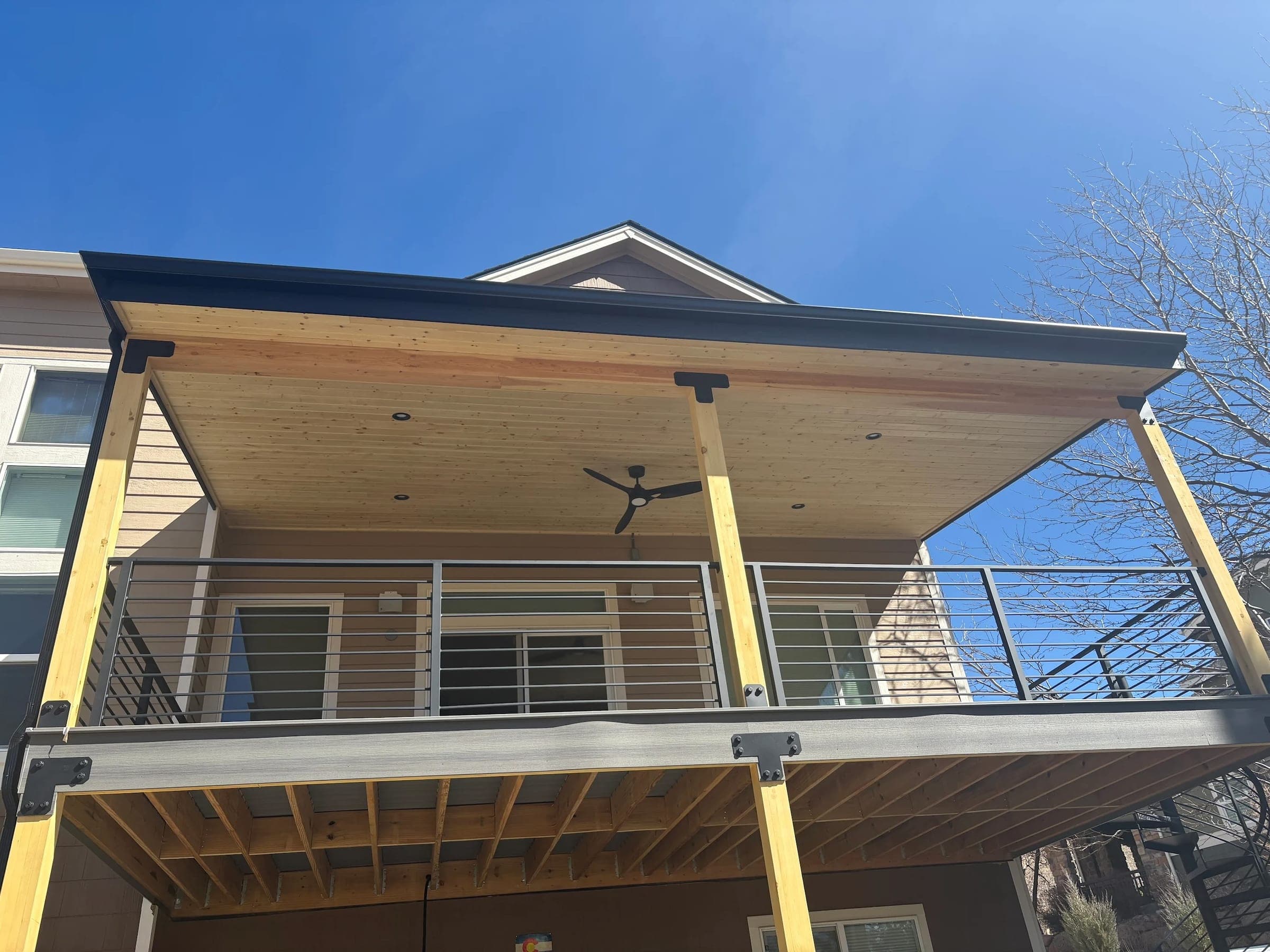
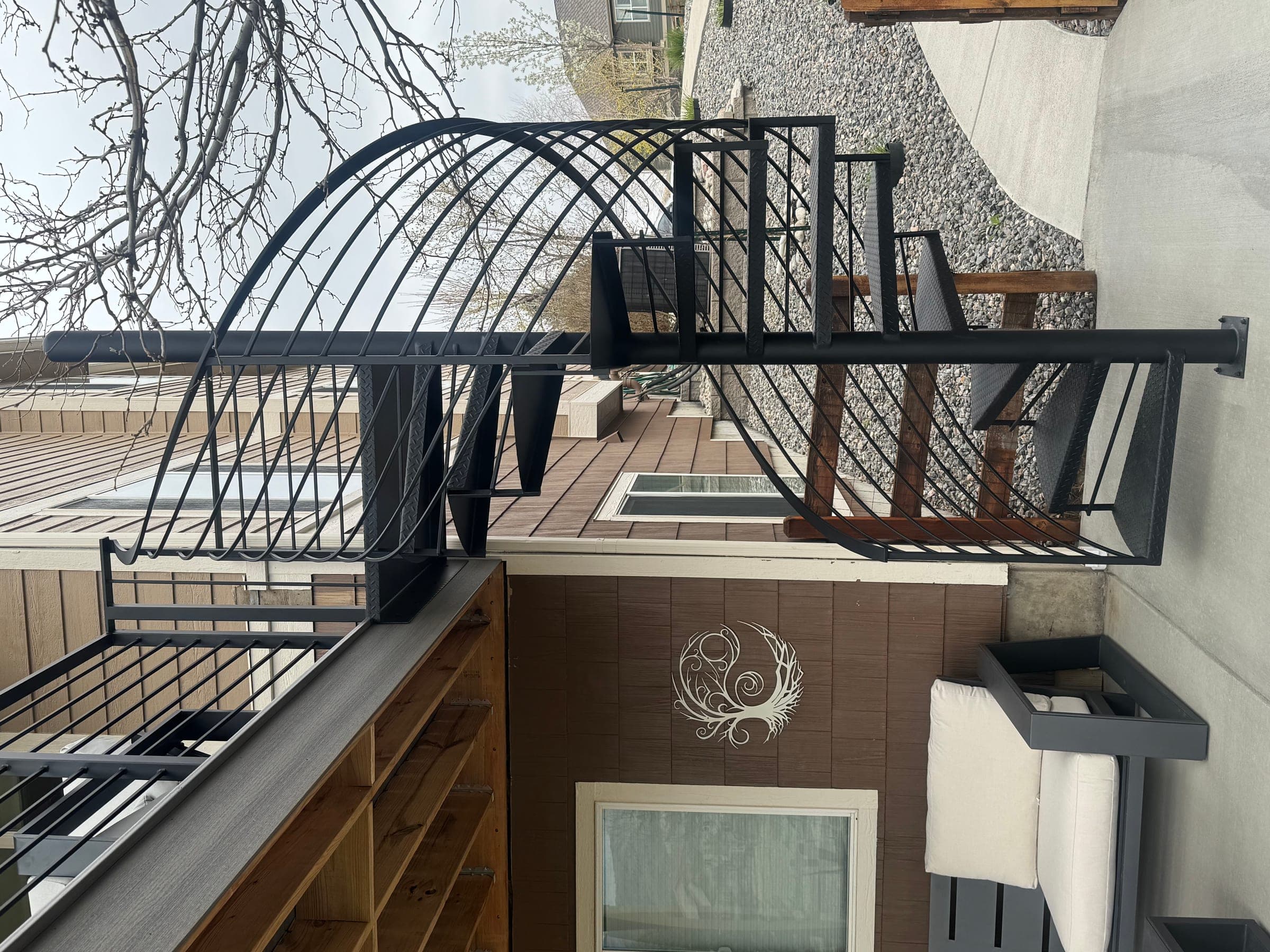
Most Denver deck repairs run $300–$2,500 in 2026, depending on whether the fix is cosmetic (a few boards) or structural (a ledger or footing). Small jobs carry service minimums of $300–$600; a full stair rebuild tops the list at $1,500–$4,000.
That's the short version. The useful version is itemized — because "deck repair" spans everything from three boards to rebuilding the connection that holds the deck to the house.
What repairs cost
Real 2026 Denver-metro numbers, installed:
| Repair | Typical cost |
|---|---|
| Service minimum (any small job) | $300–$600 |
| Board replacement (a handful of boards) | $150–$500 wood / $200–$600 composite-matched |
| Railing post re-anchor | $150–$400 per post |
| Joist sistering / repair | $150–$400 per joist |
| Ledger repair & re-flash | $800–$2,500 |
| Post + frost-depth footing replacement | $500–$1,200 each |
| Stair rebuild | $1,500–$4,000 |
| Hardware / fastener refresh | $300–$800 |
| Re-deck over sound framing | $20–$35 per sq ft |
| Full composite rebuild | $40–$70 per sq ft, plus $1,500–$3,500 tear-out |
Two notes on reading the table. First, the service minimum is real: a crew, a truck, and materials cost the same to mobilize for one board as for ten, so almost no contractor will roll out for less than $300–$600. If you have three small annoyances — a wobbly rail, two cupped boards, a loose stair tread — bundle them into one visit and the minimum works for you.
Second, board matching costs more than the material difference suggests. Discontinued colors, weathered fade, and hidden-fastener systems add sourcing and labor time. Still far cheaper than living with a soft spot.
Why structural repairs cost more
Because they're excavation and carpentry, not just carpentry.
A ledger repair ($800–$2,500) means removing deck boards and sometimes siding, cutting out rot, re-fastening into the house rim, and re-flashing to keep water out. The ledger carries roughly half the deck's weight — priced accordingly — our safety inspection guide walks through how to spot ledger trouble yourself.
A post and footing replacement ($500–$1,200 each) involves shoring the deck, demoing the old footing, and pouring a new one to Colorado's 30–36-inch frost depth. Shallow footings are why so many older metro decks heave and lean — the freeze-thaw cycle lifts them a little every winter.
A stair rebuild ($1,500–$4,000) is its own small structure: footings under the stringers, new stringers, treads, and a code-compliant graspable handrail. Code is unforgiving here — risers within 7¾ inches and matching, treads at least 10 inches deep — so stairs built to earlier codes usually can't be patched in. The full breakdown is in our stairs and railings cost guide.
Repair, re-deck, or replace?
The most expensive mistake in deck repair is fixing the wrong layer. Here's the decision logic we use:
- Surface wear only — faded, splintering, or cupped boards on a frame that's solid when you probe it → re-deck. New composite decking and railing over your existing framing runs $20–$35 per square foot — a new-deck surface for roughly half the cost of a full rebuild.
- One or two isolated findings — a soft board, a loose post, one flexy joist → targeted repair from the table above. Cheap, fast, done.
- Anything touching the ledger, footings, or framing → get a professional inspection before spending a dollar. These failures don't announce themselves, and a $400 board swap on top of a rotting ledger is money burned.
- Multiple structural findings on a 20-plus-year-old deck → replacement. At that point each repair is a payment on a structure that's already failing, and the math favors a rebuild — our replacement cost guide has the full numbers, and financing can spread them out.
If you're weighing re-deck against rebuild, run both scenarios through our deck cost calculator — the gap is usually smaller than people expect once tear-out is priced in.
Book repairs in fall
Two reasons, one about crews and one about physics.
Crews: deck season in Colorado runs hard from April through August. Come October, the same contractors who quoted you a six-week wait in June have open days on the calendar. Repairs are exactly the kind of work that fits into fall and winter — most fixes need only a dry stretch, not a warm one. (The same logic applies to full builds — see the best time to build a deck in Colorado.)
Physics: Denver's freeze-thaw cycles are a wedge. Water gets into a hairline check in a post, a gap behind loose flashing, or the soil under a marginal footing — then freezes, expands, and pries. A loose railing post in September is a dangerous one by April; a small ledger leak in October is a rot colony by spring. Every winter you wait, the repair bid grows.
Booking in the fall means the problem is fixed before winter works on it, at better availability and never a premium.
A good repair quote
The same thing a build quote should: line items. A lump-sum "deck repair — $2,800" tells you nothing; an itemized quote tells you what's structural, what's cosmetic, and what can wait a year. It should also name the hardware — joist hangers, structural screws, post bases — because the wrong screws turn a refresh into a repeat repair. It's how we quote every repair job, whether it's a Denver bungalow or a south-suburb walkout — how our process runs start to finish.
Specific symptom? Our most-read guides: a deck that feels bouncy, a wobbly railing, and the urgent one, a deck pulling away from the house. Also covered: cupped, splitting boards, soft spots, a rotting post base, and a rotting stair stringer. Selling soon? See whether a repair or a new deck adds more value.
Not sure which category your deck falls in? Schedule a free structural inspection — we'll go through the frame, the ledger, the footings, and the hardware, and give you a written verdict: repair, re-deck, or replace, with real numbers attached. No pressure, no lump sums, and you'll know exactly where your deck stands before winter gets a vote.