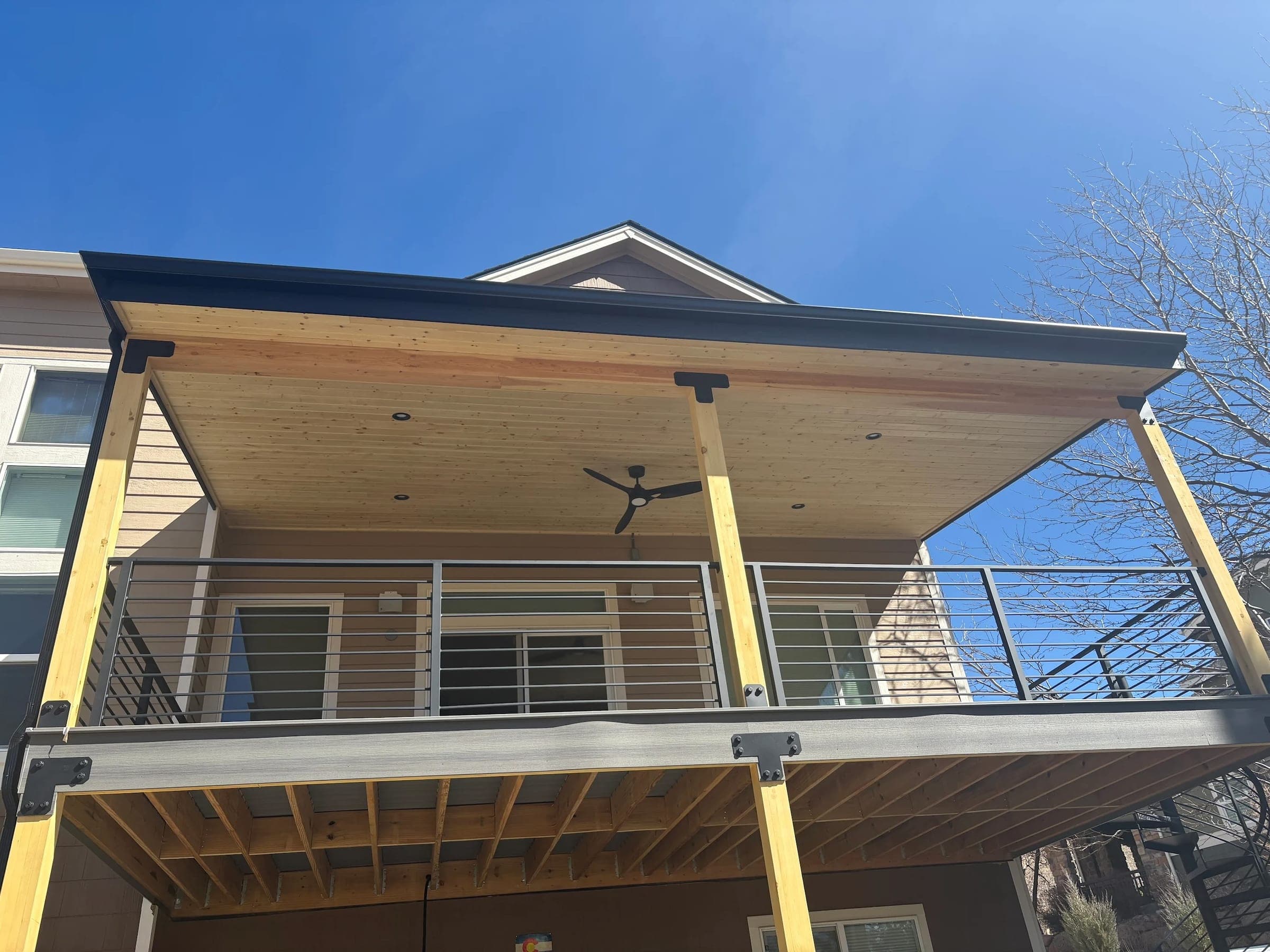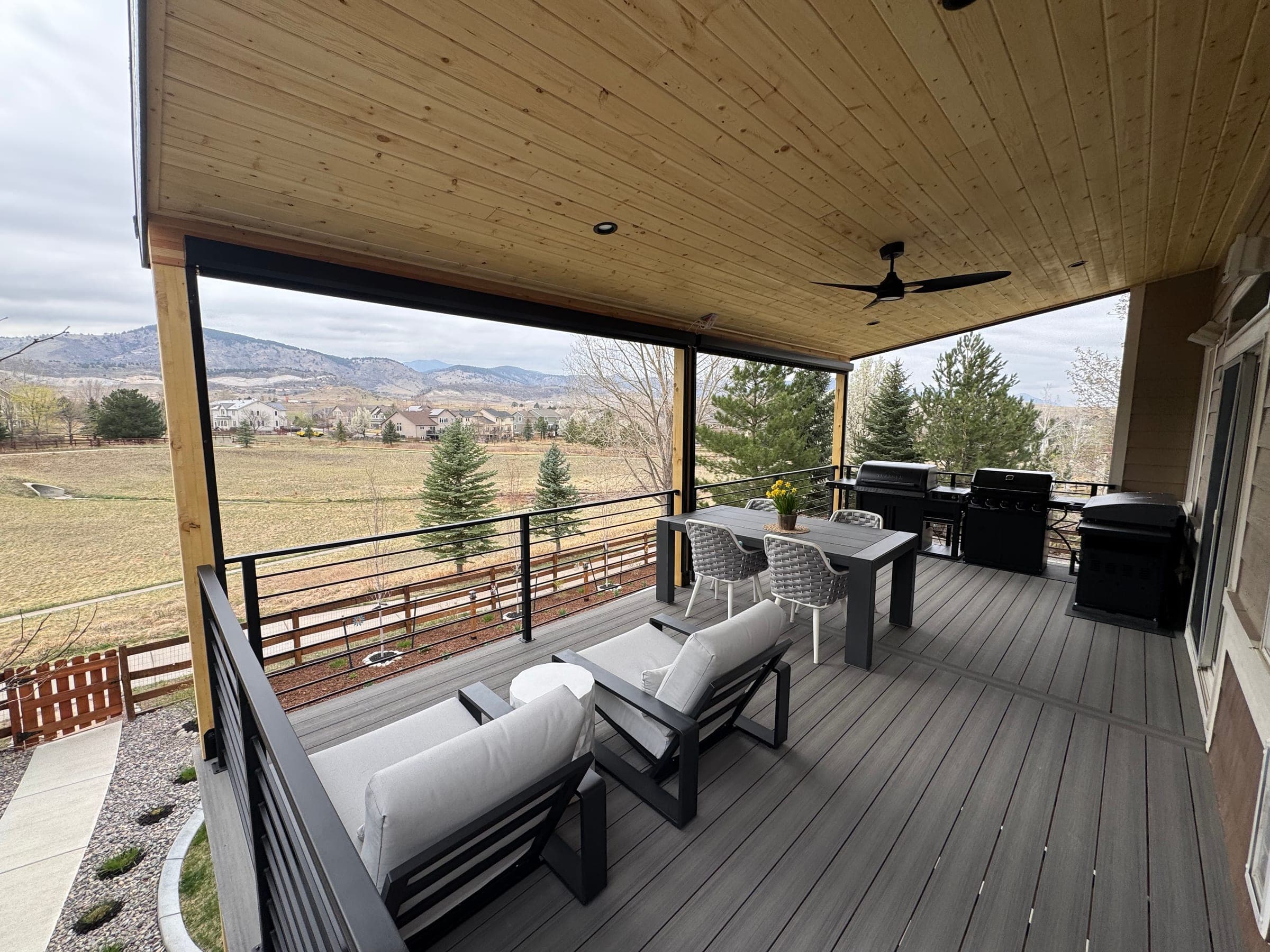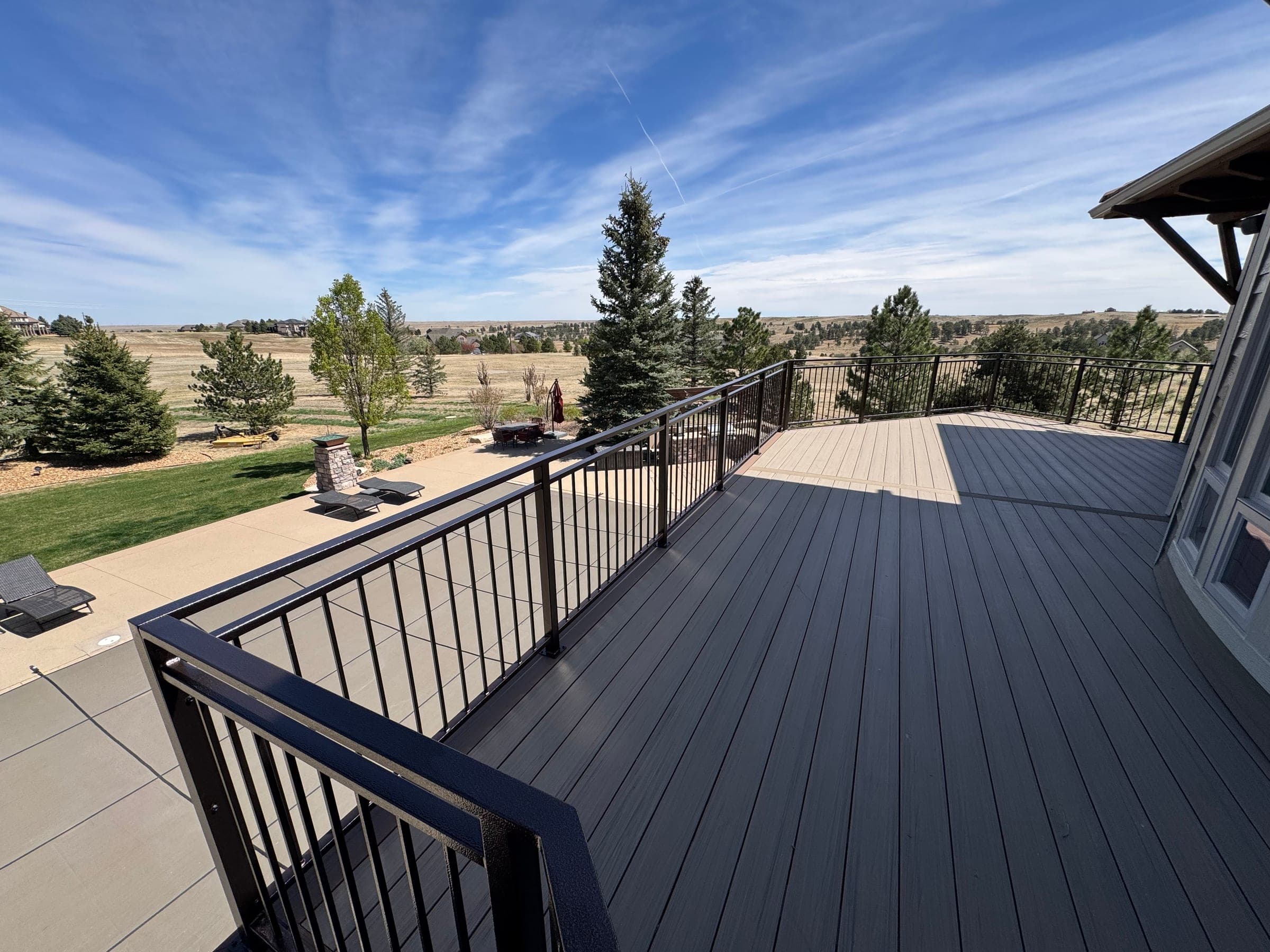
A wobbly railing is usually a loose post-to-rim connection, and re-anchoring it with through-bolts or tension hardware costs $150–$400 per post — often a single crew-day for the whole railing. The exception: if the framing moves with the post, or the post base is rotting, that's a structural problem needing an inspection before it needs hardware.
Why a wobbly railing actually matters
Any deck surface more than 30 inches above grade requires a guardrail; it has to stand at least 36 inches tall, keep openings under 4 inches, and resist a 200-pound load in any direction along the top rail. That last number is the one a wobbly railing fails. Two hundred pounds is an adult stumbling into it, a kid climbing it, a guest leaning back with a drink. A railing that rocks under your hand is nowhere near holding that. Our deck safety inspection guide puts the railing shake-test first.
What makes a railing come loose?
Three causes account for nearly all of it:
The post-to-rim connection — the usual suspect. Most wobbly railings trace back to where the post bolts to the deck frame. Wood shrinks and swells through Colorado's freeze-thaw cycles, lag screws work loose, and every lean on the rail levers the connection wider. Once there's play, every use makes it worse.
A rotted post base. Water sits where the post meets the decking, and over time the wood at the base goes soft. No amount of tightening fixes rot — there's nothing solid to bite.
Worked-loose balusters or rail sections. Sometimes the posts are solid and it's the infill that rattles — balusters that have shrunk out of their fasteners or a rail section flexing at its brackets. A code problem if gaps exceed 4 inches, but the cheapest of the three to fix.
What does each fix cost?
Denver-metro ranges for railing repair work:
| Fix | Typical cost | When it's the answer |
|---|---|---|
| Re-anchor posts (through-bolts / tension hardware) | $150–$400 per post | Solid post, loose connection — the common case |
| Refit balusters or a rail section | $150–$500 | Posts firm, infill rattling |
| Full replacement — composite or basic metal | $30–$60 per linear foot | Rot or damage in multiple posts |
| Full replacement — aluminum | $60–$90 per linear foot | Same, with a slimmer profile |
| Full replacement — cable rail | $80–$130 per linear foot | Replacing anyway, want the view |
| Full replacement — glass | $100–$150+ per linear foot | Replacing anyway, want all of the view |
The right fix follows the diagnosis. Loose connections on sound wood get modern tension hardware and through-bolts — stronger than the original lag screws, and usually done in a day. Rot in one post can mean a post swap; rot in several usually makes full replacement the better spend, since a new railing resets the clock on every connection at once. If you're pricing that route, our stairs and railings cost guide breaks the materials down.
When is a wobbly railing a structural problem?
Sometimes the railing is fine and the deck isn't. Grab the post and watch where the movement happens:
- The rim joist flexes with the post. The connection is tight — it's the framing behind it that's moving. That can mean a deteriorating rim joist or, worse, trouble at the ledger.
- The post base is soft, dark, or crumbling. Rot rarely confines itself to one post. Whatever wet the post base has likely been wetting the framing too.
- Hardware won't stay tight. If you've re-tightened the same post more than once, the wood has stopped holding thread. Bigger screws into compromised wood is not a fix.
Any of those means an inspection before anyone sells you railing hardware. On an older deck, sometimes the frame is the real project — where the honest comparison is repair versus replacement, and the real numbers on that are worth seeing before you sink money into a railing bolted to a failing frame.
Why fall is the time to do it
Railing-only jobs are quick — most are one crew-day, no excavation, no long permit cycle. Ideal fall projects: crews have room after the summer rush, and the railing gets solid before the icy season, when a grab at a loose rail on snowy stairs is exactly when it matters most.
If the railing is past fixing, our railing replacement cost guide breaks down every system per linear foot — and if your railing moves, tell us about it. We'll take a look — free structural inspection, and a written verdict on whether you need hardware, a post, or a harder conversation about the frame.