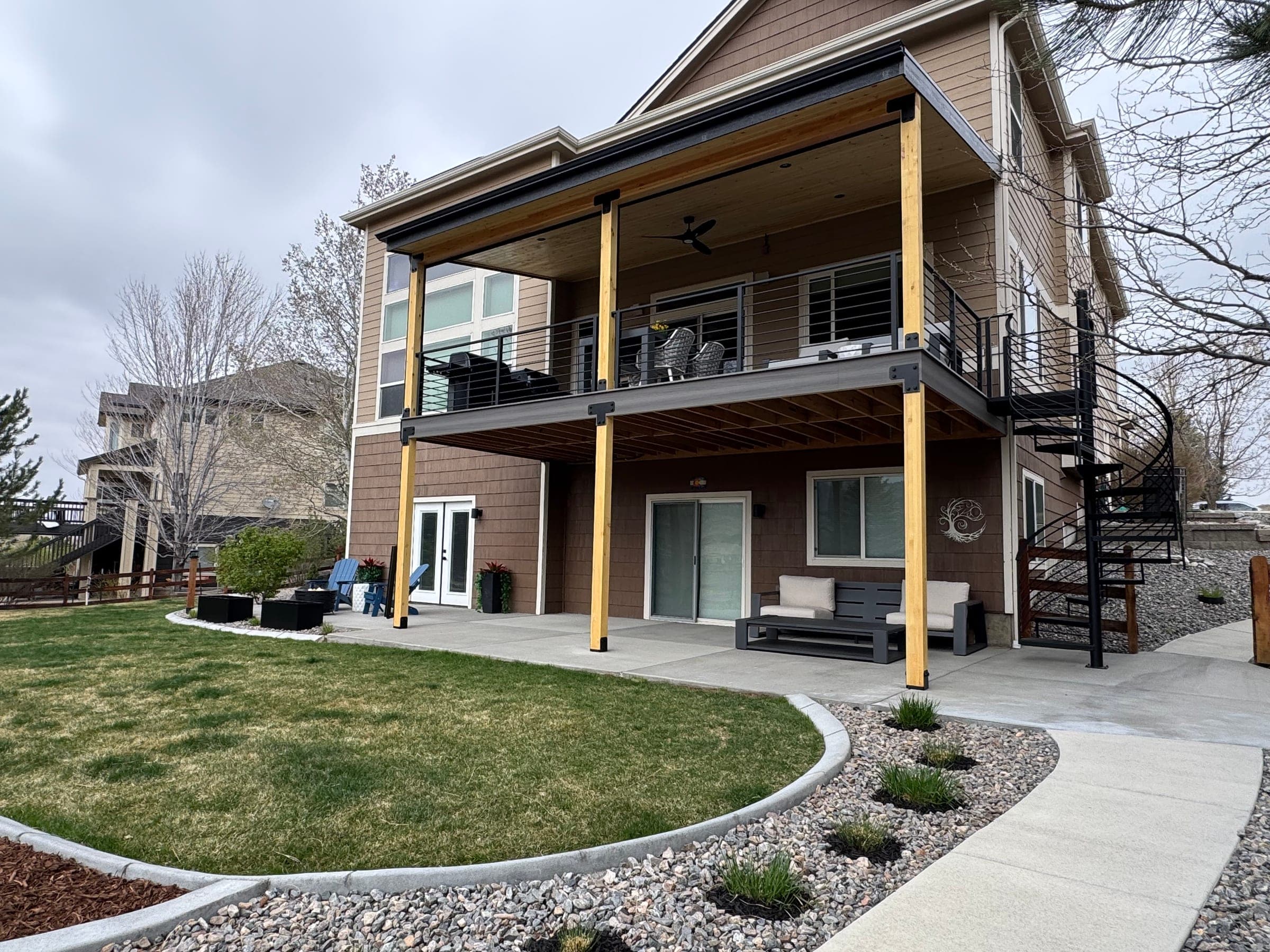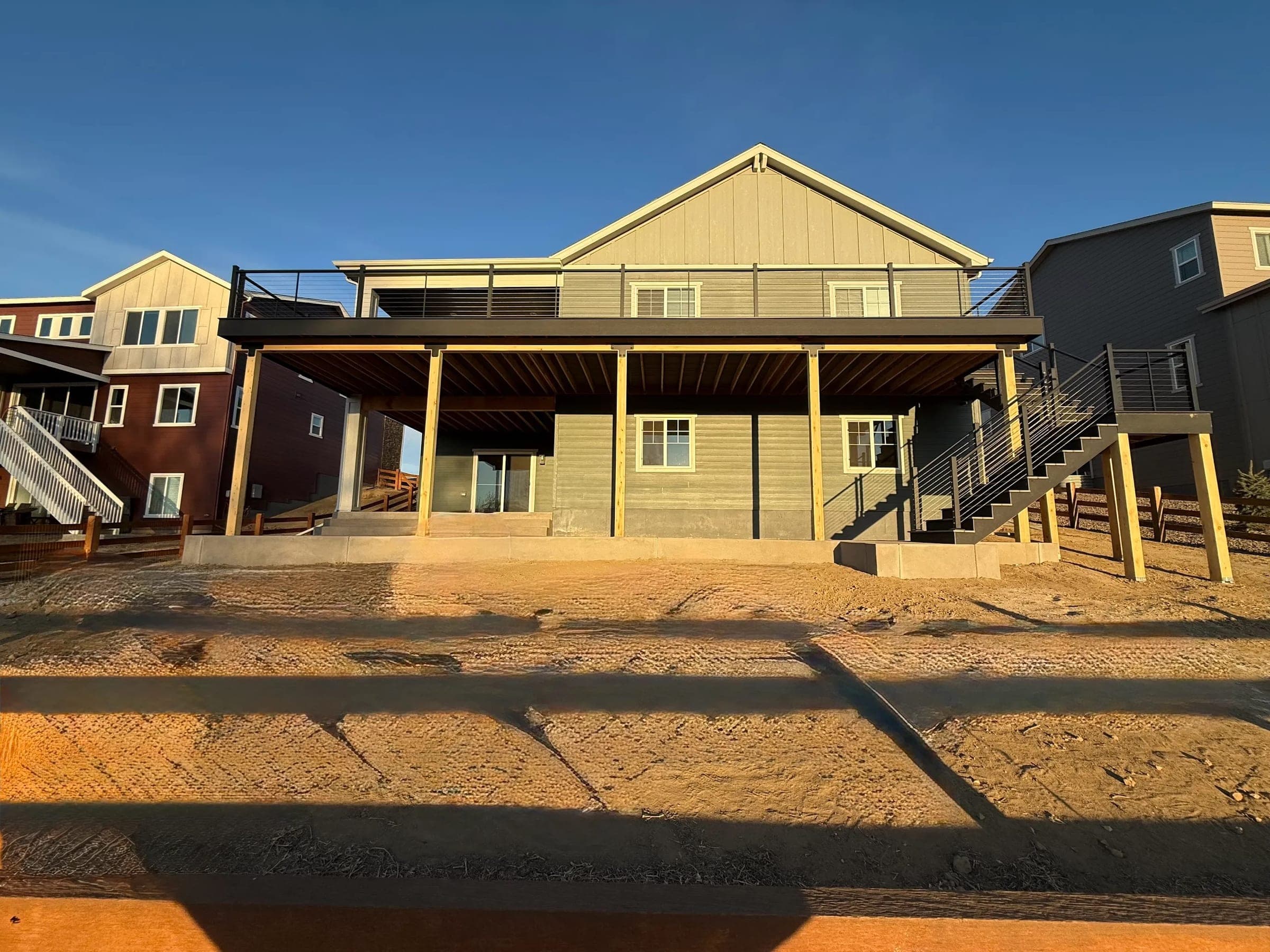
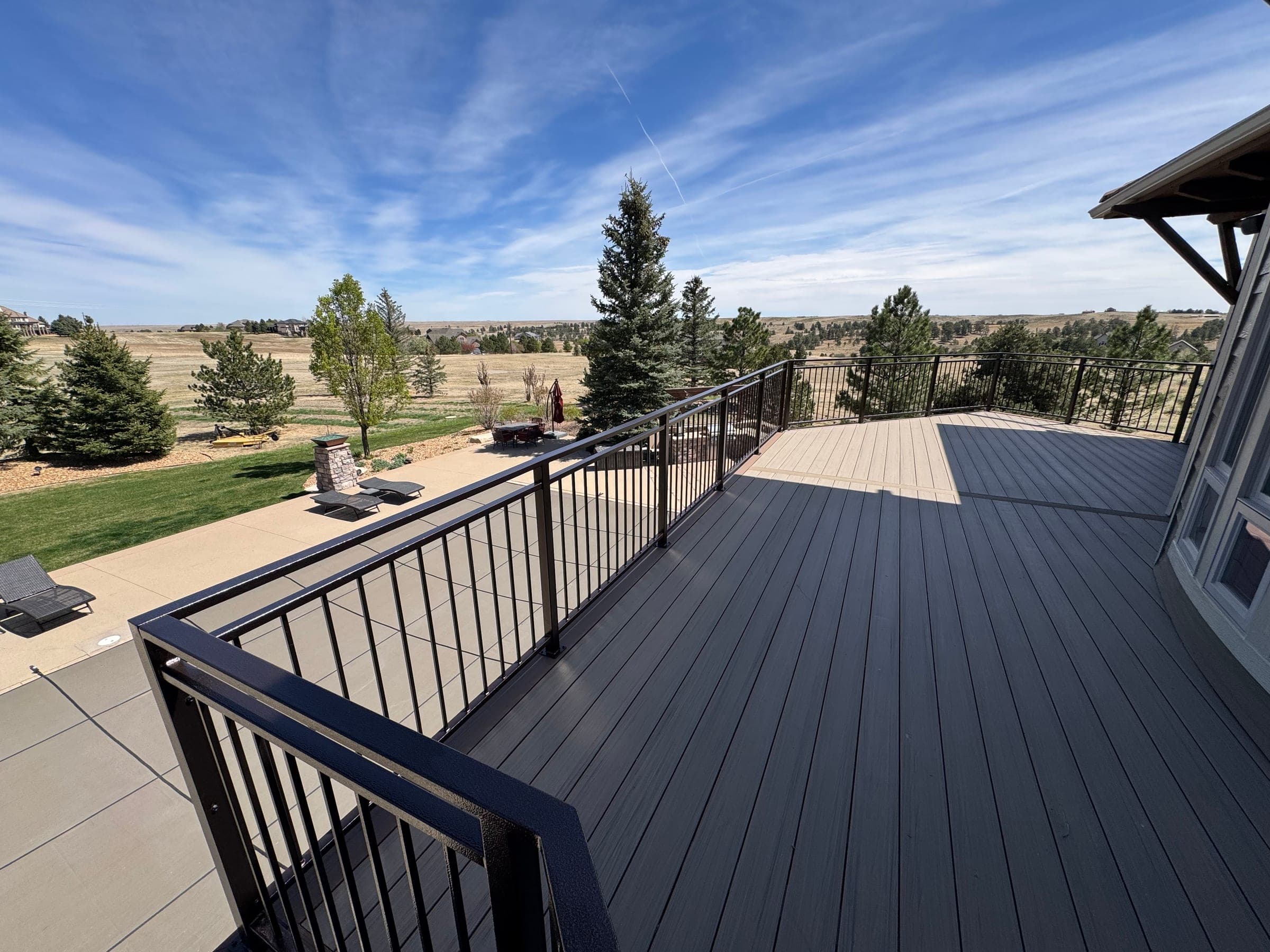
Building stairs off a deck in the Denver metro costs $1,500–$4,000 for a single flight in 2026 — about $150–400 per step installed. Railing runs $30–$60 per linear foot for basic composite up to $100–$150+ for glass, deck lighting adds $1,200–$3,000, and a second level adds $6,000–$20,000 or more.
When homeowners get their first deck quote, the surprise is rarely the deck boards. It's the options — the stairs, the railing style, the lighting, the second level — that quietly add thousands to the number. None of it is padding — it's real material and labor. But you can't make good trade-offs without knowing what each piece costs, so here's what the common add-ons run in the Denver metro in 2026.
The short version
Here's roughly what the common options add on a typical backyard deck. Ranges depend on size, height, and material — details below.
| Add-on | Typical added cost |
|---|---|
| A run of stairs | $1,500–$4,000 |
| Upgraded railing (over basic composite) | $2,000–$8,000+ |
| Deck lighting (post caps, stair risers, under-rail) | $1,200–$3,000+ |
| A second level or tier | $6,000–$20,000+ |
| Built-in benches or planters | $600–$2,500 each |
| Picture-frame border | $800–$2,500 |
| Skirting / lattice below the deck | $1,000–$3,500 |
Stairs and steps
Stairs are the most underestimated line item on a deck — their own little structure: footings under the stringers, the stringers themselves, treads, risers, and, critically, a code-compliant handrail on the way down.
What moves the number:
- Height off the ground. More vertical rise means more steps, and a tall deck may need a mid-run landing — essentially a small deck of its own.
- Width. Code minimum is 36 inches; a generous 5- to 6-foot-wide stair reads as an architectural feature and costs more than a builder-minimum run.
- Wraparound or cascading steps. Wide, open "waterfall" steps off a corner look fantastic but use far more material and cutting than a straight flight.
- Spiral staircases. On a second-story deck with no room for a straight run, a spiral stair saves footprint — but an exterior-rated kit plus footing and landing usually costs more than the flight it replaces, and it's an awkward climb with a grill in your arms. Last resort, not an upgrade.
- Railing on the stairs. A graspable handrail is code, and the transition from deck guardrail to stair rail is fussy, skilled work — one of the details separating a pro install from a weekend one.
Ground-level decks needing only a step or two are far cheaper, stretching a budget further than a walkout.
Railings — the biggest swing
After deck size, railing is the single largest variable in a quote. Basic composite is economical and often close to "included" in a composite deck price; everything above that is where the number climbs.
| Railing type | Typical installed cost (per linear foot) |
|---|---|
| Composite / basic metal | $30–$60 |
| Aluminum (powder-coated) | $60–$90 |
| Cable rail (stainless steel) | $80–$130 |
| Glass panel | $100–$150+ |
Most decks land in the $30–90 per linear foot band — composite through aluminum. Cable and glass are the view-premium tier above it: on a mid-size deck with 60–70 feet of railing, moving up to them can add $4,000–$8,000 on its own.
It's not just looks. Cable and glass get the pickets out of your sightline on a foothills or open-space view — you're paying for the view, not the rail. Aluminum is the low-maintenance workhorse that won't rust or need refinishing in our sun. Wood can undercut all of them on day one, but at this altitude it wants the same clean-and-restain every 2–3 years as a wood deck, and the rail weathers first. Our railings page breaks down how each system ages here.
What a new stair railing costs by itself
A common question from people who aren't building a new deck: what does a new stair railing cost on its own, or to replace one that's already there? Maybe the old rail is wobbly, maybe an inspector or insurance appraiser flagged it, maybe it simply looks like 1994.
As a standalone job, expect $900–$2,500 for a typical single flight, installed — composite or powder-coated aluminum on sound stairs at the low end, cable rail or stairs needing rebuilt posts and blocking at the high end. Per linear foot, stair railing prices 20–40% above the same system on the flat deck, because every piece is cut and fitted on an angle, and the code details — graspable profile, 34–38-inch height above the nosings, a 4-inch-sphere infill limit — are fussier on a slope.
Installation is labor-heavy for its size: materials are modest — a kit, a few posts, brackets, hardware — while labor goes into removing the old rail, setting or re-blocking posts, and cutting every section on the angle. What moves the number: the system (composite/aluminum vs. cable/glass), length and landings, whether the posts and stringers are sound or need structural repair first, and whether the rail has to match an existing deck guardrail. Two notes: if the stair structure itself is failing, this becomes a stair-repair quote — a rail is only as solid as what it bolts to. And if the deck's main guardrail is the same vintage, price replacing both at once; the mobilization is shared and the per-foot number drops.
A second level or a change in elevation
Multi-level decks and tiers are where budgets really move. A second level or a separate tier can add $6,000–$20,000 or more, because you're duplicating the expensive, invisible parts — footings, posts, beams, joists — plus the stairs to connect the two, plus more guardrail around more perimeter.
The same logic applies to raising a deck off the ground at all. Every foot of height adds taller posts, deeper structural requirements, guardrail (anything over 30 inches needs it by code), and usually a full run of stairs. Which is why a walkout or second-story deck costs meaningfully more than a ground-level one of the same square footage — a point we make in our full composite deck cost guide.
Lighting
Deck lighting is the highest-impact option for the money. A typical low-voltage LED package — fixtures, wiring, and a 12V transformer — runs $1,200–$3,000, with extensive under-rail runs pushing past that:
- Post-cap lights — soft ambient light on the railing posts.
- Recessed stair-riser lights — the safety upgrade that also looks the most custom.
- Under-rail and under-bench strips — a low glow that makes the deck usable after dark.
Lighting is dramatically cheaper to install during the build, while the framing is open and wiring can be concealed. Adding it later means fishing wire through a finished deck. If you think you'll ever want it, run the wiring now even if you hold off on some fixtures.
Built-ins and the finishing details
The smaller options add character and cost in the hundreds-to-low-thousands each:
- Built-in benches — $600–$1,800 each, more with hidden storage or a back.
- Planters — $500–$1,500 each, integrated into the framing.
- Picture-frame border — a perimeter board hiding the cut ends for a finished look; $800–$2,500 depending on size and inlay.
- Skirting or lattice below an elevated deck — $1,000–$3,500 to close off the space underneath.
- Fascia and matching trim — the wrap that makes the framing disappear; a few hundred dollars in material, but a real difference in the finished look.
None of these are necessary, but all are cheaper during the build than retrofitted later, once the framing's closed and the crew's gone.
Code, permits, and why the cheap bid is cheap
Stairs and railings are the parts of a deck codes regulate most tightly — and where low bids cut. Risers max out at 7¾ inches and must match within 3/8 inch, treads run at least 10 inches deep, guardrails resist a 200-pound load at the top, and stair rails need a graspable profile, not just a flat 2x6 on edge. Front Range building departments inspect all of it — usually at rough framing and again at final — and a stair or rail that fails gets rebuilt, not touched up. Our permits & code guide collects every number an inspector checks.
If the stairs you have are the problem rather than a new flight, our guide to repairing a rotting deck stair stringer covers when a sister fixes it and when the flight gets rebuilt.
So when one quote for the same stairs is half the other, ask what it includes. Footings under the stringers or just pads on dirt? Metal stringer hangers or toenailed lumber? A listed, tested railing system or shop-made pickets? None of those are gotchas — they're the difference between the numbers, and any good builder will answer them line by line.
How it stacks up: a real example
Take a 350-square-foot capped-composite deck. The base build — a mid-tier board, standard substructure, basic composite railing — might land around $16,000. Now add the options a typical homeowner actually wants:
- A wide run of stairs to the yard: +$3,000
- Upgrade to aluminum railing for the view: +$3,500
- Stair-riser and post-cap lighting: +$2,500
- A built-in bench and a picture-frame border: +$2,000
That's about $27,000 — the same deck, roughly 70% more, entirely in options. Neither number is wrong. This is why we itemize every quote: so you can see exactly what each choice costs and decide what's worth it to you, rather than discovering it buried in a lump sum.
The bottom line
Options are where a deck becomes your deck — and where budgets quietly grow. For the deck itself, our deck cost calculator gives a 2026 planning range in thirty seconds; the options above stack on top of it. Stairs and railing choice move the number most, so decide those first; lighting is the best value per dollar; and a second level is a structural project, not a trim upgrade. Whatever you're weighing, get it itemized — a bid that spells out each add-on lets you trade a fancier rail for lighting, or skip the skirting to fund the stairs.
Want a real, itemized number for your deck and the options you're considering? Reach out for a free estimate. We'll walk the site, talk through the trade-offs, and give you a fixed quote — not a ballpark.