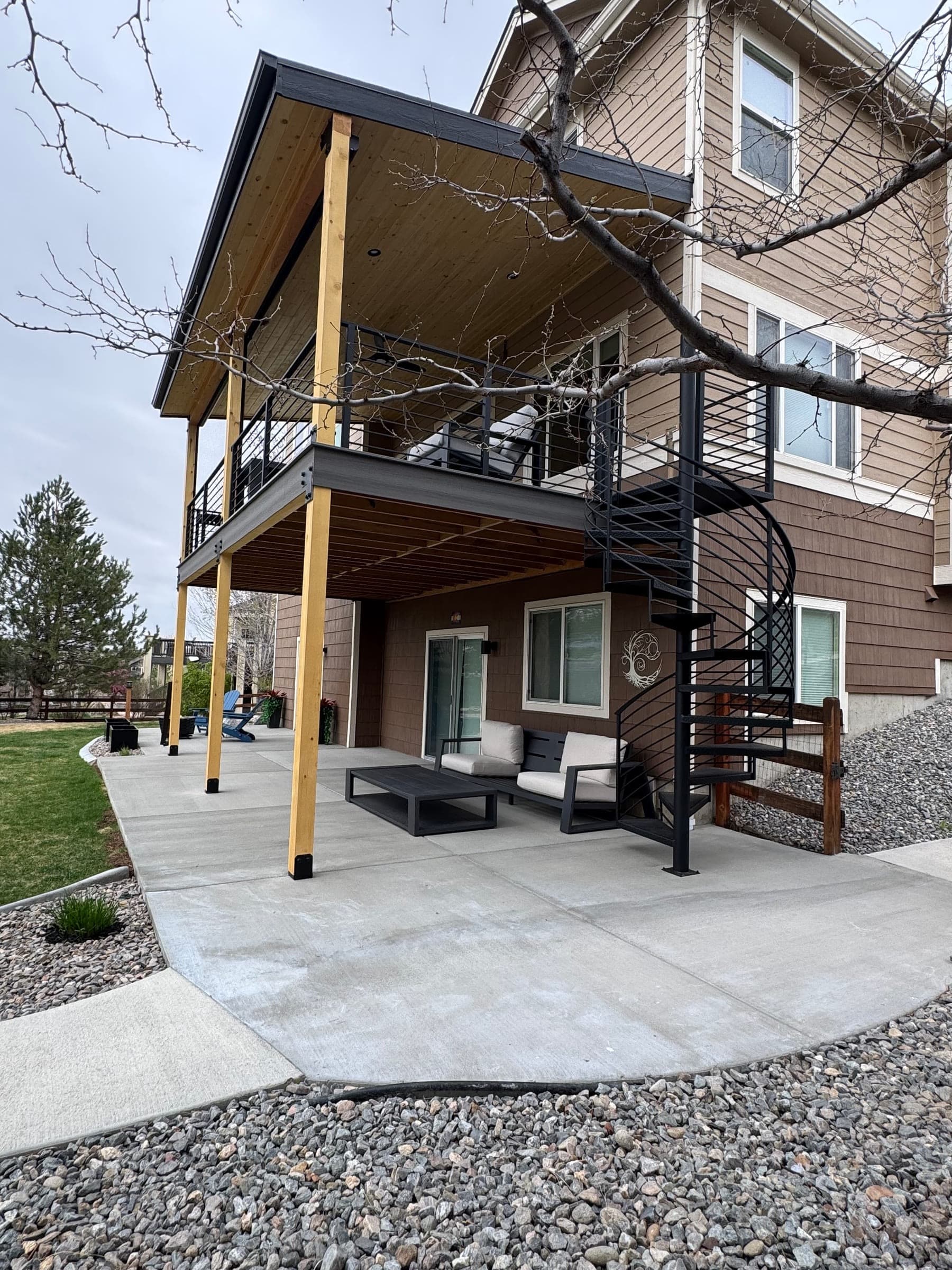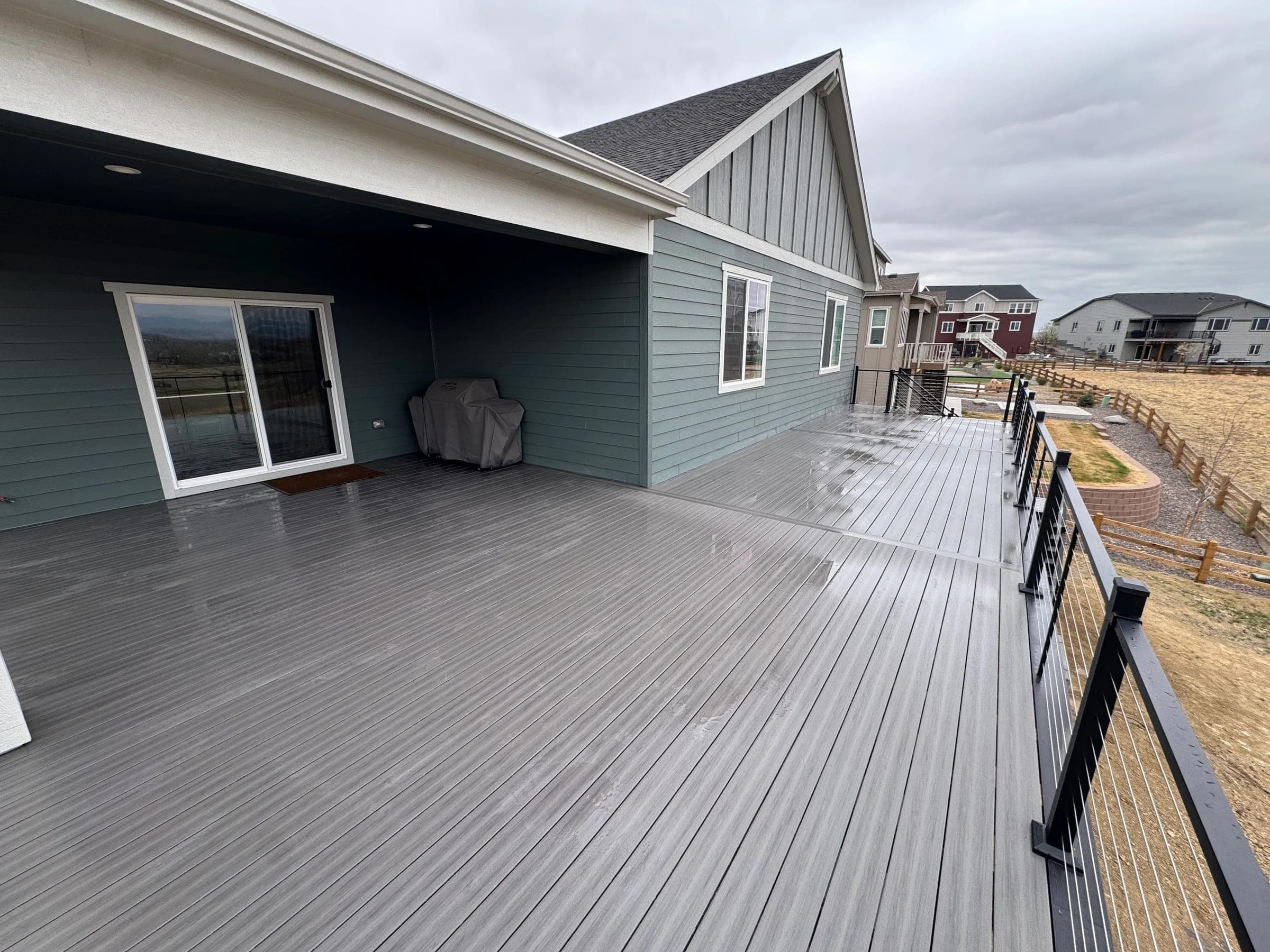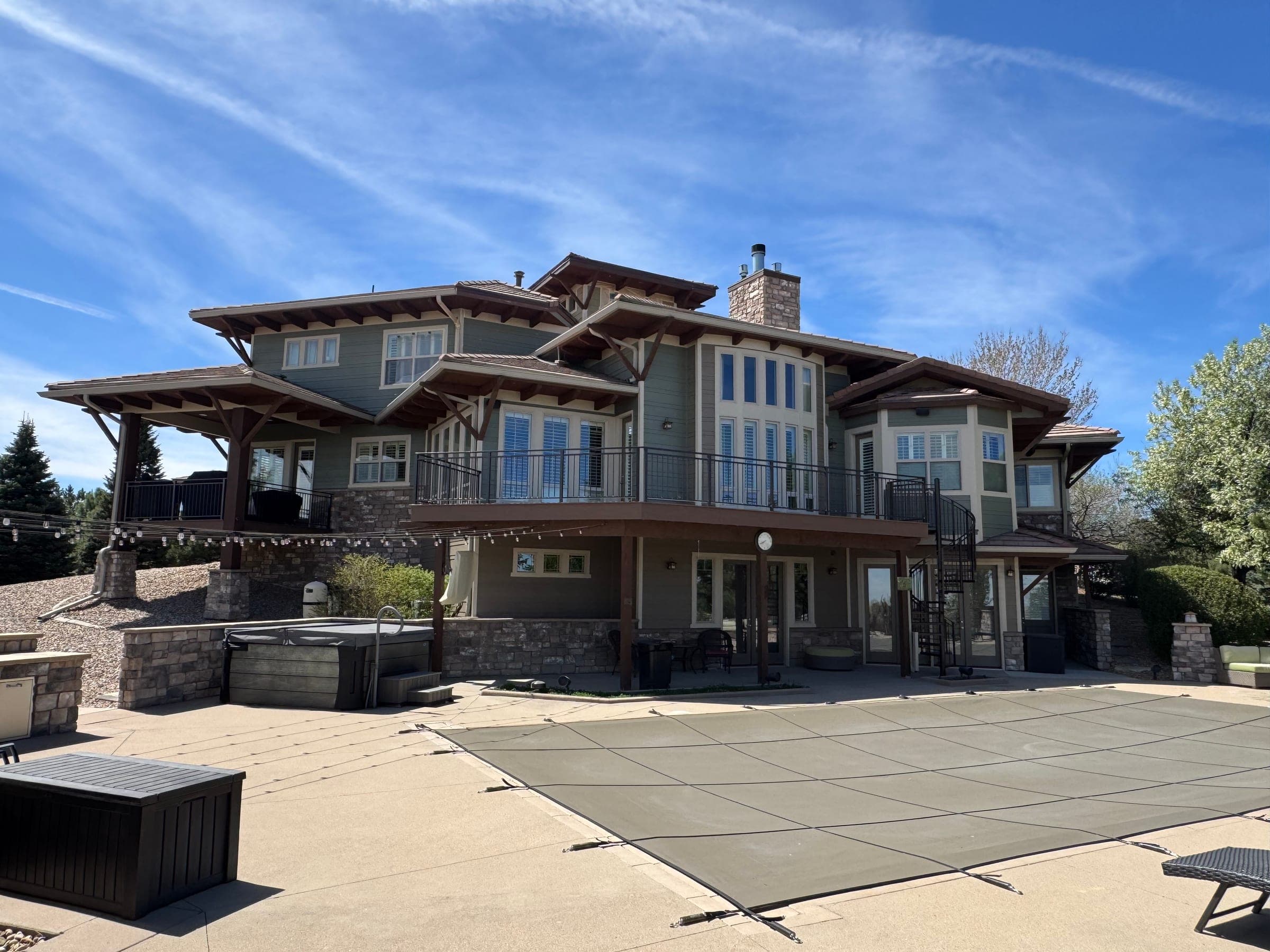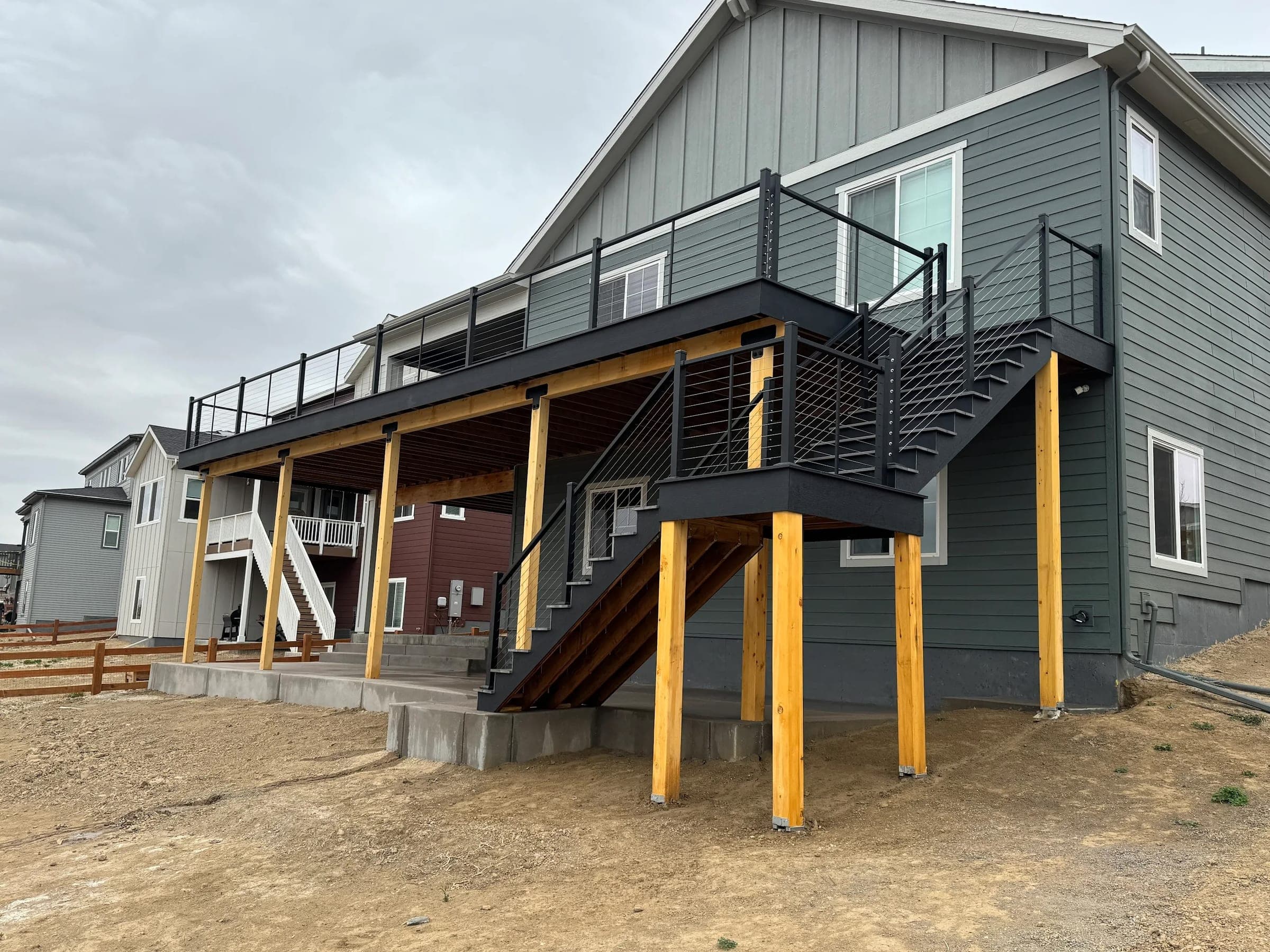
Stringer rot almost always starts in one of two places: the bottom few inches, where the stringer sits on soil or concrete and pulls up moisture, or at the tread-and-riser notches, where water pools in the corner and never dries. If only one stringer shows rot, at only one point, sistering it is a fair fix. If more than one stringer is affected, or the rot shows up at more than one point, replace the whole flight — in the Denver metro, a $1,500–$4,000 job.
Stairs take more abuse than any other part of a deck — closer to grade, closer to snowmelt, every notch a place for water to sit. By the time you can see or feel a problem, the rot has usually been working for a few seasons already.
How do you tell if a stair stringer is rotted?
Check two spots with a flashlight and screwdriver — nearly all stringer rot starts there:
- The bottom end. Wherever the stringer meets grade, concrete, or a paver, push the screwdriver tip into the wood. Sound lumber resists; rotted wood sinks or crumbles. Watch for dark staining at the base, insect activity, or a stringer visibly settled compared to its neighbors.
- The tread and riser notches. A notch with no drainage holds water in its inside corner like a tiny cup. Probe that corner partway up the flight, not just at the ends.
Other tells: a bouncy or soft tread, a gap opening at the ledger, fasteners backing out, or a stringer that flexes on its own.
What causes deck stairs to rot?
Four problems account for most failures — all water sitting where it shouldn't:
- Stringers bearing directly on soil. Set into dirt, or on a paver with no real drainage, a stringer sits in mud through spring runoff. Wood and standing moisture don't coexist for long.
- No landing pad or footing. Without a real landing under the stair, the stringer's end grain becomes the de facto foundation.
- Untreated or unsealed cut ends. Pressure-treated lumber is only treated at the mill. Every stringer gets field-cut to set its angle, exposing raw wood at the end — a rot starter unless it gets a field preservative.
- Notches with too little wood left behind them. A stringer notched for both tread and riser loses material at that corner. Cut too close to the minimum, and the remaining "throat" is thin, shaped like a shelf that holds water against end grain.
Can you sister a stringer, or replace the whole stair?
Sistering — fastening a new piece of lumber alongside the damaged one — works when the damage is contained:
- Sister it when only one stringer shows rot, the rot is isolated to one point (usually the base), the other stringers and the landing are sound, and there's enough solid wood above the damage to anchor the sister properly.
- Replace the flight when more than one stringer has rot, a single stringer is rotted at more than one point, the stringers were undersized or too thinly notched to begin with, the stair was never on a proper footing, or the riser/tread geometry is out of code (a sister can't fix that). An inspector won't pass a sound sister next to an out-of-code stringer.
A sister doesn't fix the cause, either. If the base rotted because it sat on bare dirt, sistering it without adding a pad just buys the new piece the same slow death.
What does it cost to fix or replace deck stairs in Denver?
A full stair rebuild — stringers, treads, risers, footing, and a code handrail — runs $1,500–$4,000 installed in the Denver metro, or about $150–$400 per step. That figure holds across our stairs and railings cost guide and our general repair pricing.
Sistering a single stringer is smaller; there's no separate published price, but the closest comparison is joist sistering at $150–$400 per member. Expect stringer work toward the higher end — it carries more load and usually needs temporary shoring. Either way, sistering is cheap next to a rebuild.
What does code require when you rebuild deck stairs?
Once you're replacing more than a stringer or two, you're building to current code, not the code the stair was originally built under. Front Range jurisdictions work from the 2021 International Residential Code (IRC) — Section R311.7 for stairways, R312 for guards — with the American Wood Council's DCA6 prescriptive deck guide as the standard reference for stringer sizing:
| Requirement | Code minimum | Note |
|---|---|---|
| Max riser height | 7¾" | Risers in one flight can't vary by more than 3/8" |
| Min tread depth | 10" | Measured nosing to nosing |
| Min stair width | 36" | Clear width |
| Handrail | Required on at least one side when the flight has 4 or more risers | Graspable profile (roughly 1¼–2" round, or an equivalent shape), 34–38" above the nosing |
| Guard (open sides) | Required where the stair or deck surface exceeds 30" above grade | 36" minimum height; openings can't pass a 4" sphere |
| Landing at the bottom | Required | At least 36" deep in the direction of travel, and at least as wide as the stair |
| Stringer spacing | Sized per DCA6 span tables, not one IRC number | Commonly 16" on-center for solid wood treads, tightening toward 12" for composite or thin treads, per the decking manufacturer's span rating |
| Lighting | An artificial light source is required at the stairway | Typically a fixture near the top landing, switched from inside the house unless it's on a photocell or motion control |
Treat this as a baseline, not the final word. Denver-metro towns adopt the IRC with local amendments, and the building department reviewing your permit has the final say. Our guides to permitting in Centennial, Arapahoe, and Douglas County and the south-metro permit and code guide cover the jurisdiction-by-jurisdiction differences a table can't.
Can you fix a stair stringer yourself?
It depends which repair. Sistering a single, accessible stringer is within reach for a confident DIYer: cut a same-size pressure-treated piece, fasten it to sound wood on both sides of the damage with structural screws, and land it on solid ground or a real pad. Shoring the stair safely while you work is the part most people underestimate.
Replacing a whole flight is bigger than it looks — matching riser-and-tread geometry to code, building a real footing and landing, and in most jurisdictions pulling a permit. DIY rebuilds we get called to fix usually fail on what doesn't show: a short landing, a footing never poured, a notch with no throat left. If the rot is hard to reach, or the whole flight needs replacing, hiring it out is the honest call — this is where your family trusts its footing on ice.
Not sure which situation you're in? Our safety inspection guide covers the rest of the deck, and our deck anatomy guide breaks down how stringers and framing fit together.
Get a straight answer before you cut anything
A rotted stringer isn't worth guessing — sister the wrong board and you've spent money without fixing the problem. Schedule a free inspection and we'll tell you honestly whether you're looking at a one-stringer fix or a full rebuild, with a real number attached. We handle deck repair and railings across the Denver metro and Colorado Springs, stairs included.