Yes — decks get built straight through Colorado winters, and the physics is more cooperative than most homeowners assume. Footings, concrete, and framing all work in the cold with standard practices; the trade-off is a modest weather buffer in exchange for quiet permit counters, open crew calendars, and a deck that's finished before the first warm weekend.
This is the operational companion to our post on the best time to build a deck in Colorado — that one covers when to sign; this one covers how the build itself works once the temperature drops.
Don't the footings freeze?
No. Deck footings in Colorado go below the 30–36-inch frost line in every season, because soil below that line doesn't freeze. Winter digging through the frozen top layer is slower than October digging — a few extra hours of excavation, not a canceled project.
Concrete cures fine in cold weather with standard practices the industry has used for decades: curing blankets over the fresh pour, mix adjustments for temperature, and timing pours for the right window. This isn't exotic — it's how commercial construction runs all winter in Denver.
What does winter actually change on a build?
Less than you'd think:
| Task | Summer | Winter reality |
|---|---|---|
| Permit review | 4–8 weeks in the spring pile | 1–3 weeks, no backlog |
| Footing excavation | Straightforward digging | Slower through frozen top layer |
| Concrete pour | Standard cure | Blankets and mix adjustments — routine |
| Framing | No temperature sensitivity | No temperature sensitivity |
| Composite install | Boards near full expansion | Boards contracted — gapping set for install-day temp; done on dry days |
| Crew availability | Booked weeks out | Calendar room |
Framing doesn't care about cold. Lumber, structural screws, and joist hangers go together the same at 20°F as at 80°F.
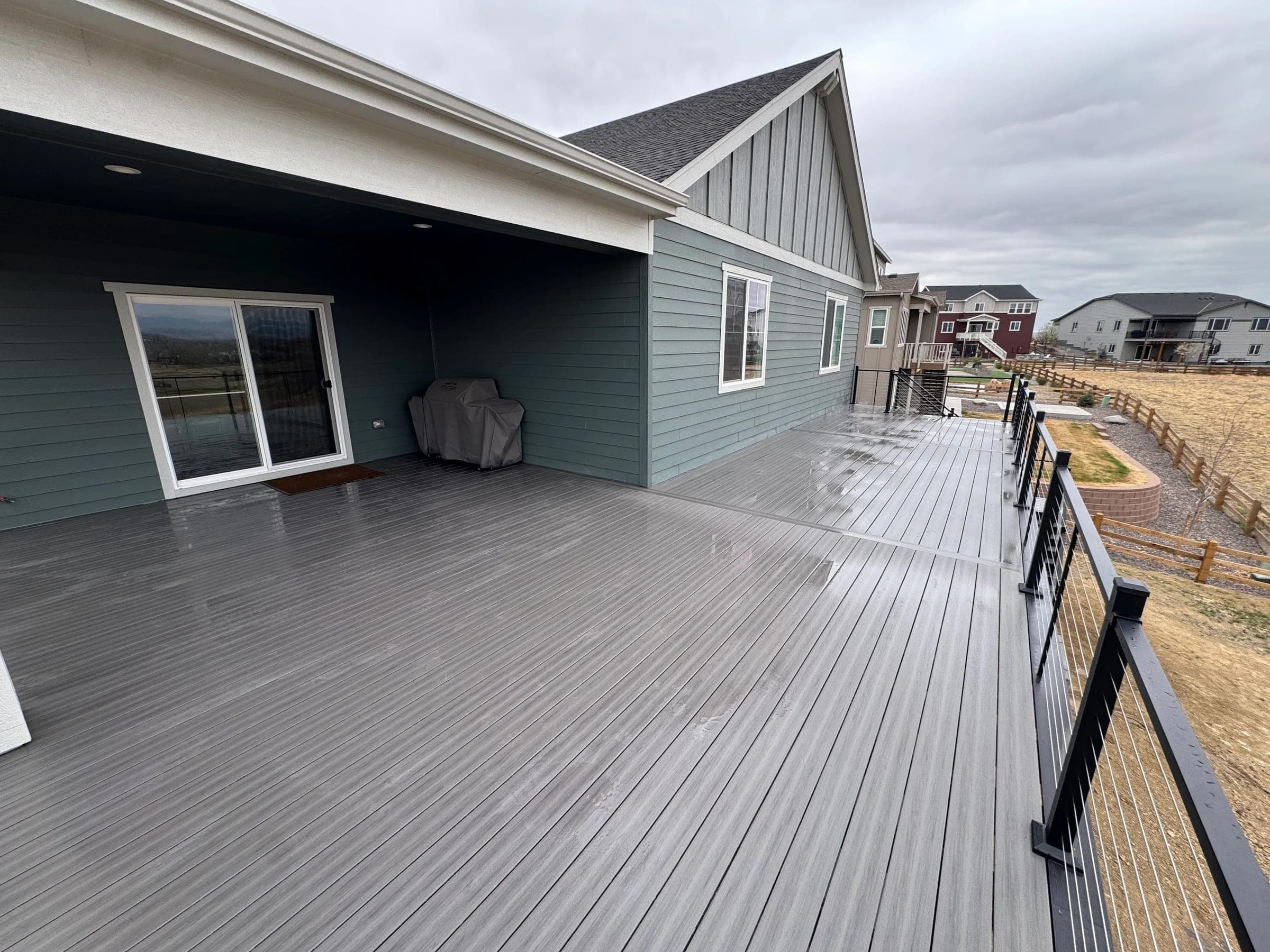
Composite is where the pro detail lives. Composite boards contract in cold and expand in heat, so the gap between boards has to be set for the temperature on install day — space it for summer and it'll be too tight by July. Manufacturers publish the numbers; pros use them; DIYers routinely don't, and the result shows up six months later. In single-digit temps, boards get more brittle, so handling is more careful and installs wait for dry days.
What actually pauses a winter build?
Two things: active snow on build days and hard-frozen ground slowing excavation. Neither cancels a project — they stretch it. Plan for a buffer, not a cancellation: some built-in slack for storm days, the same way you'd plan around afternoon thunderstorms in a July build. Our process builds that buffer into the schedule up front, so a snowy week is an expected event, not a surprise.
What do you get in exchange?
Three things that spring builders don't:
- Quiet permit counters. Winter reviews run 1–3 weeks with no spring backlog. The same submittal in April joins everyone else's April idea.
- Crew calendar room. Winter is when the schedule has air in it, which means your project starts when it's supposed to instead of six weeks after.
- Sequencing. A deck signed in December is done before the first warm weekend — instead of being a napkin sketch during one. If you're still working out budget, the Denver deck cost guide has current numbers to plan against.
What about the small stuff?
Winter is prime season for it. Repairs, railing swaps, and patio covers are one-to-two-week projects that fit neatly between storms — most need only a dry stretch, not a warm one. If your fall walk-through turned up a wobbly post or a soft board, book it now instead of joining a spring waiting list.
The short version
Winter doesn't stop deck building in Colorado — it just changes the details. Get in touch for a free consultation: we'll walk the site, talk through a realistic timeline with the weather buffer built in, and give you real dates from permit to final walkthrough. The spring rush will still be there in April. Your finished deck could be too.