
Most deck pricing online quotes materials only — then the real bids land at double. Here's the honest math, using manufacturer material data plus what installation actually adds.
Step 1 — Materials
Composite decking boards (Deckorators, Trex, TimberTech) run roughly $8–14 per sq ft for the boards themselves. Add the substructure (pressure-treated framing, footings, hardware) and railing, and all-in materials land around $20–30 per sq ft for a typical composite deck.
Step 2 — Add 50–100% for installation
Industry-wide, labor runs 40–60% of a finished deck's total cost — professional installation adds $15–35 per sq ft on top of materials. A $12,000 materials list is a $18,000–24,000 finished deck. Height, slope, access, and design complexity decide which end you land on.
What that means by deck size
Installed composite, single level, with railing — national data; Front Range labor tends toward the upper half.
The 2025 Zonda Cost vs Value report puts the national-average 16×20 composite deck addition at about $25,000 — and wood at about $18,000.
What your budget builds
Real Haka projects, typical of what each range delivers in the Denver metro:
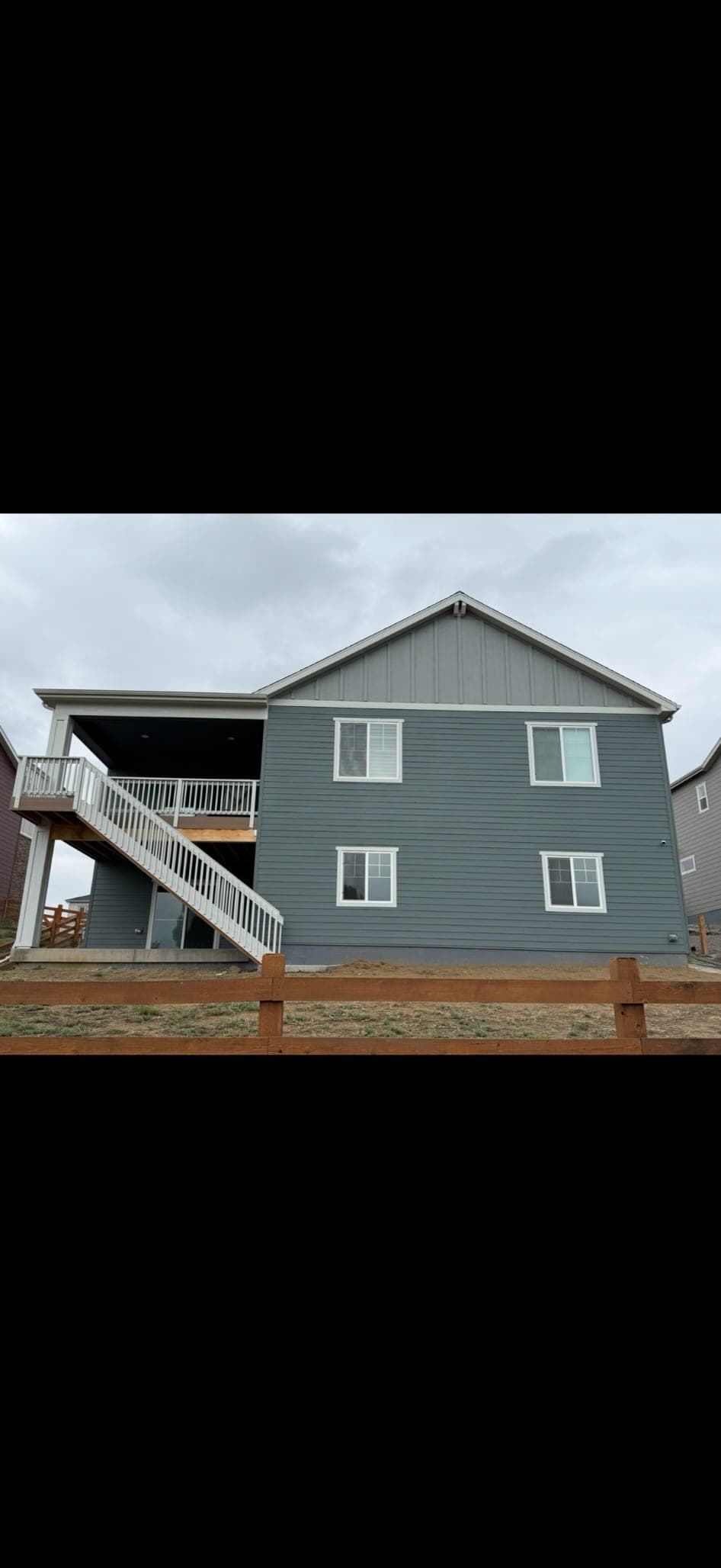
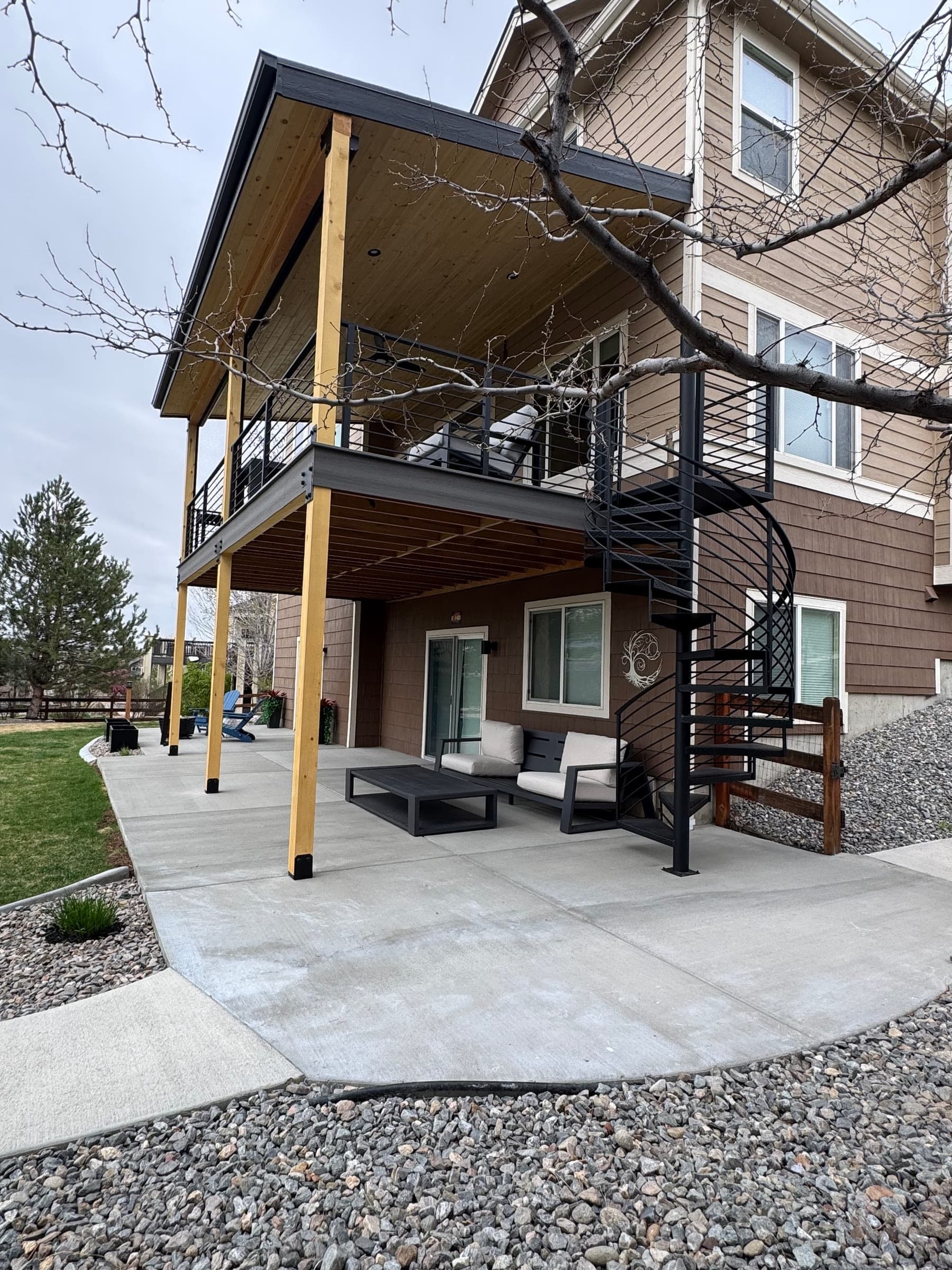
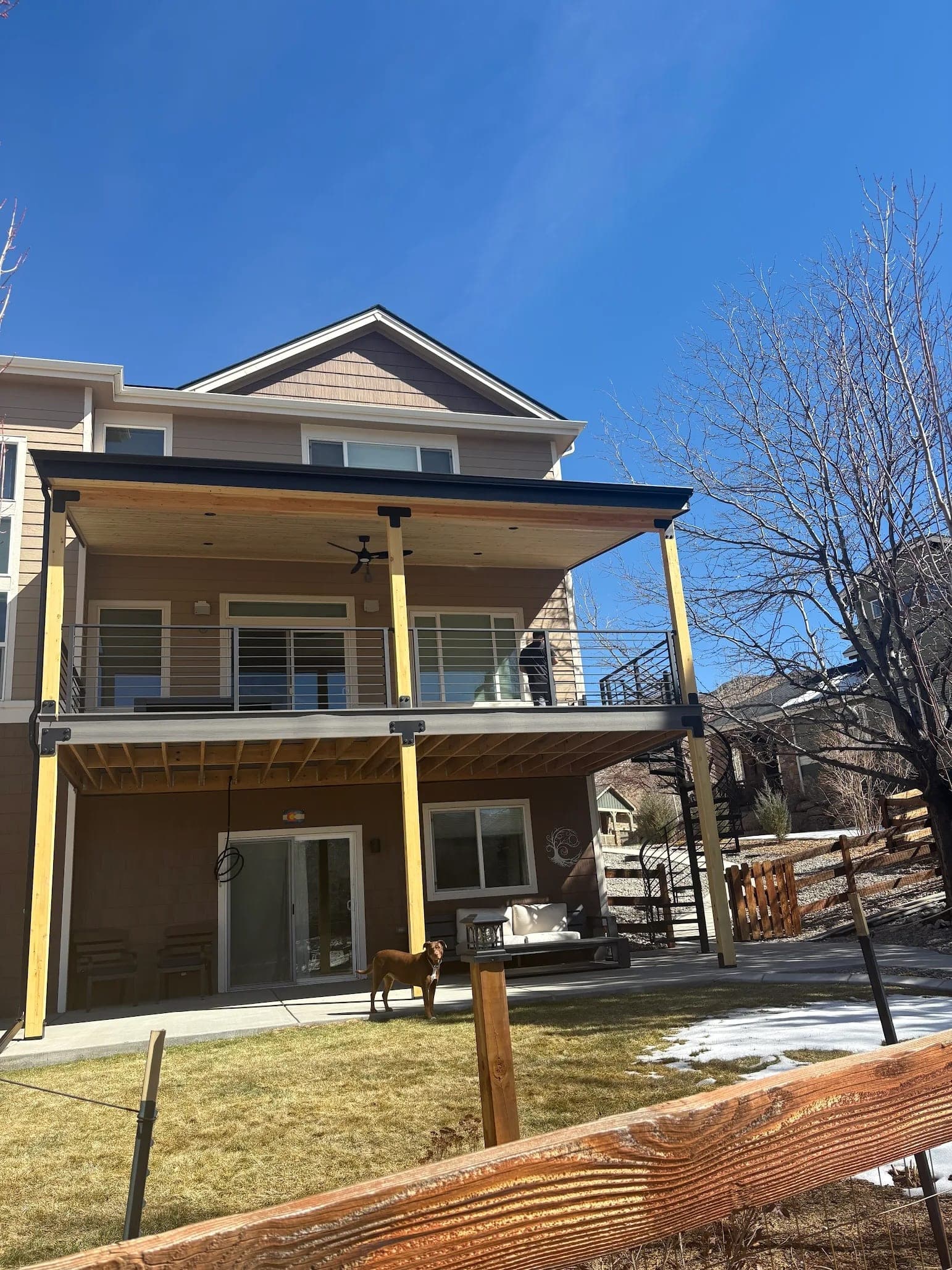
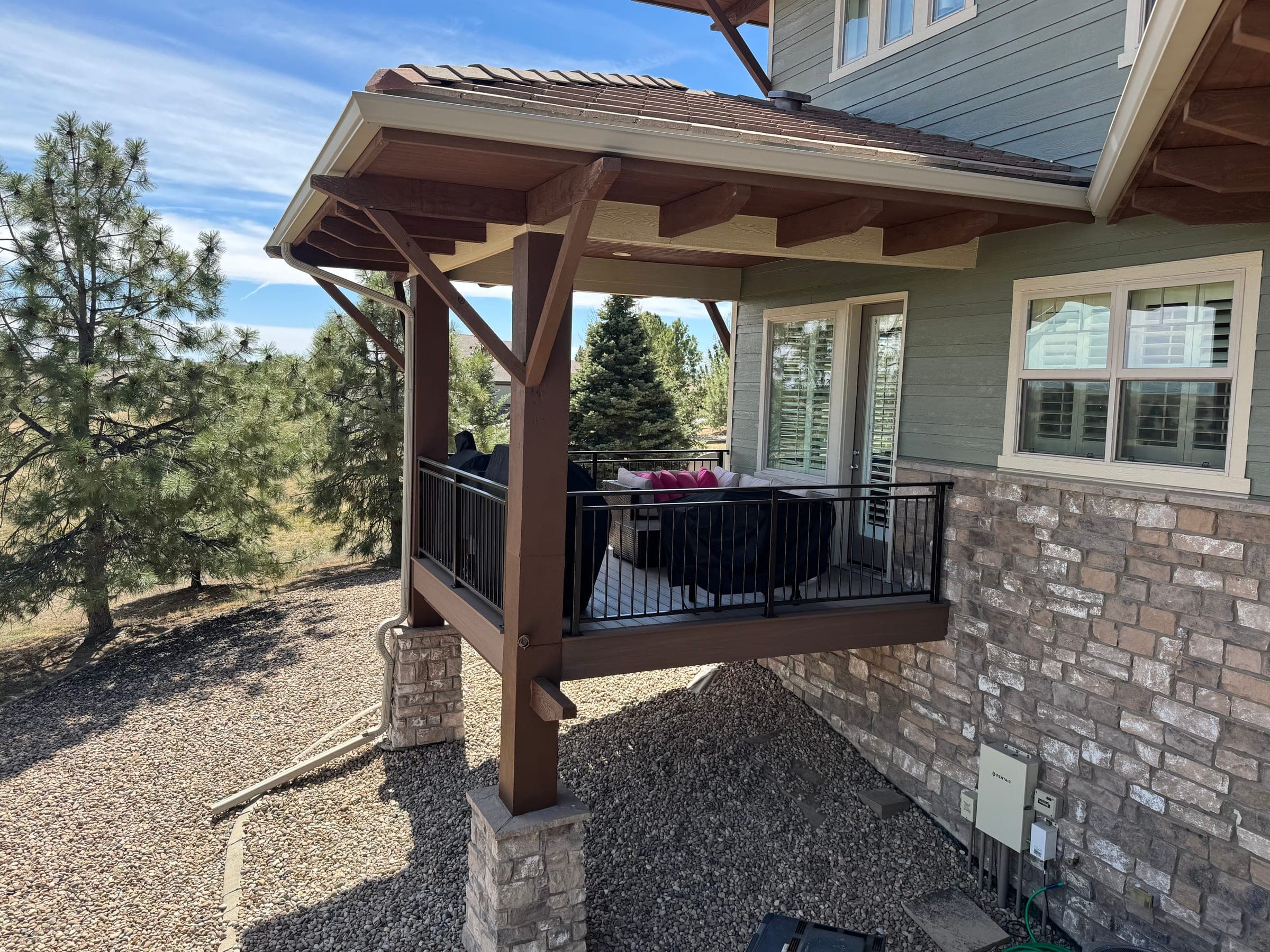
Ranges bracket what projects of each shape typically land at — every yard prices differently. The calculator gives your number; the portfolio shows what it looks like.
…and by material
Size sets the scale; the surface you choose sets the rate. Typical installed ranges per square foot, Denver metro:
Same substructure under all of them — the framing doesn't care what you walk on, so the cheap surface only saves the board delta, not half the deck. Full comparison in the materials guide.
Sized your budget? Get the real number.
Ranges are planning tools — a free on-site consultation turns yours into a fixed, itemized quote for your actual yard.
The three multipliers bids get judged on
These stack, and they're why two 320 sq ft decks can be $14,000 and $27,000 without either builder being wrong. An elevated deck means taller posts, engineered footings, railing at height, and staging. If a bid for a walk-out matches a bid for a ground-level deck, one of them misread the job.
A real bid, line by line
Here's what an itemized quote for a common project actually looks like — replacing a worn-out 16×20 wood deck with capped composite, mid-height, 36 lin ft of aluminum railing, four steps:
Landing right in the middle of the 16×20 installed range once tear-out is counted. Yours will differ, but if a bid can't be broken into lines like these, you can't compare it to anything.
The add-ons bids include (and calculators don't)
The big add-ons
Covers and kitchens are engineered structures with their own permits — priced per project, not per square foot. They're also the classic phase-two items: build the deck framed to accept them now, add them next season.
The ten-year math
Wood wins the day-one bid and loses the decade. A 320 sq ft pressure-treated deck at roughly $9,000 wants cleaning and re-staining every other year — $400–900 each round if you hire it out — plus board and fastener repairs as UV and freeze-thaw do their work. Call it $3,000–5,000 over ten years. The same deck in capped composite at $16,000 needs soap, water, and nothing else, with 25–50 year fade-and-stain warranties. The gap narrows to a few thousand dollars over a decade — and composite wins after that.
How to read a bid — the red flags
Honest ways to bring the number down
A simple rectangle footprint saves framing hours. Stay low if the yard allows it — height costs the most. Put premium railing on the view side, standard aluminum elsewhere. Pick stock colors (special-order boards add cost and weeks). Time it right — signing in the off-season buys schedule flexibility and a spring deck, as our timing guide lays out. What doesn't save money: skipping the permit, undersizing footings, or reusing framing nobody inspected — re-decking over sound framing is the legitimate version of that shortcut.