You don't have to abandon the deck in November. Colorado winters come with 300-plus days of sun, and what actually ends deck season here isn't cold — it's wind, wet surfaces, and darkness at 4:30. All three are fixable.
We build a lot of covers in the fall: homeowners — a good number of them down in Castle Pines — who've been writing off four months of usable afternoons.
Why is winter deck time even possible here?
High-altitude sun does real work. At a mile up, winter sunshine carries enough punch that a calm, sunny 45-degree January afternoon feels closer to 60 in the sun. And those afternoons aren't rare: between storms, the Front Range winter is mostly bright, dry, and frequently mild, with Chinook winds occasionally pushing into the 50s and 60s.
The obstacles are specific. Wind makes a tolerable temperature miserable. A snow-covered or wet deck means nobody walks out there. And dark-at-4:30 kills the after-work hours that are most of a weekday. Solve those three and the deck works most of the winter.
What's the single biggest upgrade?
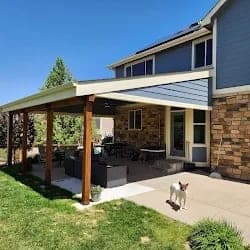
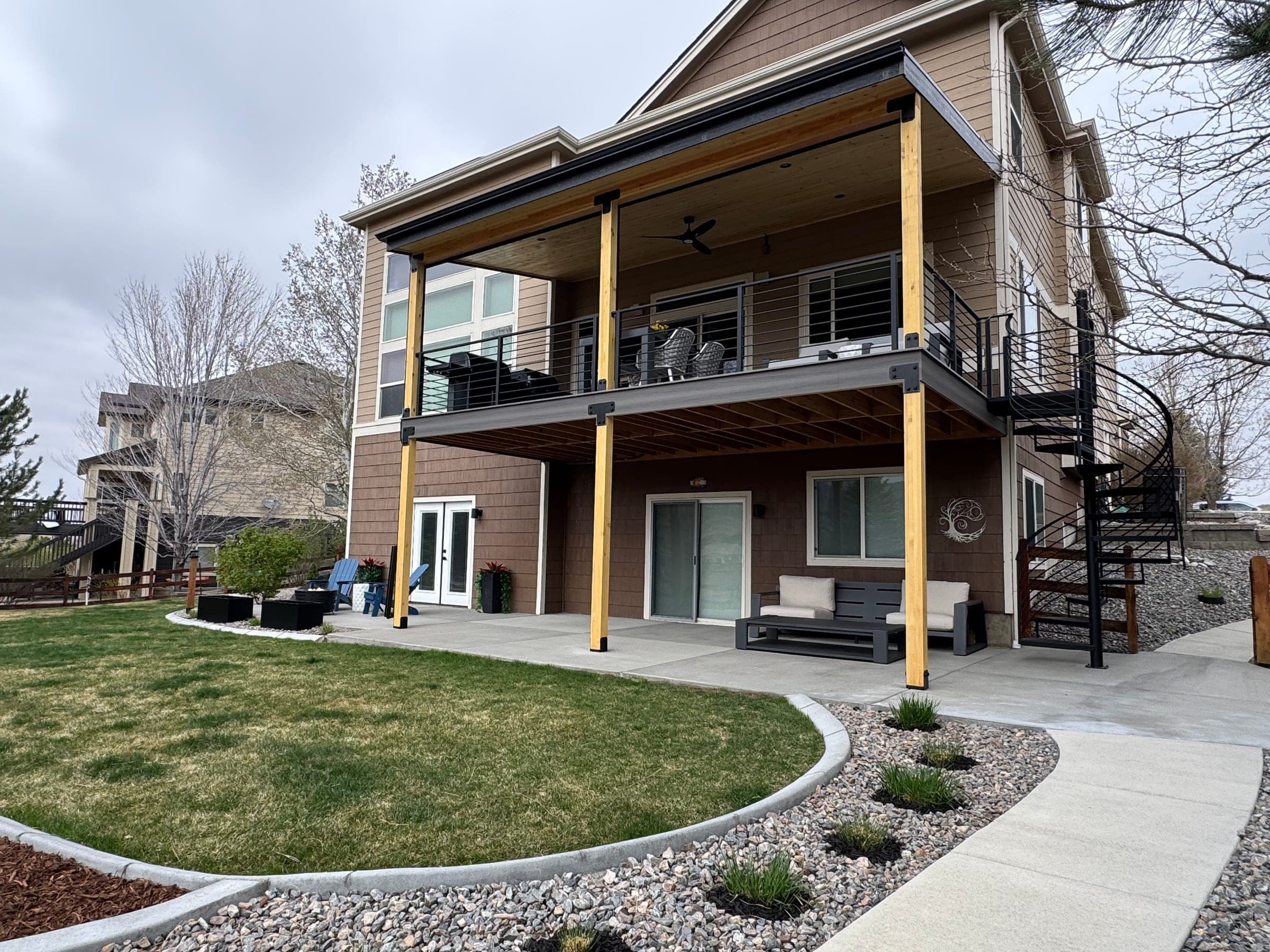
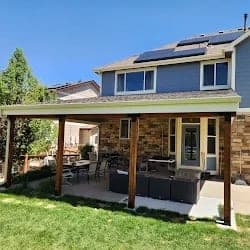
A roof. A covered deck is dry the morning after a storm; an open one is a shoveling job you'll skip. A solid roof or tongue-and-groove pavilion runs $15,000–$28,000 and turns the deck into a true outdoor room — dry and sheltered, snow sliding off instead of piling on your furniture. A polycarbonate roof at $10,000–$22,000 does the same job while letting daylight through — brighter than a solid roof when the winter sun sits low. Our polycarbonate cover guide covers the panel options.
Either way, the structure is engineered for the Front Range's 30 psf design snow load. If the deck already exists, adding a roof to an existing deck starts with a structural check; our covers are designed around that from the start.
How do you heat an outdoor space?
Overhead infrared electric heaters — the kind restaurants use on patios — heat people and surfaces directly instead of warming moving air. Wired during a cover build, heaters and lighting together run $1,200–$3,000 as an electrical package; retrofitted later, the same work means fished wire and opened ceilings.
Fire tables earn their spot too — more ambiance than BTUs, but a fire table plus an overhead heater makes a 35-degree evening comfortable. Running a gas line for one is its own project, so raise it during design, not after.
What about the wind?
Wind is the real Colorado villain — a calm 40-degree afternoon is pleasant, a gusty one isn't, and Chinook events can gust for days. The fix is a windbreak on the exposed face, usually the west:
- Screened sections on a covered structure (+$3,000–$8,000) knock wind down while keeping airflow — the same math as the screened porch.
- Privacy walls — framed and finished to match the structure — give a solid block on one face.
- Glass or polycarbonate panels stop wind entirely while keeping the view and the low winter sun.
Isn't winter what a hot tub deck is for?
Yes — snow on the rail, steam off the water, 103 degrees in a 20-degree night. If a hot tub is anywhere in the plan, winter is the season that justifies it. It's also the one feature that requires an engineered platform: a filled tub is a concentrated multi-ton load. The hot tub deck guide covers the framing and clearances.
What fixes the 4:30 darkness?
Lighting — and it's already in the electrical package above. Post-cap lights and under-rail strips wired during the build (part of that $1,200–$3,000 lighting-and-heat number) mean the deck doesn't disappear when the sun does. A lit, covered, heated deck at 6pm in January is a room; a dark one is a memory of summer.
| What stops winter deck use | What fixes it | Typical cost |
|---|---|---|
| Snow and wet surfaces | Solid roof / tongue-and-groove pavilion | $15,000–$28,000 |
| Lost daylight under a roof | Polycarbonate roof (keeps winter light) | $10,000–$22,000 |
| Cold air | Infrared heaters + lighting, wired during build | $1,200–$3,000 package |
| Wind | Screened sections on a covered structure | +$3,000–$8,000 |
| Darkness at 4:30pm | Post-cap and under-rail lighting | Part of the $1,200–$3,000 package |
Does the deck surface itself matter?
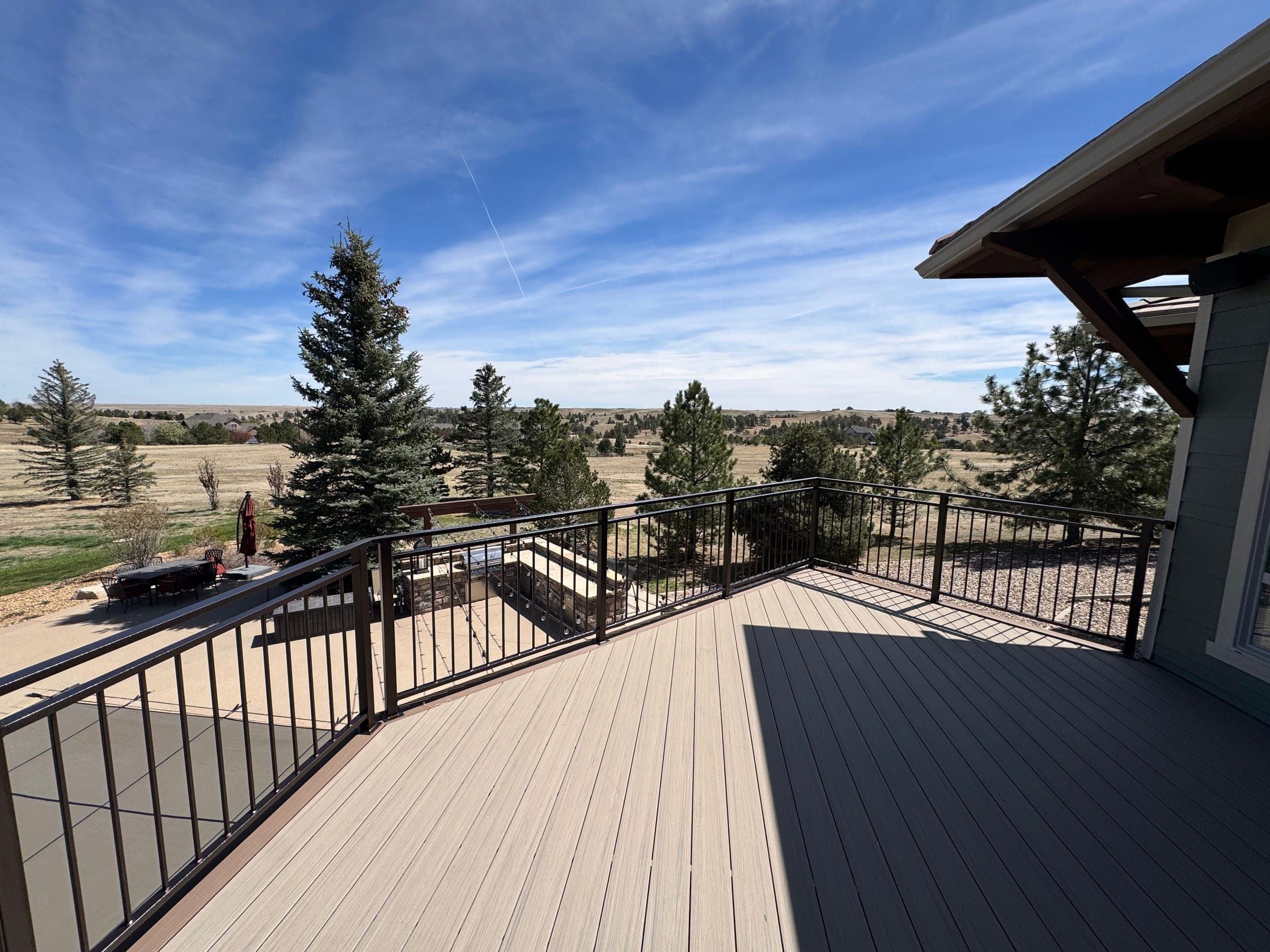
More than people think. Composite sheds snow with a plastic shovel and comes through a winter of freeze-thaw needing nothing — no spring sanding, no refinishing, no popped finish — part of why we build composite-first. Two rules: plastic shovel, never metal; and skip ice-melt chemicals, which corrode the metal connectors — plain sand is the safe traction move. For the full checklist, see the winter deck prep guide.
When should a winter-ready cover get built?
October, honestly. A cover is a 1–2 week project, crews have room in fall and winter, and a roof that goes up in October is a winter room by Thanksgiving — and hail armor by May. The best-time-to-build guide walks through the full calendar math.
Tell us about your deck and we'll walk through what a winter-ready version looks like — cover, heat, wind, and light — with honest numbers.