Twenty minutes with a broom and a screwdriver in October will do more for your deck than any spring project — because winter doesn't create deck problems, it accelerates the ones already there. Here's the checklist, plus two winter habits — metal shovels and the wrong ice melt — that quietly destroy decks fine in September.
The 20-minute fall checklist
- Clear the gaps between boards. The gaps are the deck's drainage system. Leaves and pine needles pack in, water ponds instead of draining, and every freeze wedges the boards a little harder. A putty knife or a stiff broom run along the gaps clears them.
- Sweep the ledger line. Where the deck meets the house is the most consequential joint on the structure. Debris piled there holds moisture against the connection. Sweep it bare.
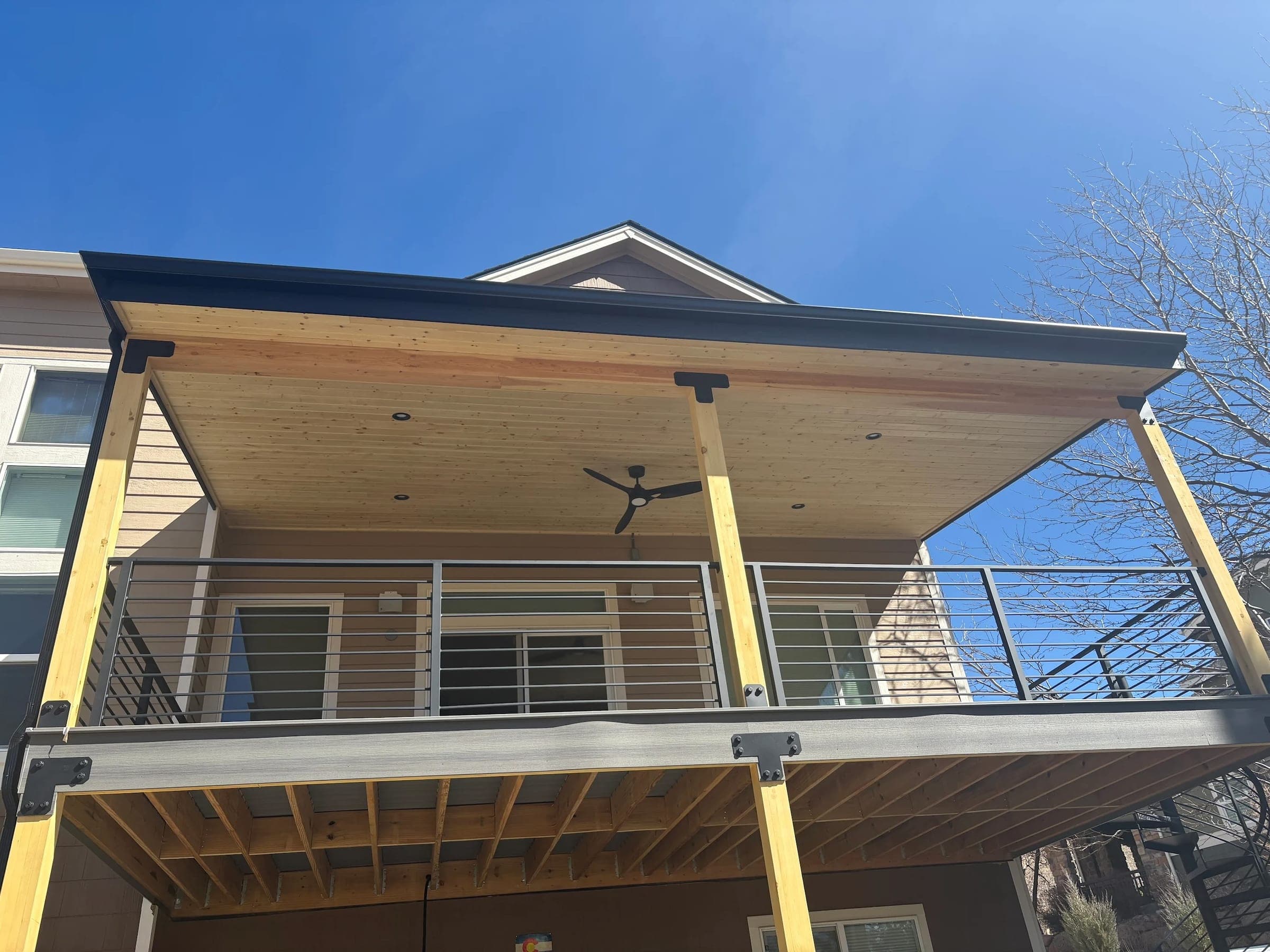
- Check the flashing before the first freeze. Look at the metal flashing along the ledger. Lifted edges, gaps, or rust mean water is getting behind it — and that's how decks fail seriously. Our deck safety inspection guide shows healthy flashing; if yours doesn't match, that's a fall repair, not a spring one.
- Re-seat proud fasteners. Walk the deck and look for screw heads sitting above the surface — freeze-thaw backs them out a little each year. Drive them home. A proud fastener under snow is a toe-catcher you can't see.
- Shake the railing. Grab every post and pull. Ice on the stairs is exactly when someone grabs the rail hard and expects it to hold — code expects a 200-pound load in any direction. A wobbly post is a quick fall fix; a failed one in January is an emergency.
- Evict the firewood. Firewood stacked under the deck holds moisture against posts and joists. Store it somewhere the deck isn't.
- Look underneath. Two minutes with a flashlight: dark streaks, soft wood at post bases, white mineral tracks on hardware. Anything suspicious, photograph it and get it looked at while crews still have fall room.
- Book repairs now, not in April. Anything the checklist turned up is cheapest and fastest to fix in fall — see below.
What does winter actually do to an unprepared deck?
| Winter force | What it attacks | How it plays out |
|---|---|---|
| Freeze-thaw cycling | Fasteners and connections | Water in board gaps and screw holes freezes and expands — dozens of cycles a season — backing fasteners out and working joints loose |
| Snow load | Weak or aging framing | A wet spring dump is heavy; framing with hidden rot or undersized spans sags or worse under weight it once shrugged off |
| Ice melt (calcium chloride) | Metal hardware below | Salt brine drips through the gaps onto joist hangers and connectors and corrodes the steel holding the deck together |
| Trapped debris | The wood itself | Packed leaves hold moisture against boards and the ledger all winter — rot's ideal setup |
None of these forces breaks a sound, clean deck in one winter. All of them find whatever weakness fall left in place.
How should you handle snow on a deck?
Three rules cover it:
Plastic shovel, never metal. A metal blade gouges wood and slices composite capping. Plastic clears the same snow without scars.
Shovel along the boards, not across. Run the shovel parallel to the decking so the blade rides the boards instead of catching every edge crossways. Don't scrape to bare wood — leave a thin layer and let the sun finish; it usually does within a day or two here.
Skip the ice melt if there's metal below — use sand. Calcium chloride and its cousins run through the board gaps as brine and sit on the joist hangers, post connectors, and fasteners underneath — and salt corrodes exactly the hardware the whole structure hangs on. Plain sand gives traction with zero chemistry. If you have to use a melt, the brand-by-brand ice melt rules for composite decks say which products Trex, TimberTech and Fiberon allow on the boards themselves. (This matters less on a covered deck — the snow never lands.)
You don't have to clear every storm. Most Colorado snowfalls sublimate off a deck in days. Clear the big, wet spring dumps — especially on an older deck you're less sure of, the kind we see a lot of in Littleton's established neighborhoods.
Why fall beats spring for repairs
Everything the checklist finds is easier to fix in October than in April. Crews have room — fall is when the summer crush ends, the same reason fall and winter are the smart season to build. The ground is still workable, so post or footing work happens before frost locks the soil. And the problem is still small — the loose post that's a $200 fall fix has spent a winter of freeze-thaw becoming a bigger one by March.
If the checklist turns up something beyond a screwdriver's pay grade — soft framing, failing flashing, a surface that's cupping and splitting its way out — fall is also the right time for the bigger conversation.
The free version of all of this
Found something on the walk-through? Our repair cost guide prices every common fix. If you'd rather have a professional look before winter, get in touch — we do a free structural inspection and give you a written verdict: what's fine, what should be fixed before the snow, and what can honestly wait.