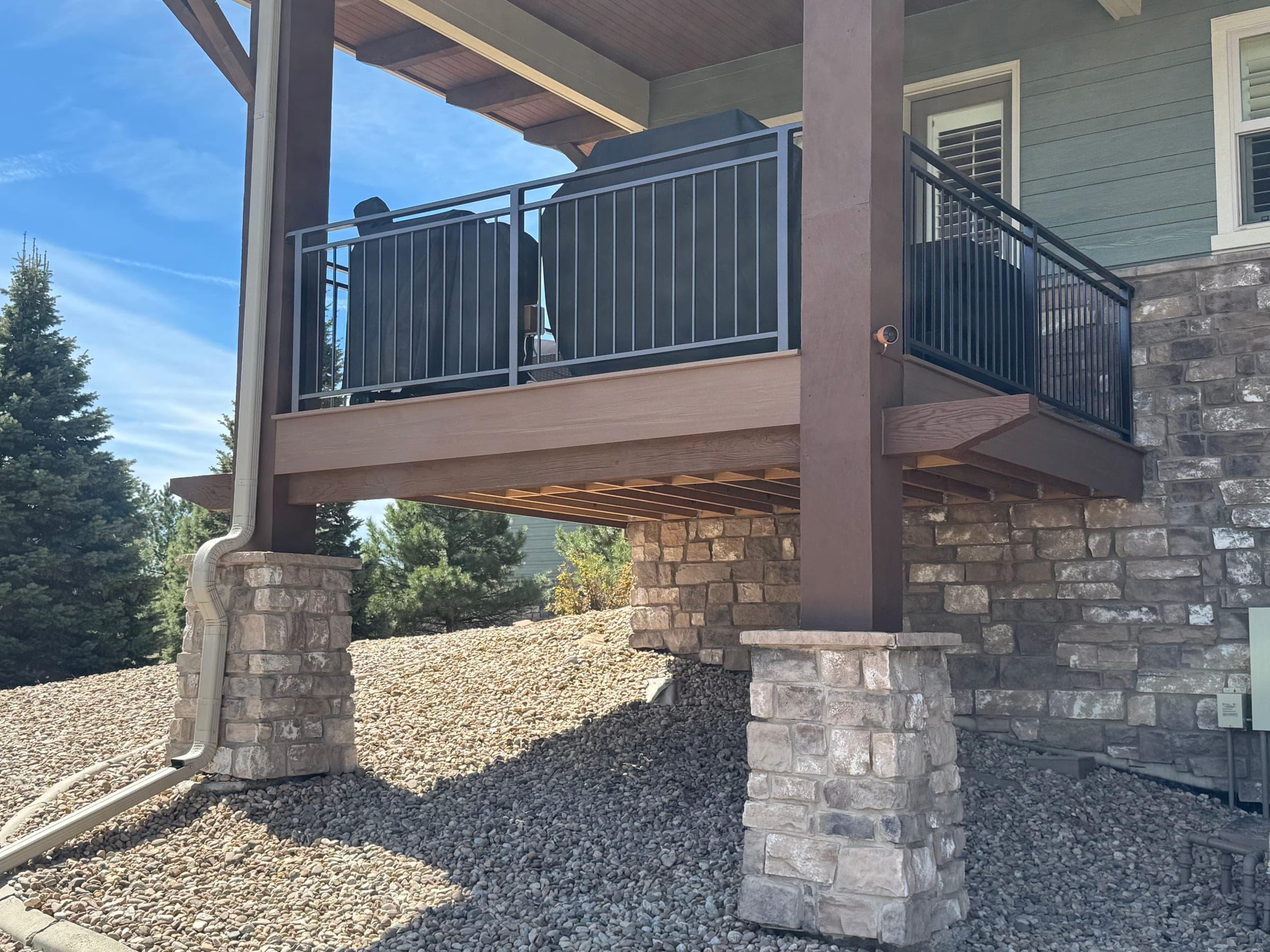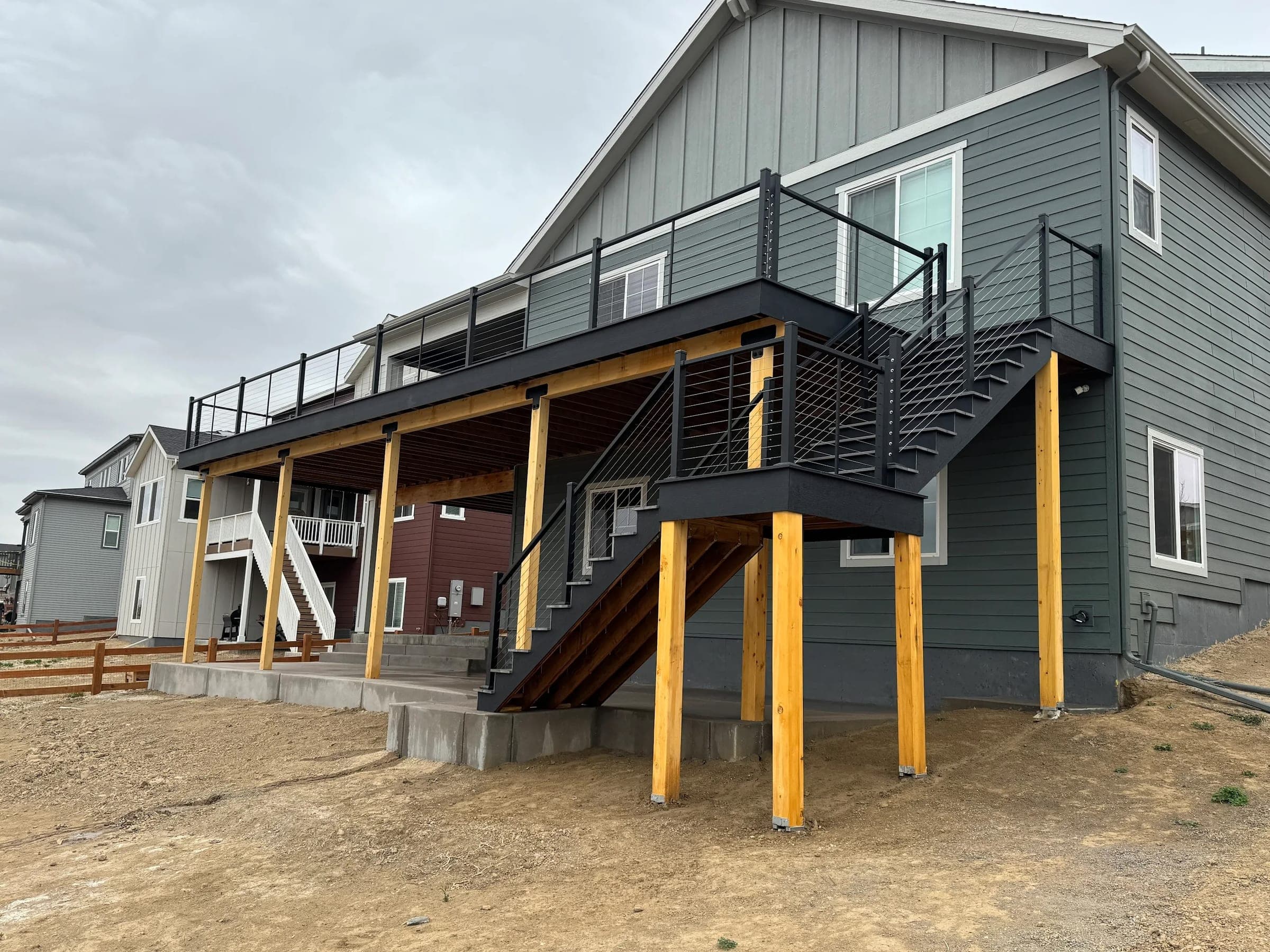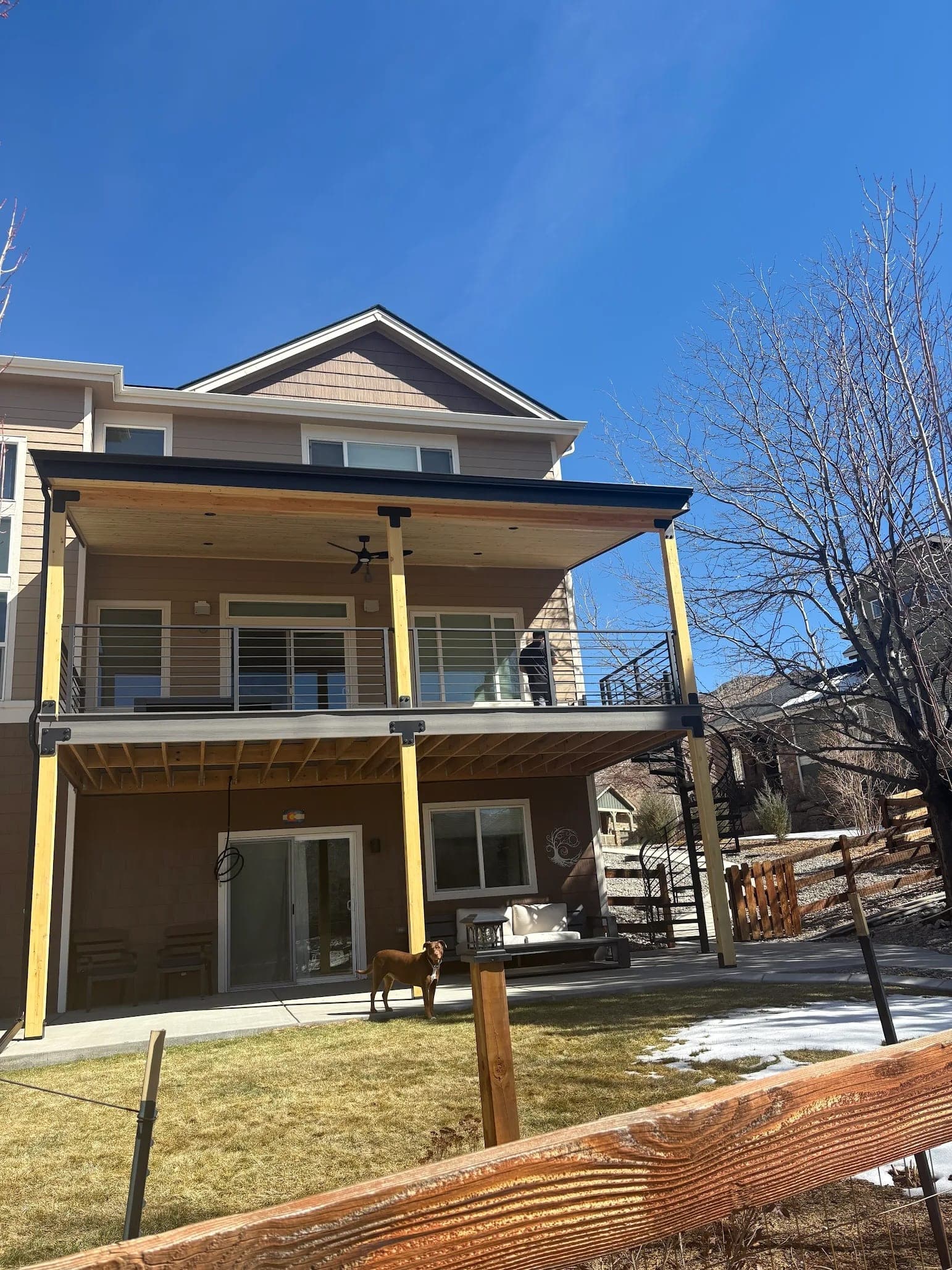
Yes — calcium chloride is the one ice melt every major composite brand names as safe, and Trex and Fiberon also sign off on plain rock salt (TimberTech/AZEK says no to both rock salt and sand). Off-limits everywhere: metal shovels, dyed or colored de-icers, and chipping at bonded ice. Whatever melt you use, rinse the chalky white residue off the boards once a real thaw sets in.
Here's the brand-by-brand version, plus how that squares with the sand-and-plastic-shovel advice in our fall winterizing checklist.
What shovel should you use, and how do you push it?
Plastic, always. Trex's winter care guidance is blunt: metal shovels damage composite, so stick to a plastic blade — and push it in the direction the boards run rather than dragging it across them. TimberTech says the same about metal damaging "both composite and wood decking." None of the three brands want you chipping at ice already bonded to the surface. Leave a thin layer once the bulk is off and let the sun take the rest; it usually does within a day or two here.
Can you use ice melt on a composite deck? Brand by brand
Manufacturers agree on calcium chloride and disagree on everything else:
- Trex (current lines — Transcend, Enhance, Select): calcium chloride or rock salt are both fine on the deck surface. Older Trex Accents boards tolerate the same products but should be rinsed off as soon as practical.
- TimberTech/AZEK: calcium chloride only. TimberTech's guidance is specific — "not rock salt" — because sodium chloride is harder on the capped surface than calcium chloride. It also says to skip sand, calling it too coarse for the board finish.
- Fiberon: calcium chloride or rock salt, same as Trex. Fiberon also flags no ice melt with an added colorant, since the dye stains the boards and is hard to clean off.
That dye warning is the one rule all three brands share word-for-word. A clear, uncolored calcium chloride product is the safest default.
What about sand, pet-safe melts, and real wood?
| Melt type | OK on composite? | Notes |
|---|---|---|
| Calcium chloride | Yes, all brands | The universal safe choice. Dries to a white, chalky residue — hose it off once you get a real thaw. |
| Rock salt (sodium chloride) | Trex, Fiberon: yes. TimberTech: no | TimberTech's own guidance rules it out on capped boards. Harder on real wood too — pulls moisture and speeds up checking and graying. |
| Magnesium chloride | Generally yes | Milder than calcium chloride and works a bit less cold; a common middle-ground pick where pets use the deck. |
| Calcium magnesium acetate (CMA) | Yes — gentlest option | The pet-safest pick and non-corrosive, but only effective to about 20°F, so it's a shoulder-season product, not a January one. |
| Sand | Use sparingly | Zero chemical risk to the hardware below the boards — see our snow-load guide — but TimberTech and Fiberon both warn coarse sand can dull a board's finish if it's ground in underfoot for weeks. Sweep it off once footing's steady instead of leaving it all season. |
| Dyed or colored ice melt | No, any brand | All three manufacturers call this out by name — the dye stains composite boards and doesn't scrub out easily. |
| Natural wood decking | Different rules | Rock salt and calcium chloride both dry out real wood and accelerate cracking, splintering, and graying. Sand is the traditional safer call on wood, and expect a spring cleaning or re-stain either way. |
Do you even need ice melt here?
Often not. Most Front Range snowfalls sublimate off a deck in a day or two of Colorado sun — our snow-load guide covers when it's actually worth clearing. Save the calcium chloride for mornings the sun hasn't reached yet, or heavy, wet spring dumps that stick around. If you're tired of running this calculation every winter, a covered deck sidesteps the whole question — snow that never lands doesn't need melting.
Does the wrong ice melt affect your warranty?
It can. Our warranty guide notes that manufacturers exclude damage from de-icing chemicals — which is less about calcium chloride itself (every brand allows it) and more about the dyed products, the wrong chemical for your line, and residue left to sit all winter. Stick to the plain, uncolored product your brand names, rinse it off when you get a thaw, and you're well inside the terms of the 25-to-50-year material warranty that comes with the deck.
Get it looked at before the next storm
If you're not sure which composite line is on your deck, or you're shoveling around boards that are already cupped or splitting, that's worth a second look before winter makes it worse. Get in touch for a free inspection, or see what a composite deck built for Colorado winters actually involves.