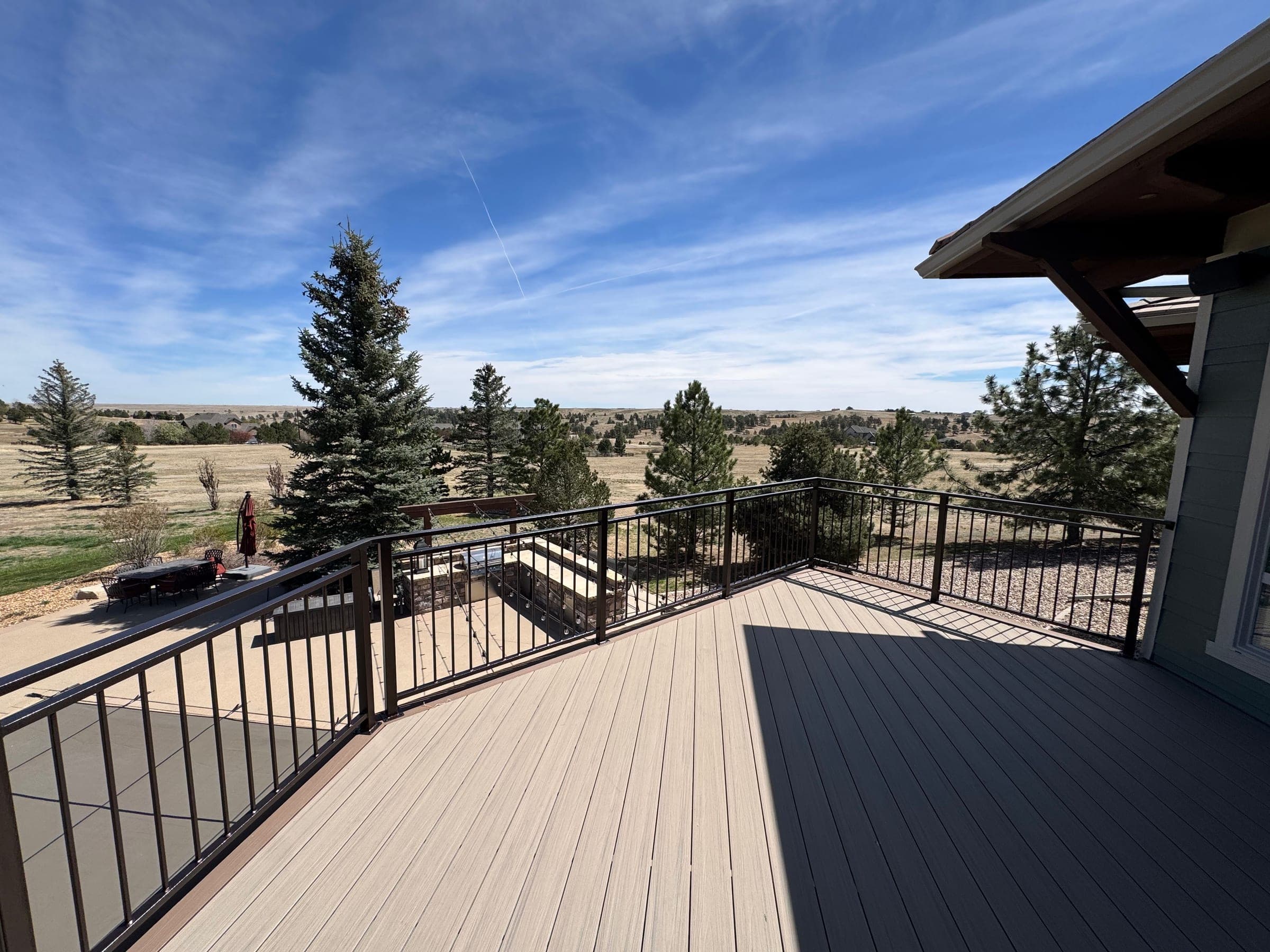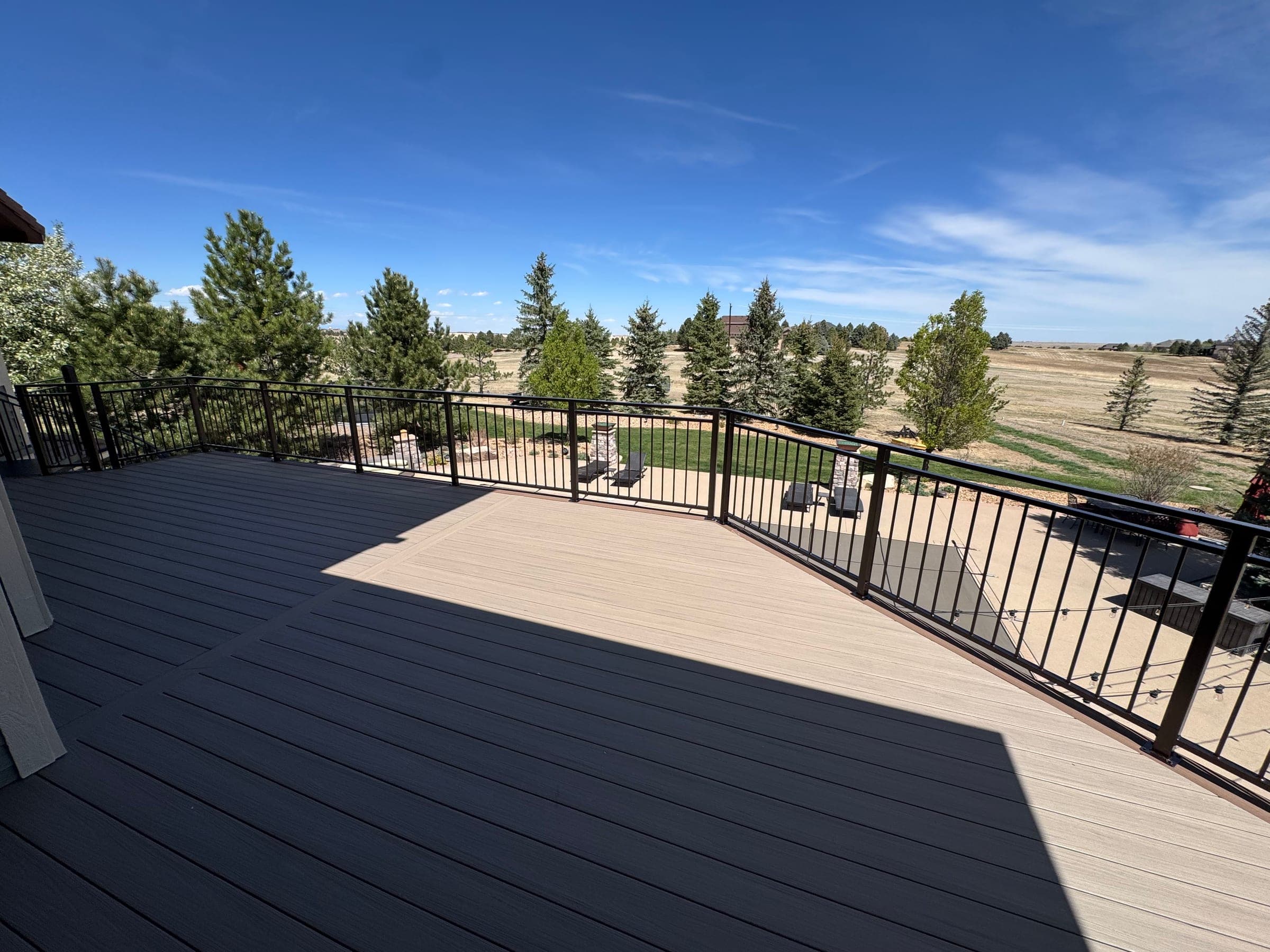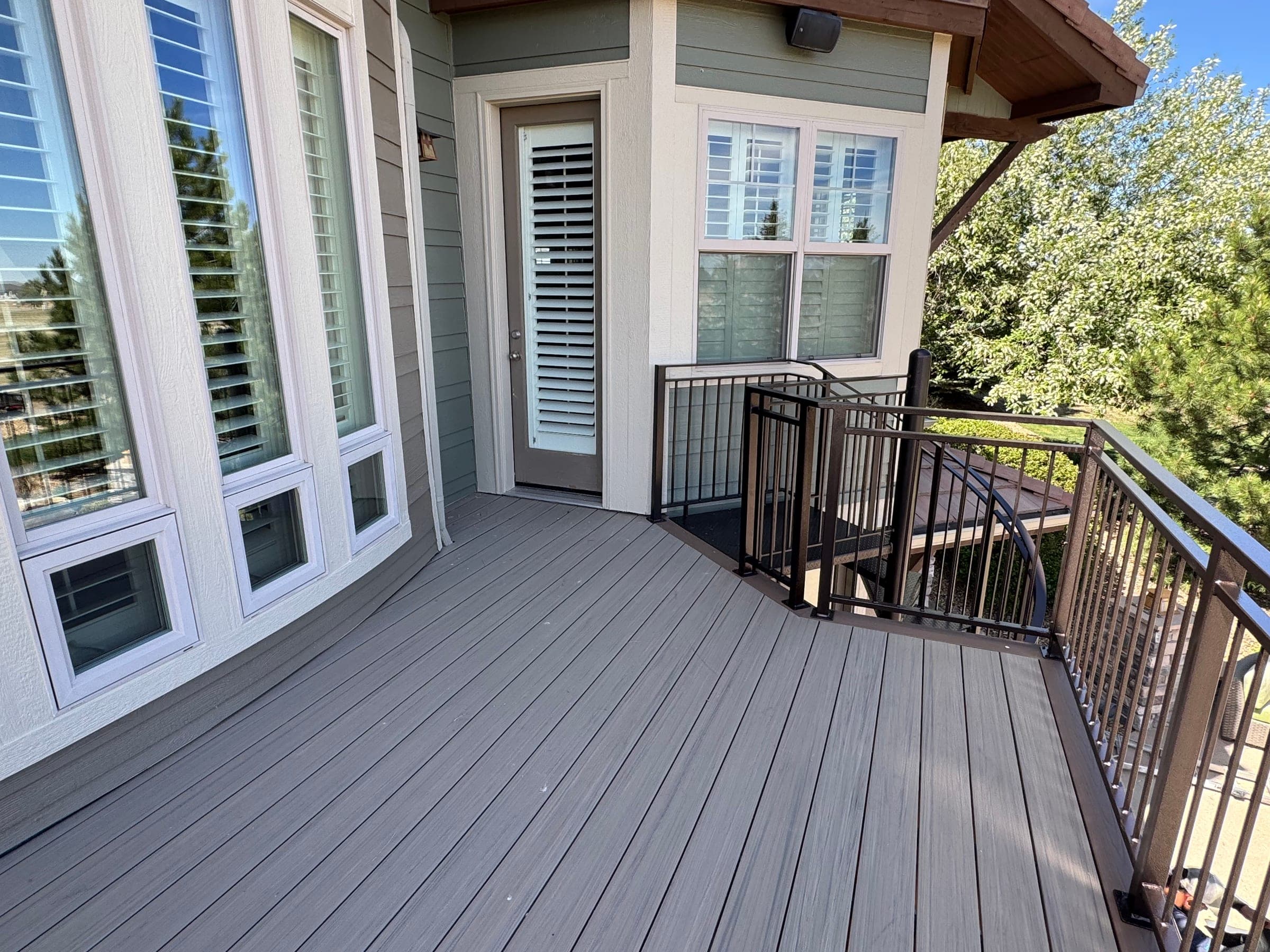
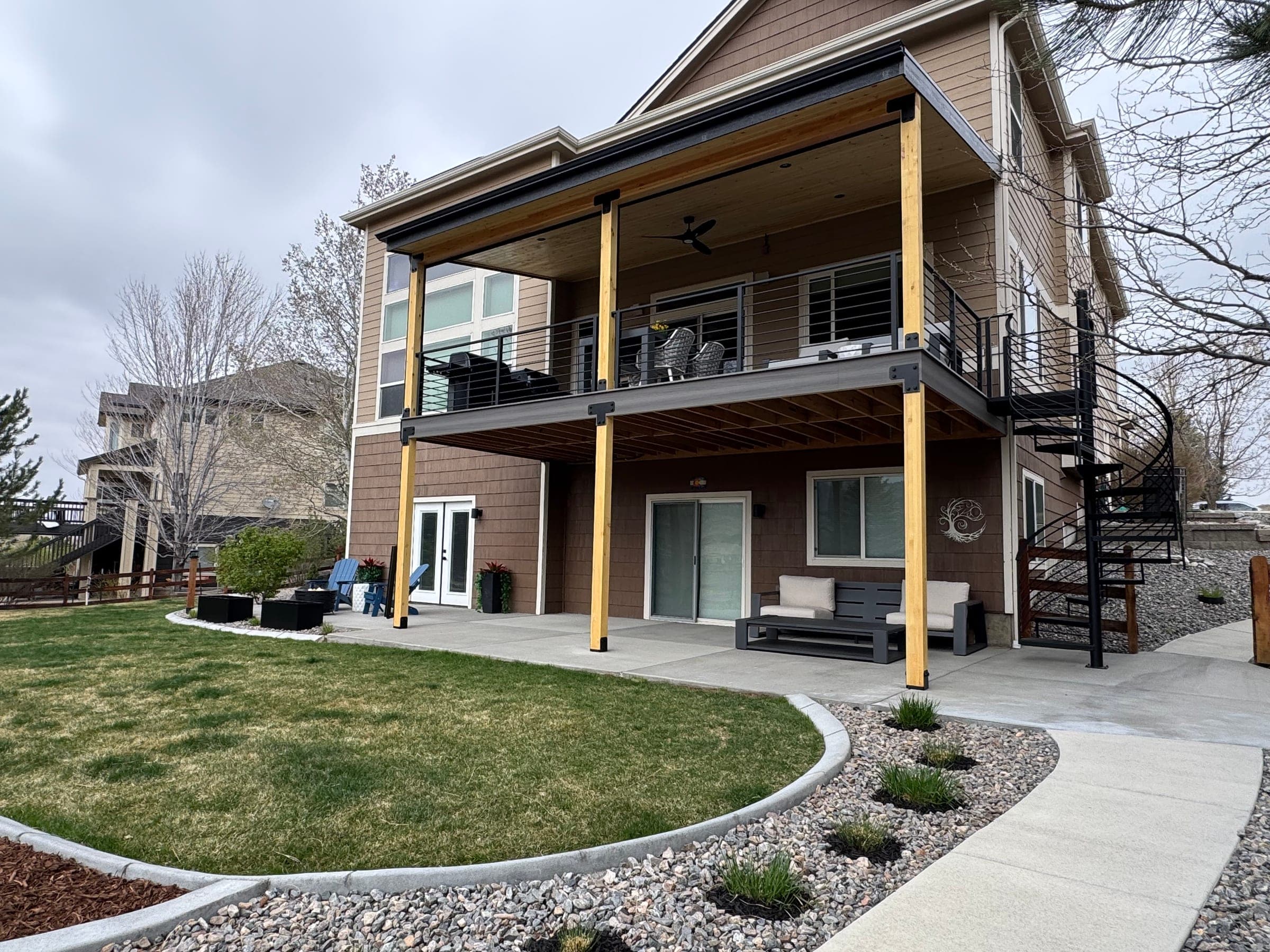
Deck boards cup when the top face dries faster than the underside: Colorado sun bakes the top while the shaded bottom stays damp, curling the edges up. A few cupped boards are a $150–$600 swap. If most of an older wood deck is cupping and the framing is sound, a re-deck in capped composite at $20–$35 per square foot fixes it for good — composite doesn't absorb water, so it can't cup.
In Colorado's sun and freeze-thaw, that process only runs one direction.
Why does Colorado do this to wood decks?
A deck board is wood cut flat and asked to stay that way outdoors, and the Front Range is close to the hardest place in the country to ask it. The sun here carries roughly 25% more UV than sea level, and it shows up 300+ days a year. UV breaks down lignin — the glue holding wood fibers together — at the surface, while the sun bakes the top face dry and the shaded underside stays damp.
Then winter takes its turn. Water sits in the wood, freezes, expands, thaws, and repeats — dozens of cycles a season along the Front Range. Boards swell wet and shrink dry until the wood fibers give up along the grain: that's splitting. A stain or sealer slows all of this; nothing stops it.
Is cupping actually a problem, or just ugly?
It's a problem, and a compounding one: a cupped board is a shallow trough that holds water, storing moisture against itself and its fasteners after every rain and snowmelt — the on-ramp to rot. Splits are worse for the hardware: a crack that reaches a screw channels water straight to the fastener and the joist below it, and a split board swallows fasteners — heads sink, shanks lose their bite, and the board works loose underfoot. If boards are moving when you walk the deck, it's worth running the checks in our deck safety inspection guide, because loose decking and tired framing often travel together.
Replace boards, re-deck, or replace the deck?
The triage comes down to two questions: how widespread is the surface damage, and what shape is the framing in?
| Situation | The right fix | Denver-metro cost |
|---|---|---|
| A few cupped or split boards, deck otherwise sound | Board swap | $150–$500 wood; $200–$600 composite-matched |
| Widespread cupping, wood deck 15–20+ years old, framing sound | Re-deck in capped composite | $20–$35 per sq ft |
| Surface and framing failing | Full replacement | $40–$70 per sq ft |
A few bad boards is a straightforward repair — pull them, check the joists underneath while they're open, screw down new stock. Cheap, quick, done. (A board that's soft rather than curled is a different problem — see soft spots in deck boards.)
Widespread cupping is where homeowners burn money slowly. Replacing boards one at a time on a 15–20-year-old wood surface is paying repair prices, repeatedly, for a replacement outcome. If the framing underneath is sound (often true — joists live in the shade and dry out between storms), the answer is a re-deck: strip the surface, keep the frame, and lay capped composite at $20–$35 per square foot — a brand-new deck surface for roughly half the cost of a full rebuild.
Framing gone too — rot at the ledger, soft joists, posts past saving — and a re-deck would be new boards on a dying frame. That's full replacement territory at $40–$70 per square foot, and the math on when that line gets crossed is laid out in our deck replacement cost guide.
Why composite doesn't cup
Cupping and splitting are wood behaviors — they exist because wood absorbs and releases water. Capped composite doesn't, so there's nothing to curl and nothing to crack. The board you install is the shape it stays, through every freeze-thaw winter and every 95-degree July.
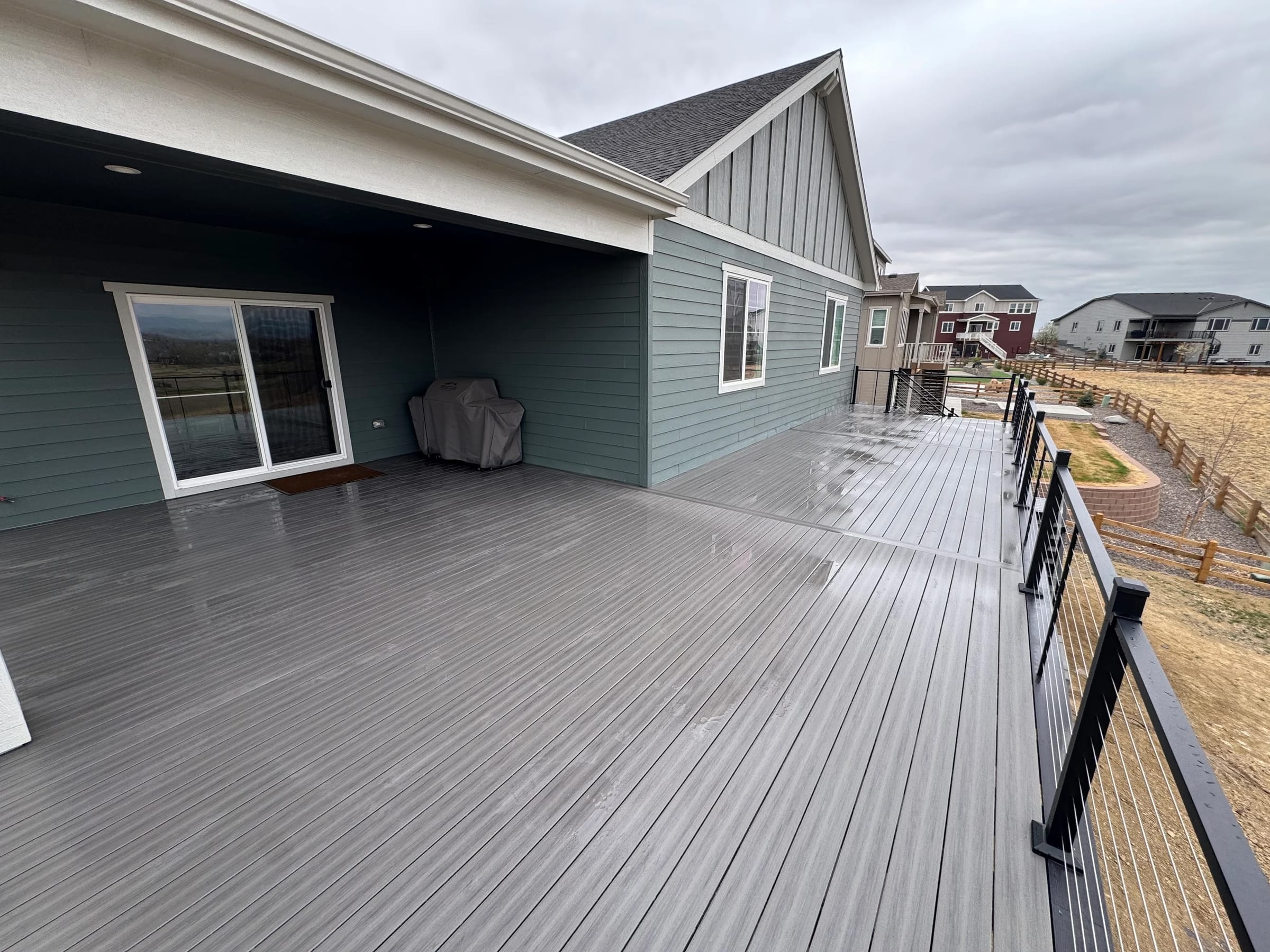
Capped composite after a rainstorm on our two-story prairie-view deck in Erie: the water sits on the surface instead of soaking in, so the boards stay flat.
One caveat: composite isn't magic in high-altitude sun. Early-generation boards could chalk or fade noticeably; modern capped boards can still lighten slightly over many years. Today's caps are engineered for exactly this exposure, though; the change is cosmetic, not structural, and the fade is covered in writing by manufacturer warranties — decades long from the brands we install. A cupped cedar board holds water against your framing; a composite board that's a half-shade lighter in year fifteen holds a dinner party. Our composite vs. hardwood comparison runs the full trade-off.
Get a verdict before you buy boards
The whole decision hinges on the framing, and framing condition isn't visible from a deck chair. Our full repair pricing guide has the itemized numbers for everything short of a re-deck. Get in touch and we'll walk the deck — free structural inspection and a written verdict: six boards, a new surface, or the bigger conversation. If it's headed toward a re-deck, the cost calculator will give you a planning number in thirty seconds.