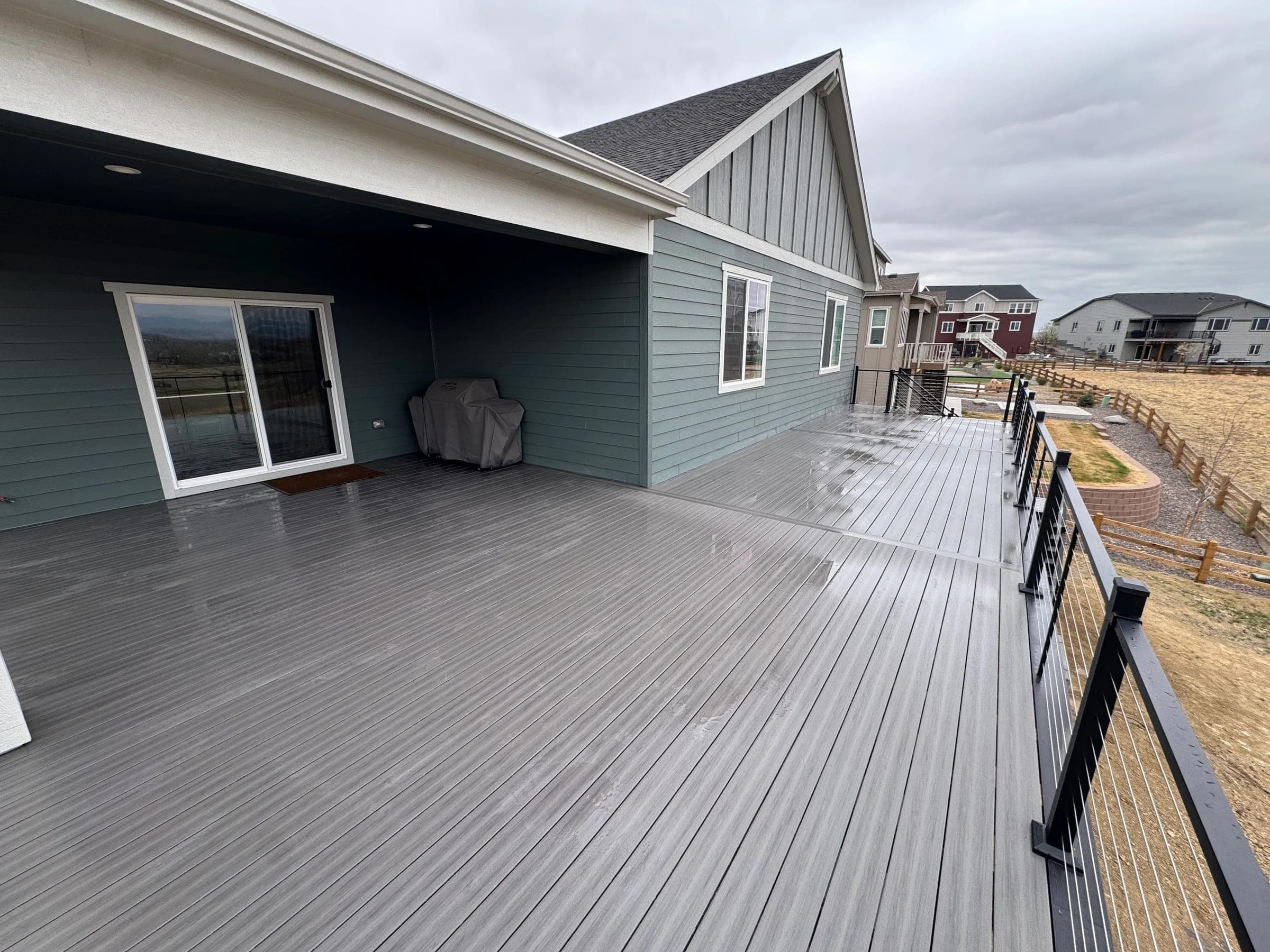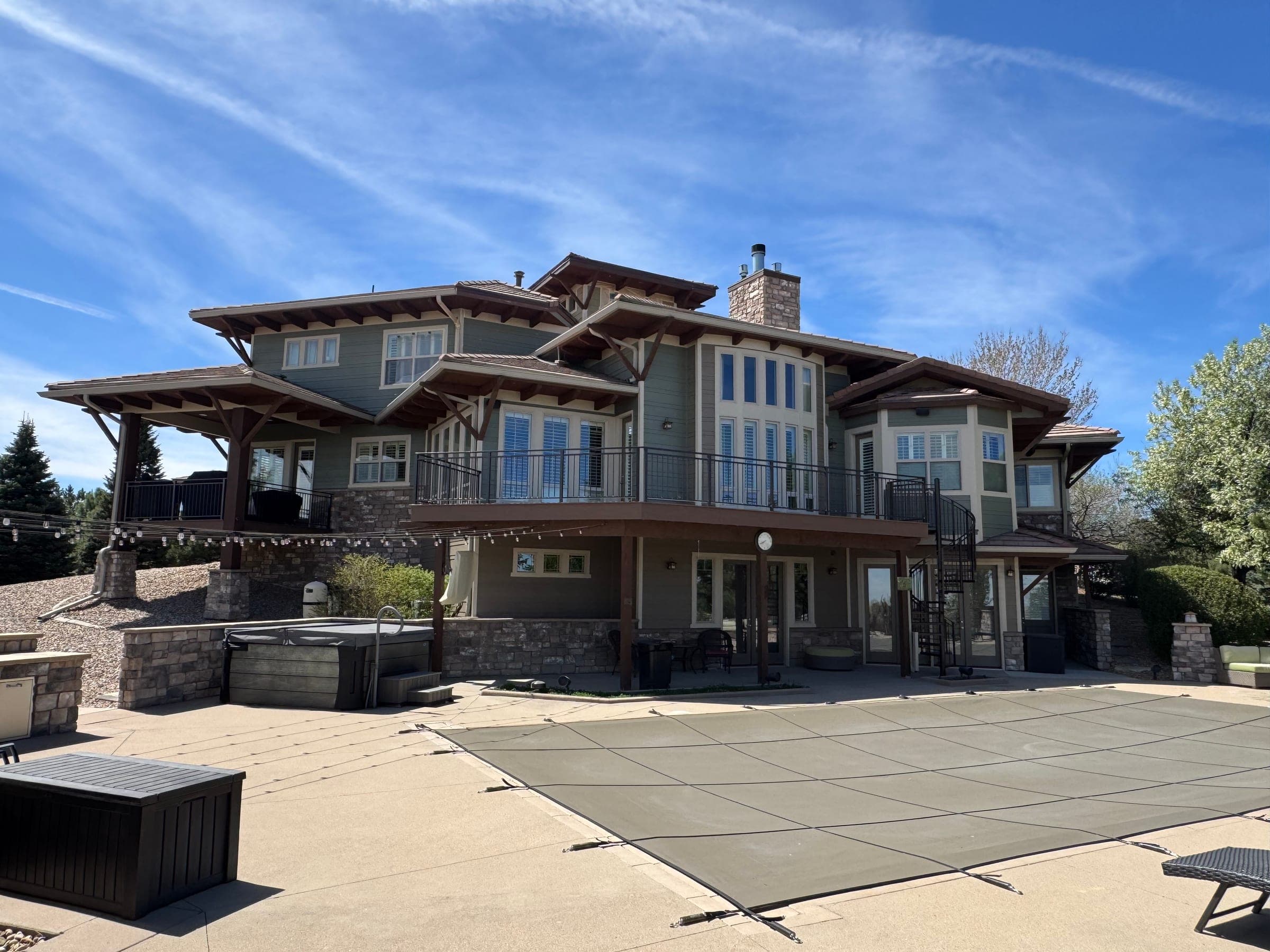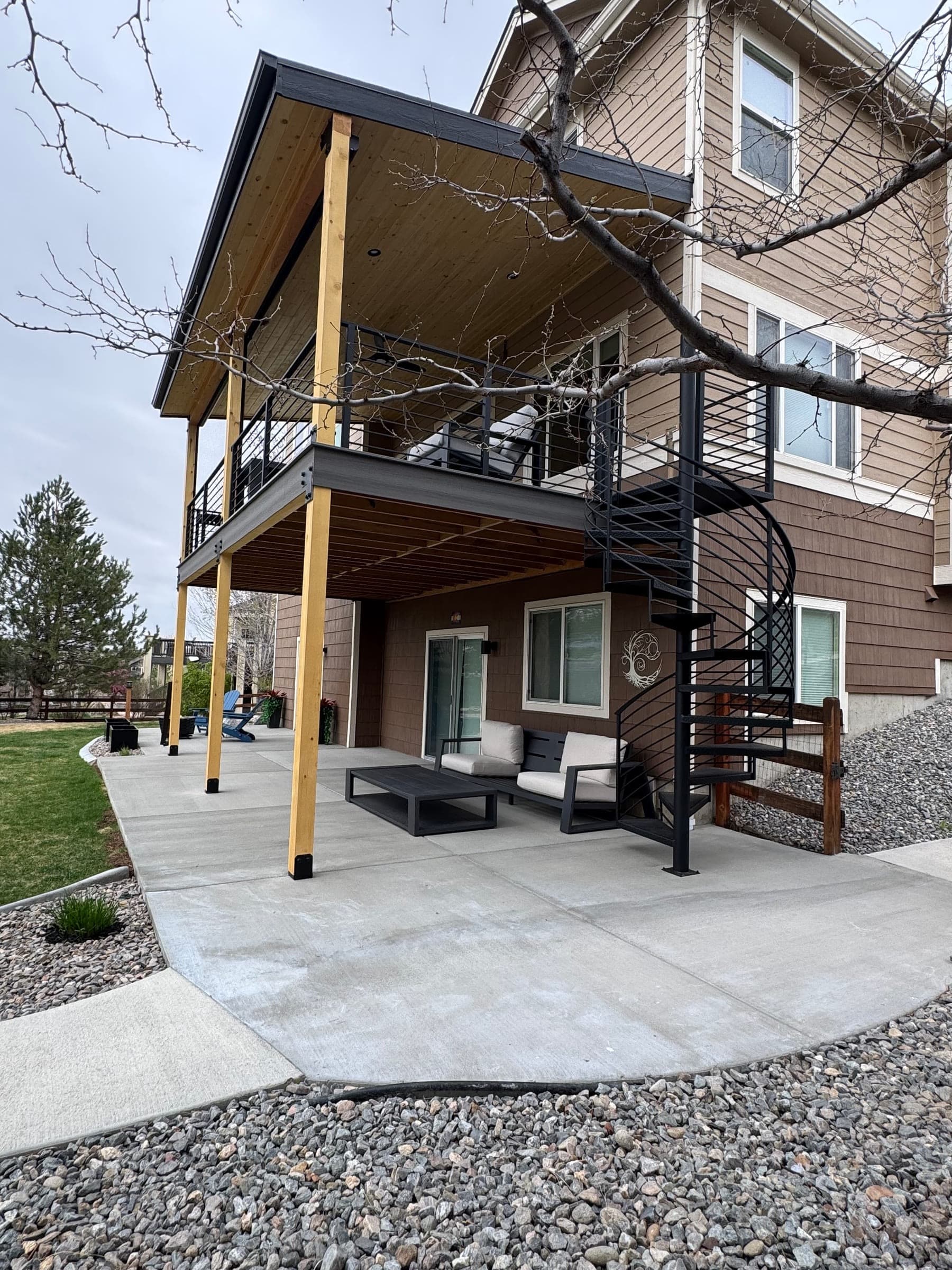
A soft or spongy spot in a deck board means wood is rotting — either the board itself, or the joist underneath it, and you can't tell which from standing on it. A single rotted board is usually a straightforward $150–$600 swap. Rot that's reached the joist is a different repair — the only way to know is a screwdriver and five minutes under the deck.
Why does a deck board go soft or spongy?
Soft wood is decay fungus at work, and fungus needs water sitting in the wood for weeks to take hold — it doesn't happen from one rainstorm or one humid week. That's why soft spots aren't random. They show up almost exactly where water sits longest:
- Board ends. End grain is like a bundle of straws pointed straight up — it absorbs water many times faster than the face of the board, and it's usually the spot builders are least careful about sealing.
- Under planters, rugs, and furniture pads. Anything that sits on a board and blocks sun and airflow turns that patch of decking into a sponge that never fully dries.
- Near downspouts and low spots. If a gutter dumps onto the deck, or the boards pitch slightly toward the house instead of away from it, that handful of boards gets soaked every time it rains.
- Where debris collects. Leaves and pine needles packed between boards hold moisture against the edges and the fasteners long after the surface looks dry.
Each of these is a slow process — it typically takes more than one Colorado freeze-thaw season before a soft spot is noticeable underfoot.
Board rot or joist rot — how do you tell?
This matters because the two problems cost very differently to fix. Probe the soft spot from the top with a screwdriver: if the blade sinks in with light pressure, that board has rot. That tells you about the board — nothing about what's underneath it.
The real test happens from below. Crawl under the deck, find the joist directly beneath the soft spot, and probe it the same way. If the screwdriver sinks in easily there too, the rot has gone structural — the board was just the first thing to show it. Our deck safety inspection guide walks through this same probe test across the whole structure, worth doing once you've found one soft board.
Is this different for composite decking?
Capped composite boards themselves don't rot — there's no exposed wood fiber for fungus to feed on, so a capped board stays sound even where water sits on top of it. But "composite doesn't rot" describes the board, not the deck. The framing underneath is still ordinary dimensional lumber unless it's rated for ground contact, and it sits under the same downspouts, planters, and board-end gaps. That's why manufacturers including Trex sell joist tape as part of a composite install — a butyl barrier over the tops of joists, beams, and rims.
Older uncapped composite, common before the mid-2010s, has a known failure mode of its own: its core is wood flour bound in plastic, and that wood flour can absorb moisture and soften or swell from the inside. If your deck is pushing fifteen-plus years old and a board feels spongy or swollen at a seam, that usually means the board itself needs replacing. That's distinct from cupping or splitting, a wood-surface behavior from uneven drying rather than decay — worth ruling out before you assume the worst.
What should you check today?
| Check | What you're looking for |
|---|---|
| Location of the soft spot | Board ends, under planters or rugs, within a few feet of a downspout |
| Screwdriver test, the board | Blade sinks in with light pressure |
| Screwdriver test, the joist below | Same probe on the framing member directly under the soft spot |
| Color and smell | Dark staining or a musty smell mean active decay, not just old wood |
| Fastener grip | A screw that spins without resistance means the wood around it is gone |
Don't load a soft spot while waiting on repair — step around it, and keep heavy furniture and foot traffic off that area.
How is it fixed, and what does it cost?
What you pay depends on how far the rot has traveled:
- One or two isolated boards, joist sound underneath — a straightforward board swap: $150–$500 for wood, $200–$600 for composite-matched boards where sourcing a matching color adds labor.
- Rot reached the joist — joist sistering, fastening a new joist alongside the compromised one, runs $150–$400 per joist. Worth checking too whether the rot tracked down into a support post; our companion guide on rotting deck posts covers that failure.
- Several boards and joists involved, or a wood deck 15–20+ years old with soft spots in multiple areas — you're managing a surface failing everywhere at once. A re-deck over sound framing runs $20–$35 per square foot for a new capped-composite surface that won't repeat the problem.
A soft, spongy spot localized to one area is a rot problem. A deck that moves across its whole surface, with no soft wood anywhere, is usually a framing-span or hardware issue — our guide on why a deck feels bouncy covers that.
Get a straight answer before you buy boards
A soft spot is easy to find; what's causing it usually isn't, and guessing wrong means paying for a board swap today and a joist repair next spring. Schedule a free structural inspection — we'll probe the board, the joist, and the post below it, and give you a written verdict on what needs to come out and what it costs — full price list in our deck repair cost guide.