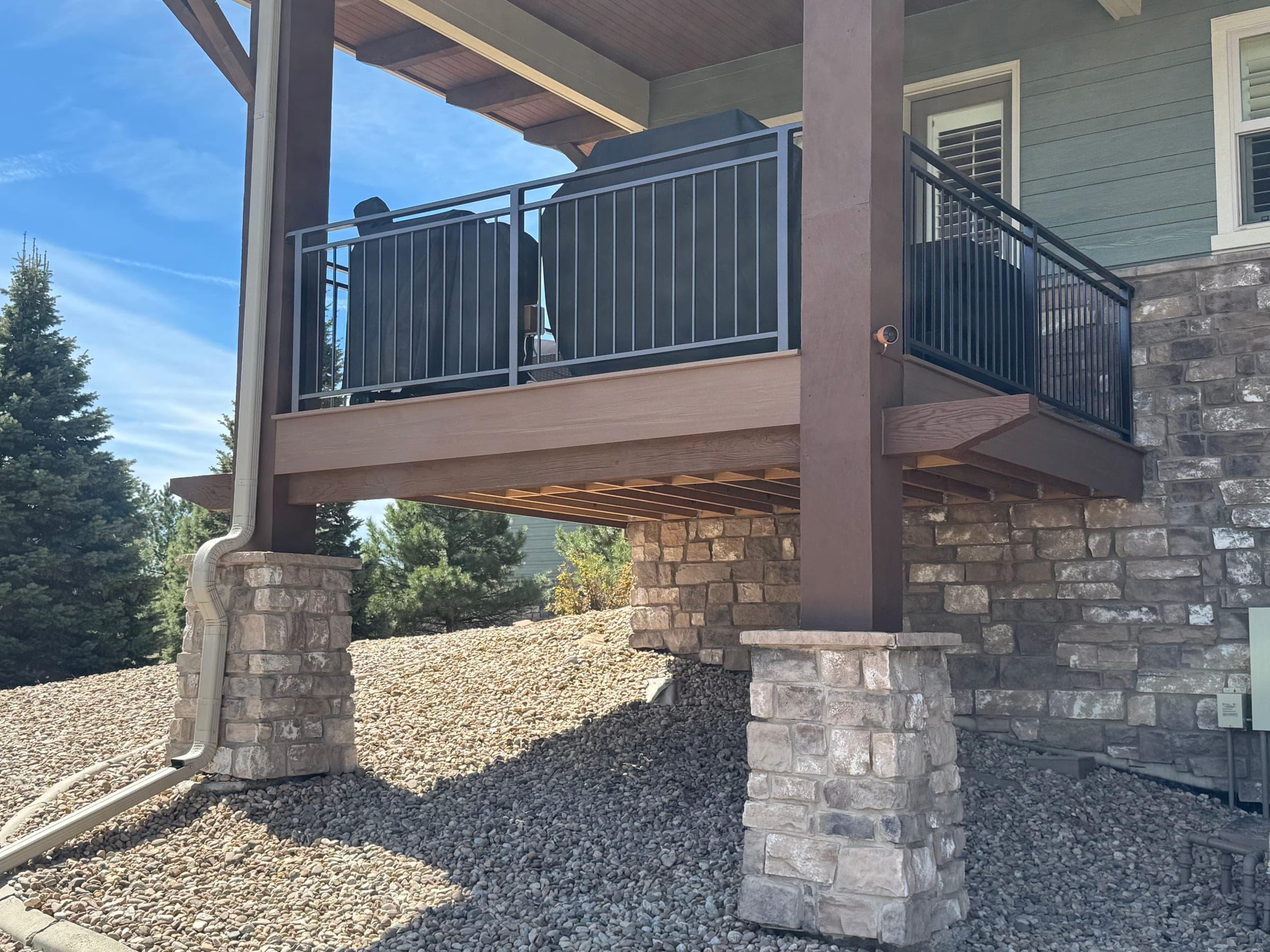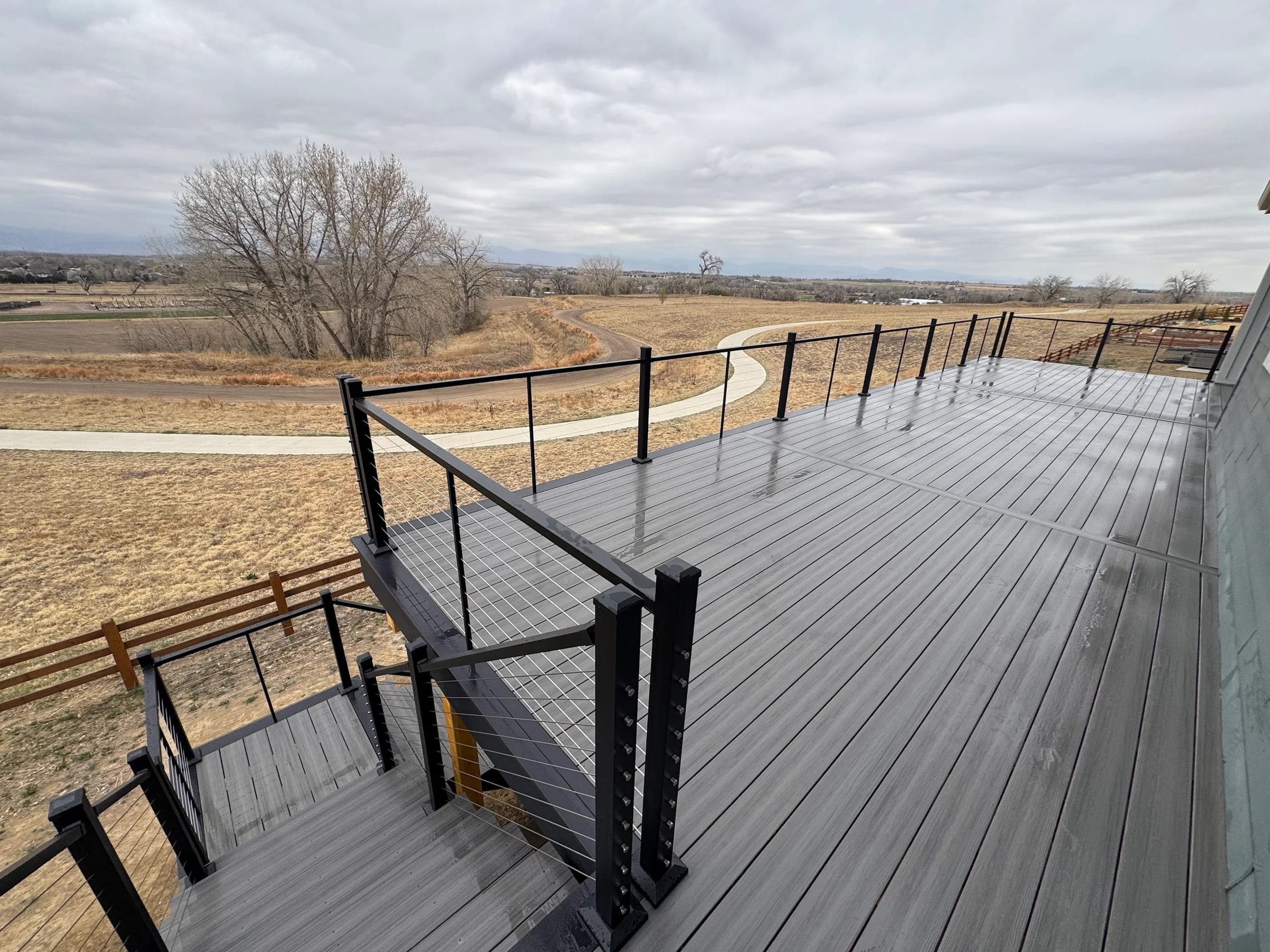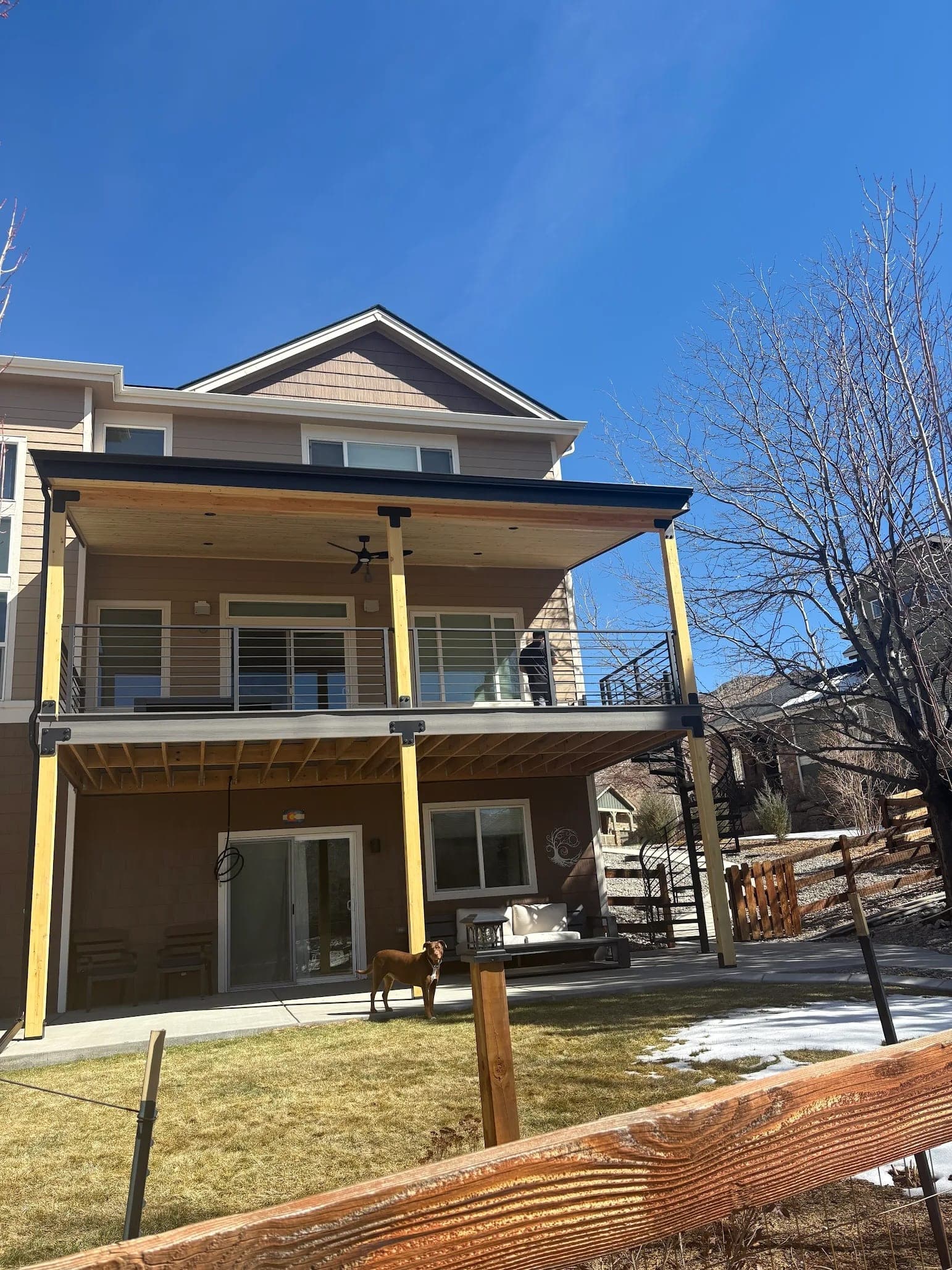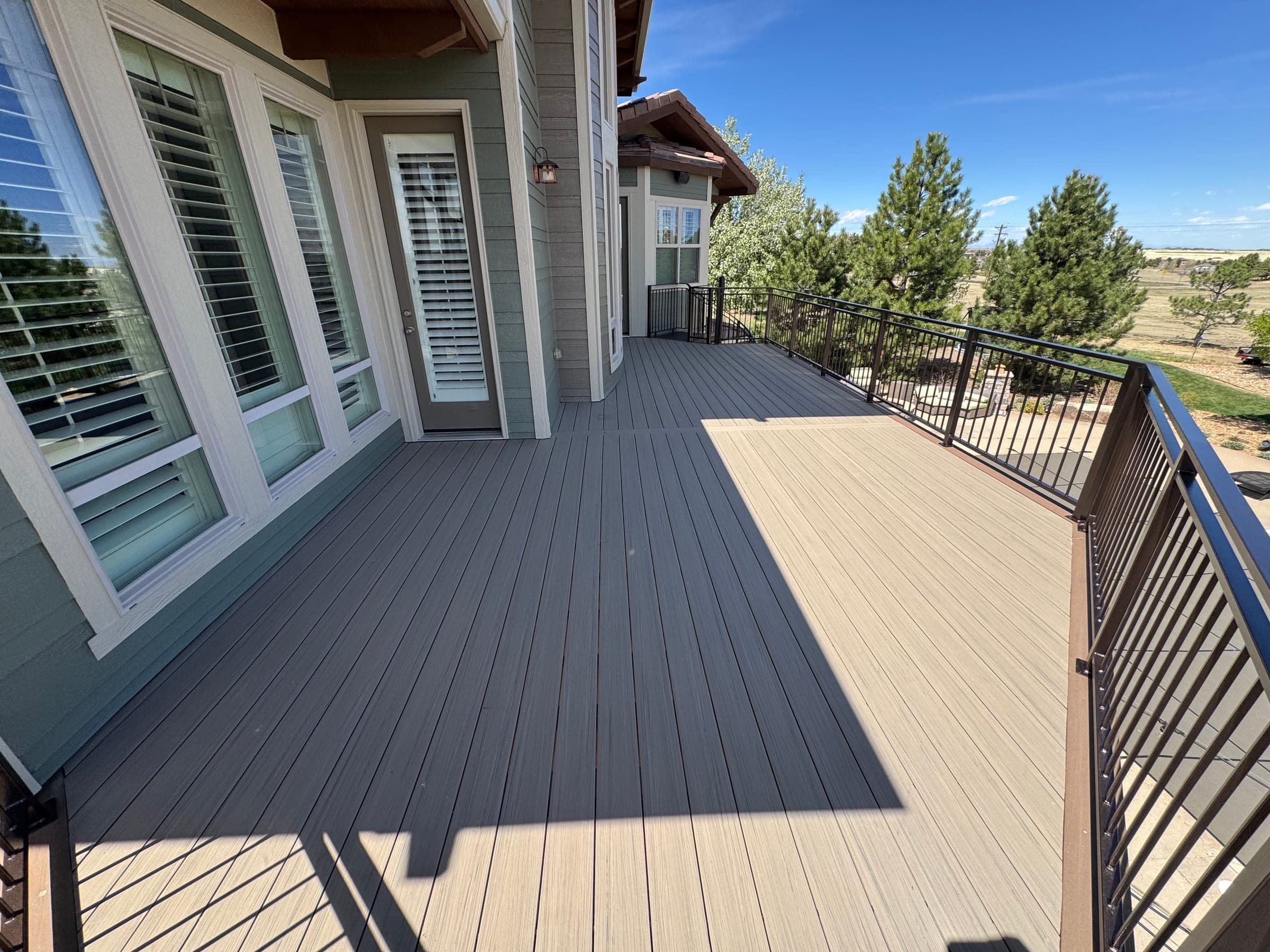
Resurfacing a deck — stripping the old boards and railing and installing new composite decking on the frame you already have — costs $20–$35 per square foot in Denver in 2026. That range covers composite boards, hidden fasteners, joist tape, fascia, and railing, without touching the footings, posts, or joists underneath, as long as they pass inspection.
If your deck's frame is solid but the boards are gray, splintering, and starting to cup, you don't need a rebuild — just a new surface on the structure you already paid for. Here's what deck resurfacing actually costs across the Denver metro in 2026, what it buys, and what decides whether resurfacing is even on the table.
Cost by deck size
Run the $20–$35 per square foot range against the three most common Denver deck sizes, and set it next to what a full teardown-and-rebuild costs for the same footprint — our deck replacement cost guide has the rebuild math:
| Size | Resurface (new boards + railing) | Full replacement (with tear-out) | Typical savings |
|---|---|---|---|
| 12×16 (192 sq ft) | $3,800–$6,700 | $9,500–$16,500 | $5,700–$9,800 |
| 16×20 (320 sq ft) | $6,400–$11,200 | $14,500–$28,500 | $8,100–$17,300 |
| 20×24 (480 sq ft) | $9,600–$16,800 | $20,500–$40,500 | $10,900–$23,700 |
Those resurfacing numbers assume the frame needs nothing but a new skin. The moment joists need sistering, the ledger needs re-flashing, or footings need work, the job starts picking up line items from the repair side of the ledger.
Can your frame stay?
A resurfacing quote is really a frame verdict wearing a price tag. Before anyone talks about board color, this is what gets checked:
| Check | Resurface-ready | Sends it to replacement instead |
|---|---|---|
| Joists (screwdriver probe) | Blade meets resistance everywhere you push it | Blade sinks into soft, spongy wood — active rot |
| Joist spacing | 16" on center for boards run straight; 12" on center for a diagonal layout | Framed at 24" on center with no room in the budget to sister new joists |
| Ledger | Bolted or lag-screwed to the house rim, flashed so water sheds away | Nailed only, unflashed, or bolted into a rotted rim joist |
| Footings | Poured to Colorado's 30–36" frost depth, no heave or tilt | Shallow pour, cracked, or visibly heaved |
| Hardware | Joist hangers, post bases, and fasteners show surface rust at worst | Hardware flaking or visibly losing section |
| Frame age | Generally under ~20 years, built to a reasonably current code | 25-plus years old and stacking more than one finding above |
The joist-spacing line trips up more old decks than anything else on this list. Both Trex's and TimberTech's installation guides cap joist spacing at 16 inches on center for boards run straight, dropping to 12 inches for a 45-degree diagonal layout. Plenty of decks built around the Denver metro in the '80s and '90s were framed at 24 inches on center, because solid wood boards could span that far on their own. Composite can't — which is why a straightforward-looking re-decking job sometimes turns into a framing job partway through.
What $20–$35 a square foot buys
Composite boards themselves run $8–$14 per square foot in materials — roughly a third to a half of the total. The rest of the range covers:
- Hidden fastener clips that lock each board to the joist from the side, so the surface reads as one continuous plane with no exposed screw heads.
- Joist tape over the exposed wood joists — a self-adhering membrane (Trex sells one under its Trex Protect name, backed by a 25-year warranty) that keeps the framing dry under the new composite cap.
- New fascia to hide the old rim joist and cover the cut ends where decking meets the edge.
- Railing, generally $30–$60 per linear foot installed for basic composite, more for glass or cable systems — almost always replaced during a resurface, since tired posts are usually the first sign of a deck's age.
Labor runs roughly 40–60% of the total bill — tearing off the old surface, running hundreds of linear feet of hidden-fastener track, and setting new railing add up faster than board cost alone. That's where labor cost swings widest between bids: a crew that installs Trex's clip systems daily (ours is a Trex Platinum Pro-certified build team) moves faster than one installing it for the first time. Most of what's above — board selection, fastener systems, warranty paperwork — is the same conversation as a new composite deck; resurfacing just skips the foundation work.
Why conversions sometimes need added framing
That 24-inch-joist problem has a fix, but it isn't free: closing the gap to 16 inches on center — or 12 for diagonal — means sistering a new joist alongside roughly every other existing one, or adding blocking between joists. At $150–$400 per joist — the same range as our deck repair and re-decking work — that can add a real line item on a deck with a dozen or more joist bays.
It's not an upsell: a composite board spanning more than its rated distance will sag, bounce, and eventually crack. Sistering now is cheaper than a return trip to fix soft spots in three years.
When is resurfacing the wrong call?
Resurfacing stops making sense the moment the checklist above fails on more than one line. In practice:
- Rot has reached the ledger, a beam, or more than a couple of joists — not just the surface.
- Footings are shallow of frost depth or have already heaved. That's a foundation problem, not a decking problem.
- The frame is 24" on center with enough joist bays that sistering costs more than the resurface-vs-rebuild gap.
- You want a different footprint, height, or layout than what's there. Resurfacing can't change the shape underneath it.
Our deck replacement cost guide walks through full teardown-and-rebuild pricing and the same frame checklist. If your deck lands on that side of the line, a full replacement gets you code-current framing and footings instead of a new surface bolted over old problems.
Get a straight verdict
The only way to know which side of this line your deck is on is to have someone probe the joists, check the ledger, and look at the footings — not guess from the driveway. Schedule a free on-site inspection and we'll tell you straight: resurface as-is, sister a few joists first, or replace. Want a planning number before anyone comes out? Run your deck's dimensions through our deck cost calculator to compare resurfacing against a rebuild for your size.