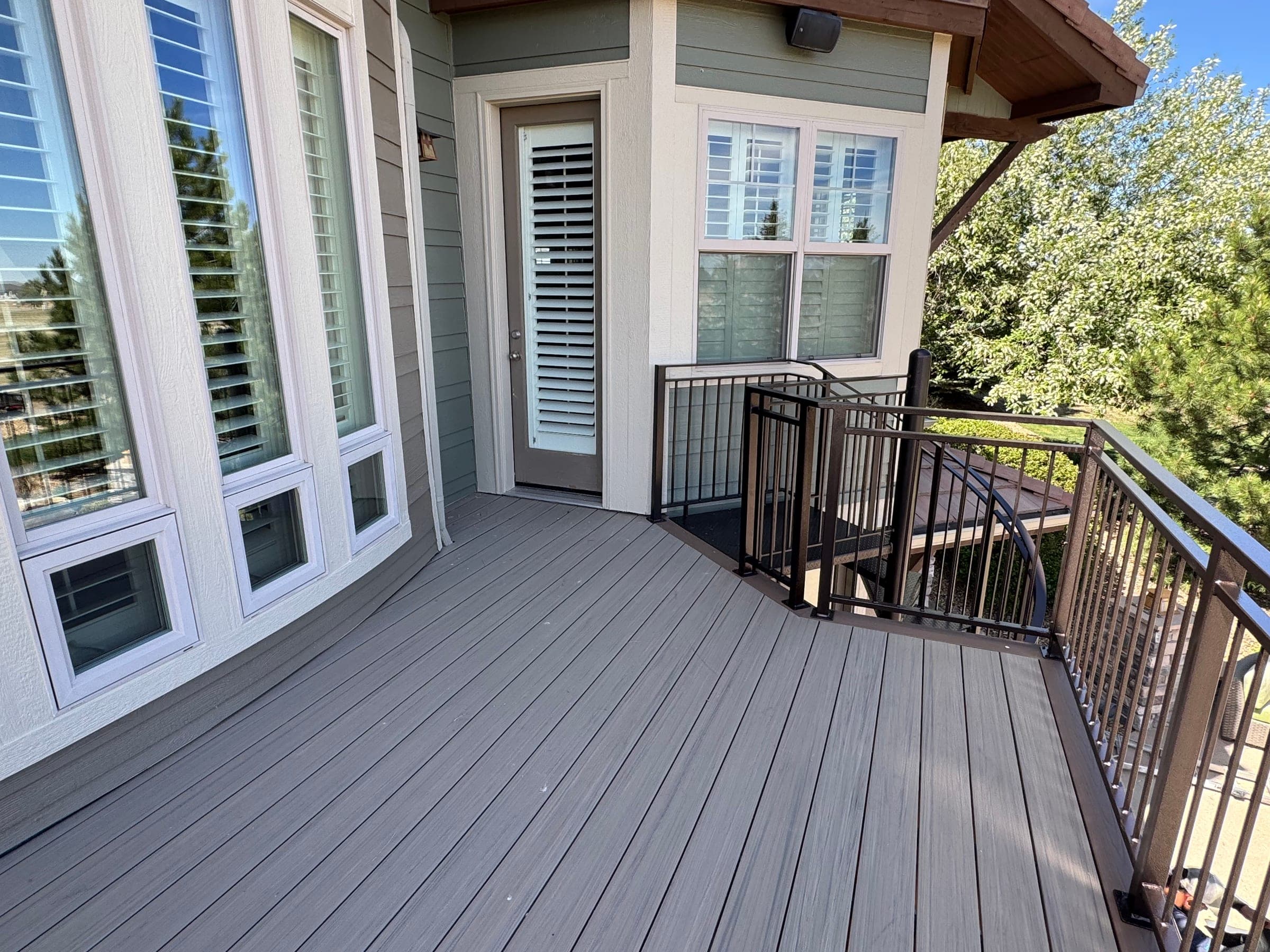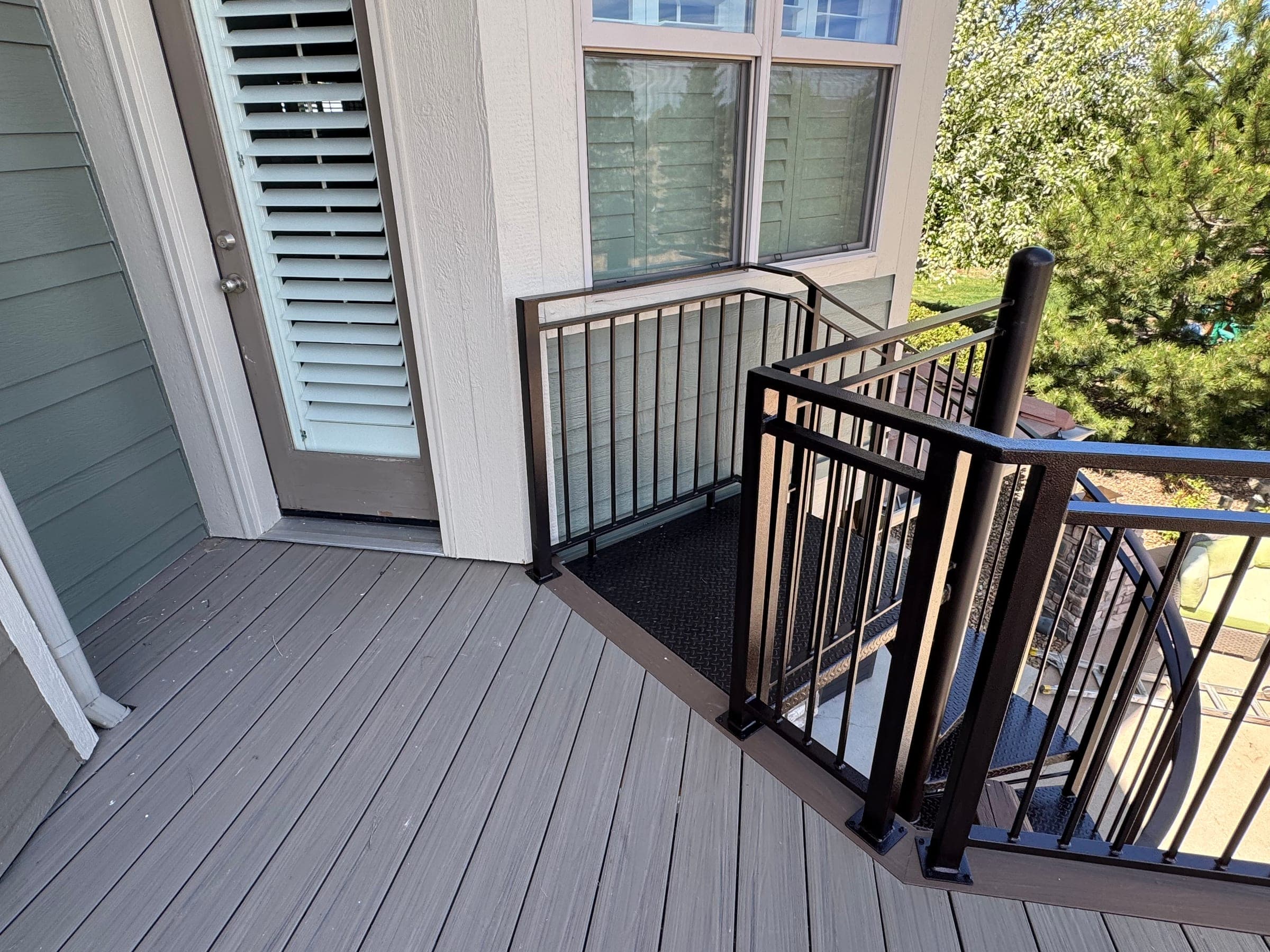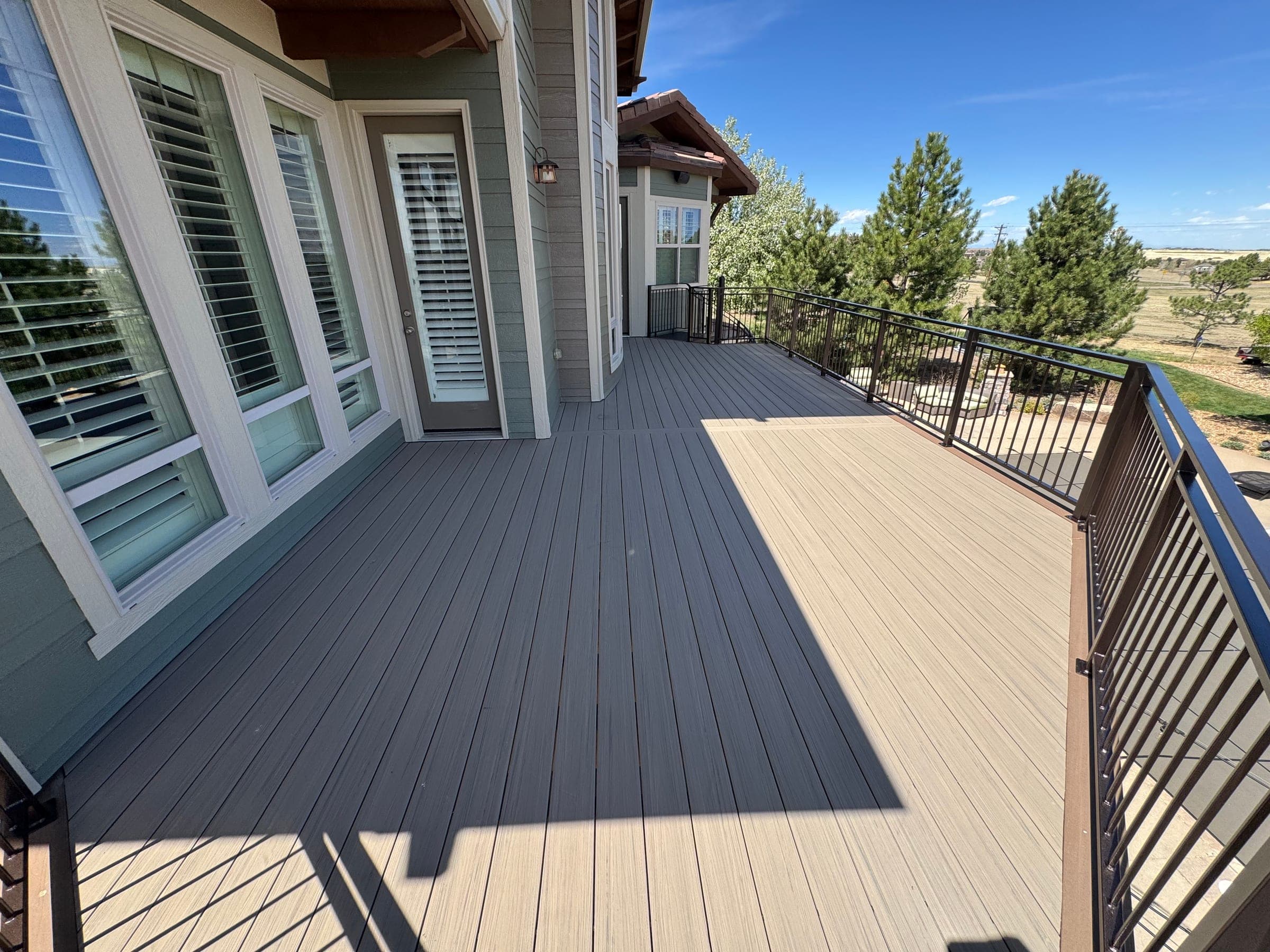
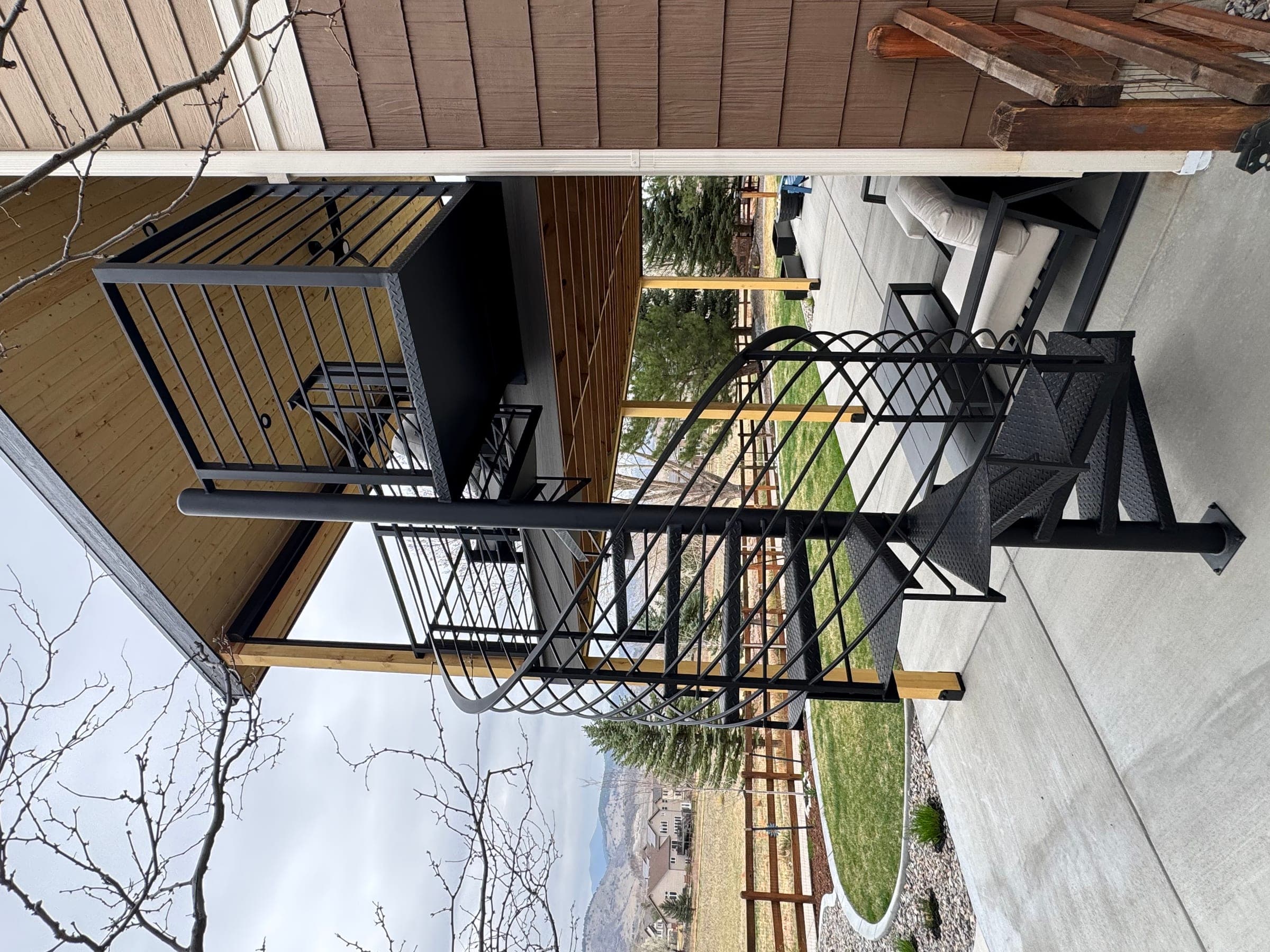
Colorado's 300 days of sun is really about 245 sunny days — enough that UV runs about 25% stronger than sea level at south-metro elevation, so a wood deck rated for restaining every 3 years needs it every 18–24 months. Add 35–90 freeze-thaw cycles a year, and the answer is capped composite, lighter colors, rated fasteners, and shade.
Coloradans love to brag about our 300 days of sunshine. The truth is closer to 245 fully sunny days plus another 100-plus with partial sun — still more than almost anywhere else in the country. That sun is one of the best reasons to build a deck here, and it's also the single biggest enemy of every deck we build.
The Numbers That Matter
Sunny days per year: Denver averages 245 clear days and 115 more with measurable sun-plus-clouds. Colorado Springs and Pueblo run slightly higher.
UV intensity at altitude: UV radiation increases roughly 4% per 1,000 feet of elevation. Across the south Denver metro's 5,800–6,200 feet, UV runs about 25% stronger than at sea level. In the high country, 40–60% stronger.
Freeze-thaw cycles: The Front Range logs roughly 35–90 freeze-thaw cycles a year — days that cross 32°F in both directions. Every cycle works water deeper into wood grain, screw holes, and concrete.
Temperature swing: A 50°F day-to-night swing in spring and fall is routine. Boards expand and contract with every one.
Snow: The Front Range averages 50–60 inches a year, and code designs decks here for a 30 psf snow load. All of it sits on, melts into, and refreezes inside your deck.
Hail: Colorado is a top-three U.S. state for hail damage claims. A 1-inch stone falls at about 50 mph.
How Hot Do Boards Actually Get?
Surface temperature is the complaint we hear most, so here are typical readings on a 90°F sunny afternoon, full sun:
| Surface | Typical temp |
|---|---|
| Sealed cedar or redwood | 110–125°F |
| Light gray / tan capped composite | 120–135°F |
| Dark espresso composite, cool-surface cap | 125–140°F |
| Dark espresso standard composite | 150–160°F |
Two levers control it: color choice alone is worth 10–30°F, and cool-surface capstock (TimberTech CoolDeck, Trex Transcend Lineage) cuts another 30–35°F off a dark board. On a south- or west-facing deck, use both.
What This Climate Does to Decking
Wood fades and dries faster than the manufacturer's chart predicts. A cedar deck rated "re-stain every 3 years" in Ohio realistically needs attention every 18–24 months here — $400–900 per clean-and-restain hired out, which is how a pressure-treated deck quietly costs $3,000–5,000 per decade in upkeep. UV breaks down lignin and pulls oil out of the surface; without re-treatment, boards check, cup, and split.
Dark composite gets very hot. See the table above — 160°F softens lower-grade caps too.
Freeze-thaw works fasteners loose. Water gets into screw holes, freezes, expands about 9%, and ratchets the fastener looser with every one of those 35–90 annual cycles — standard galvanized doesn't stand a chance.
Hail dents soft materials. PVC and lower-density composites can show dimples after a serious storm. Capped composites and aluminum hold up best. Wood dents too, but sands out.
Snow and ice accelerate everything. Snow piled for weeks keeps the surface saturated and stresses finishes. Plastic shovels only — metal edges gouge composite and PVC, and gouges void fade warranties.
What to Build With Here
Along the Front Range, our material recommendations shift compared to lower-altitude, lower-sun regions:
- Composite or PVC with a UV-stable cap and a 25-to-50-year fade warranty. Most major lines qualify — our brand-by-brand comparison covers where each manufacturer actually stands.
- Light-to-medium colors unless you specifically order cool-surface technology. Save deep espresso for shaded decks and covered patios.
- Hardwood (Ipe, Cumaru) over softwood if you want real wood — density makes it far more UV-tolerant. Plan on annual oiling or accept the silver-gray patina. The full wood-vs-composite math is in our materials guide.
- Stainless or polymer-coated structural fasteners throughout. Standard galvanized is a false economy at 35–90 cycles a year.
- A shade structure if the deck faces south or west — a pergola runs $6,000–12,000, a solid-roof cover $15,000–28,000, and either one extends both your season and your boards' life. Our pergolas and patio covers page covers the options.
What It Means for the Structure
Footings have to sit 30–36 inches down to get below Front Range frost depth, or the first wet winter heaves them. The ledger connection to the house needs proper flashing, because that's where snowmelt sits and refreezes against untreated house framing — ledger failure is the classic cause of deck collapse. Joist tape over the framing tops adds a few hundred dollars to a build and blocks the screw-hole water intrusion that freeze-thaw exploits. None of this is visible on the finished deck, all of it decides whether the deck is sound in year 20 — our deck safety inspection guide shows you what to check on a deck that's already standing.
Quick Climate Checklist Before You Build
Before signing a contract for a deck in Colorado, make sure your contractor has answered: What direction does it face, and how many sun hours a day? Is the material's fade and heat warranty valid at our elevation? Are fasteners rated for freeze-thaw cycling? Is the framing sized for a 30 psf snow load? Is there a drainage plan for snowmelt, and a shade option budgeted?
The Bottom Line
Colorado's sun is a feature, not a bug. But the same UV that makes your backyard amazing in July is burning the finish off your boards 25% faster than the national brochures assume — so pick materials built for our climate, plan for shade, and budget a shorter maintenance clock on natural wood.