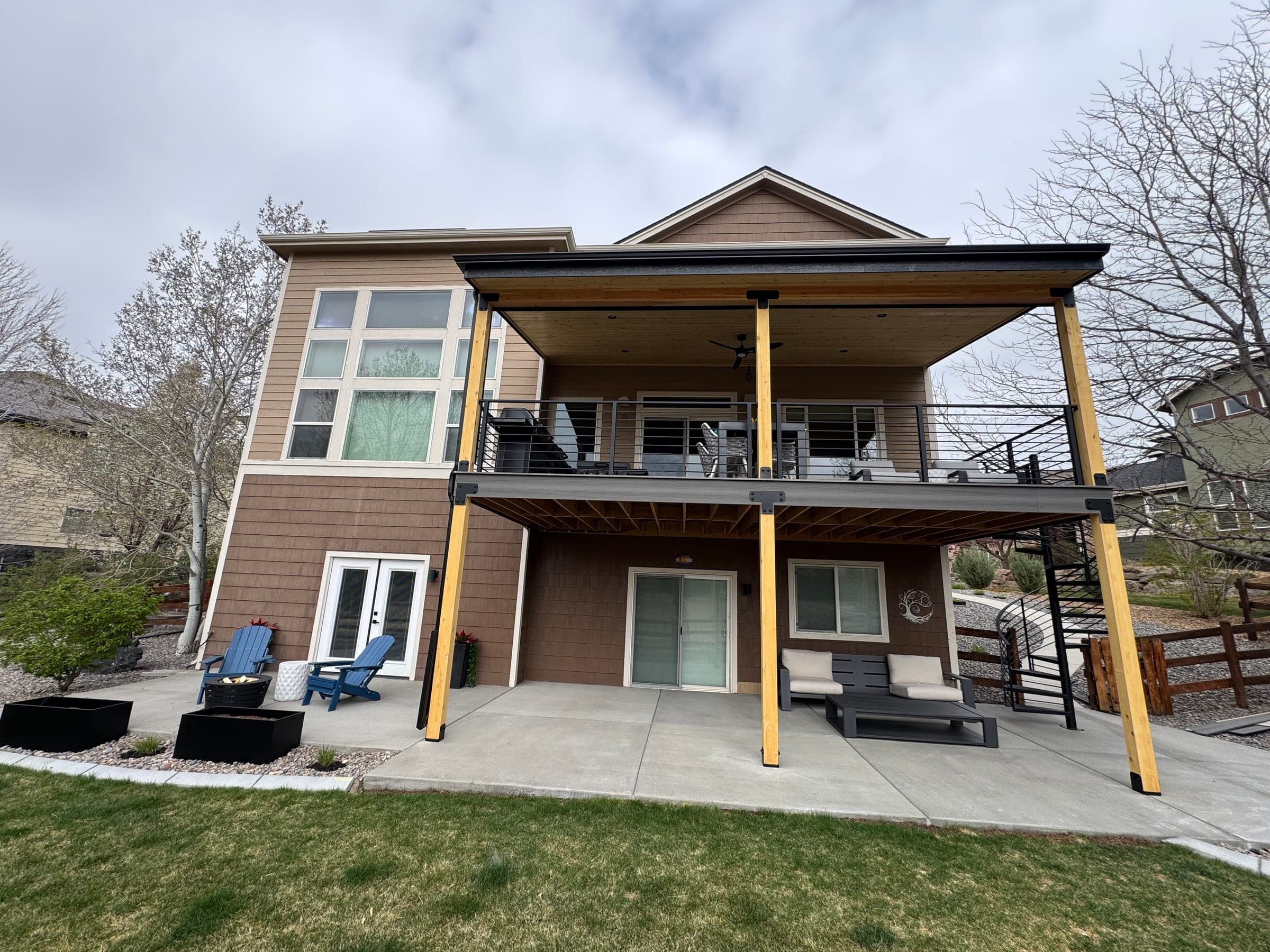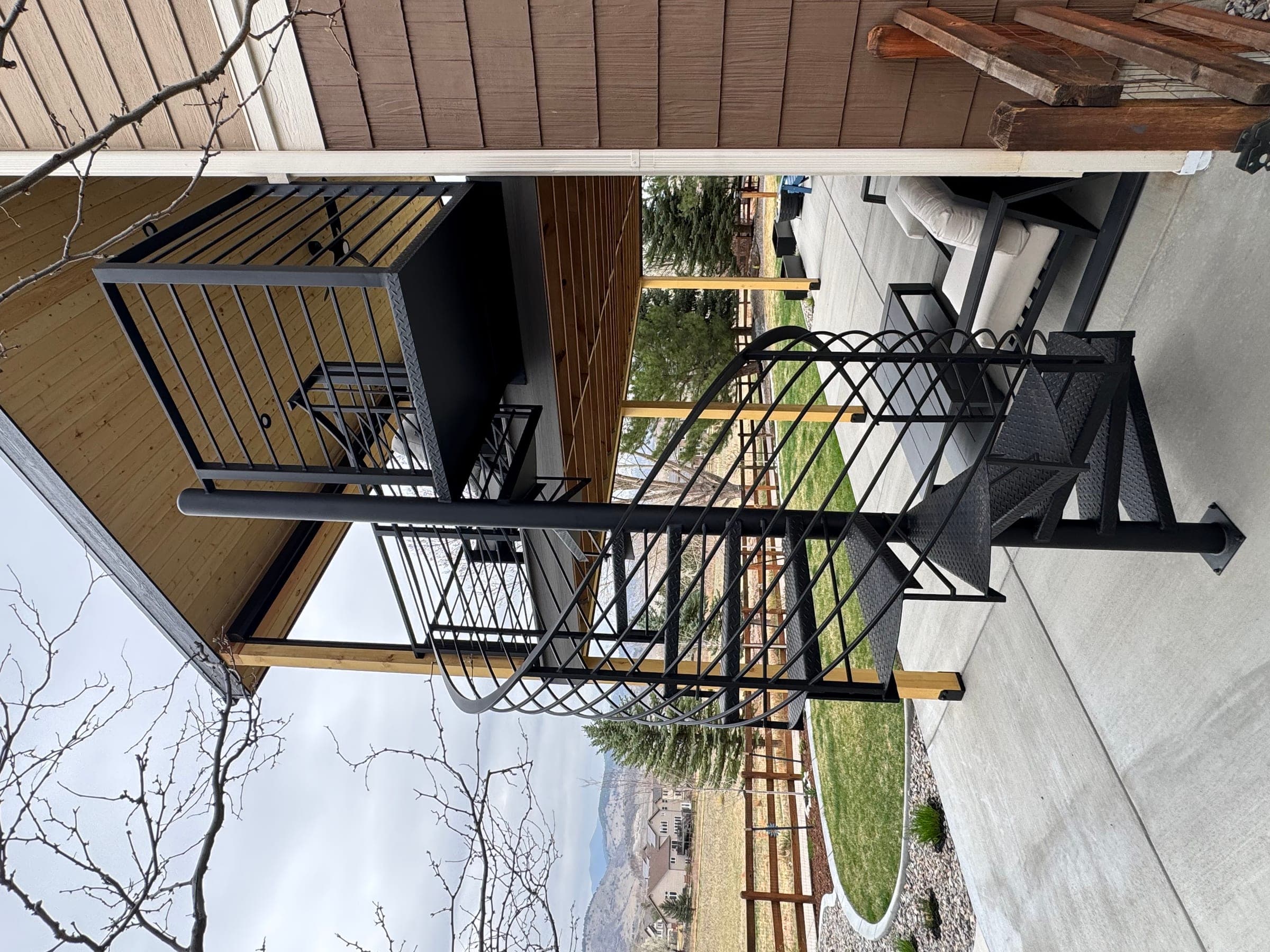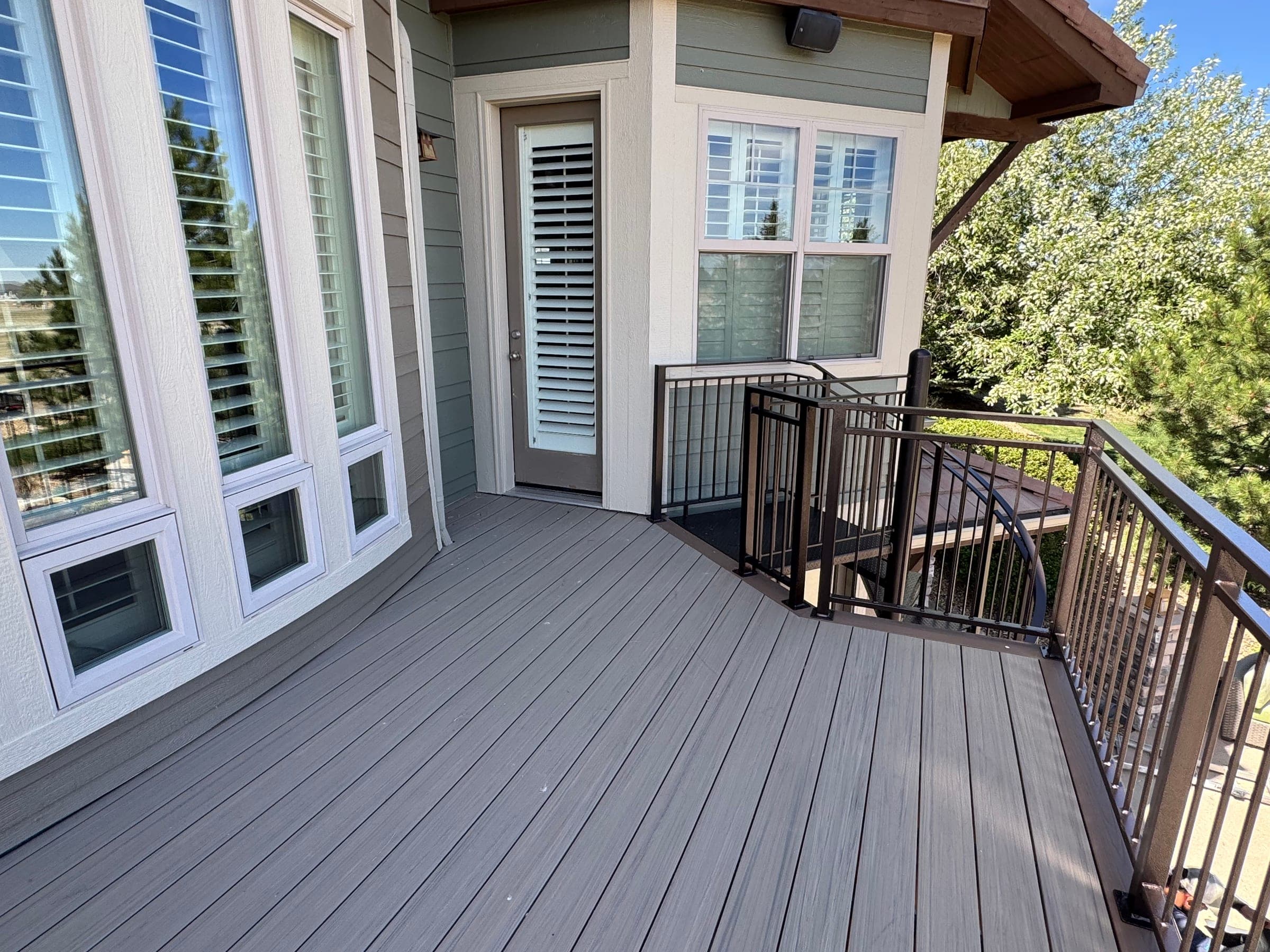
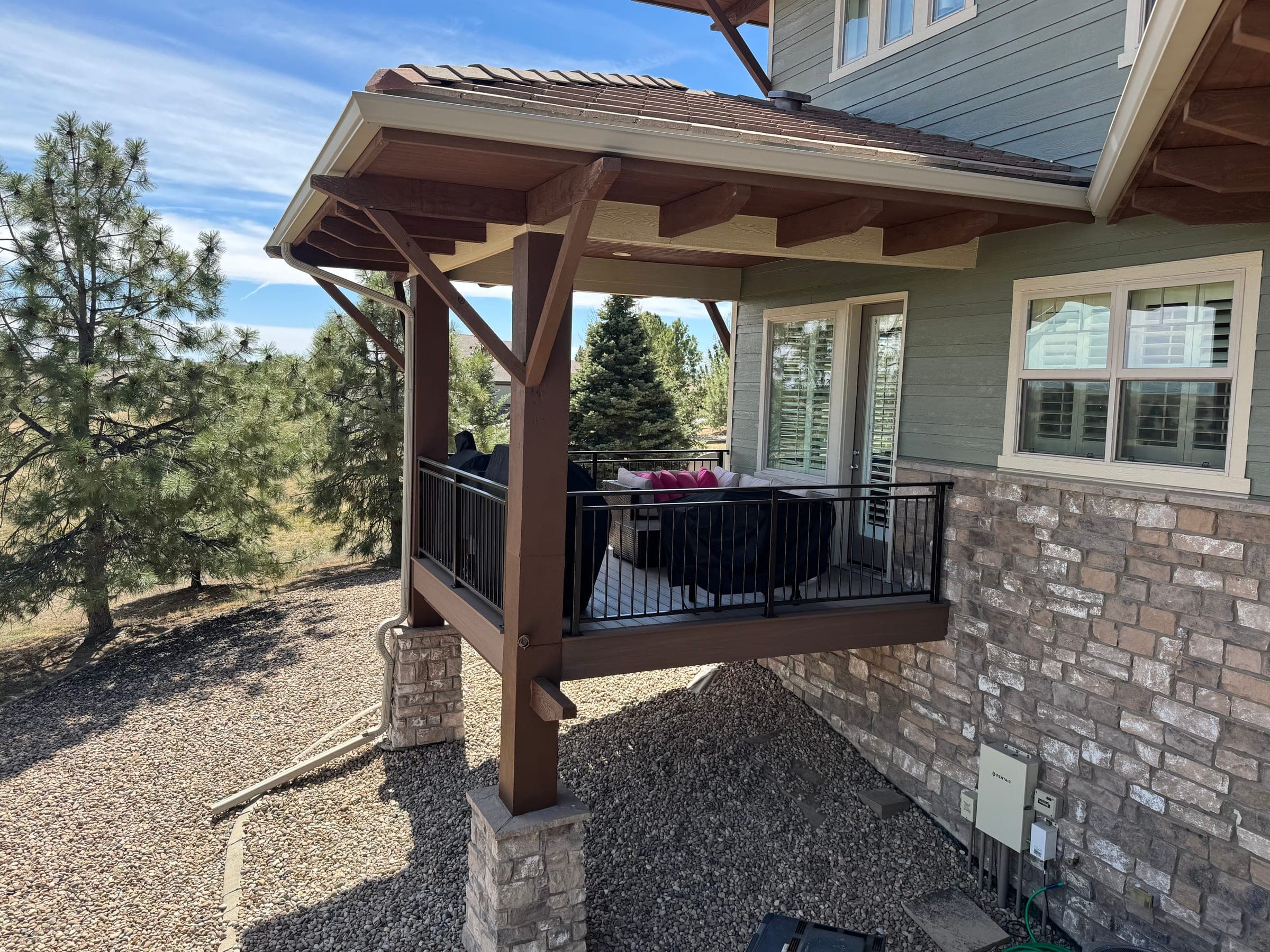
Composite costs more up front — $40–$70 per square foot installed versus $20–$35 for pressure-treated pine in Denver — but wins over ten years. A 320 sq ft wood deck at about $9,000 needs $3,000–5,000 in restaining over a decade; the same deck in capped composite at roughly $16,000 needs soap and water, and past year ten composite is ahead.
Picking a decking material is one of the biggest decisions in a deck project. The surface you choose sets the installed rate — from $20–35 per square foot for pressure-treated pine to $50–85 for PVC — and dictates how many weekends you lose to maintenance. Here are the numbers, the trade-offs, and a decision tree to help you pick.
The Two Camps
Natural wood means pressure-treated pine, cedar, redwood, and tropical hardwoods like Ipe and Cumaru — real grain, lower entry cost.
Composite is a manufactured board of wood fibers and recycled plastic wrapped in a protective polymer "cap"; modern PVC and mineral-based boards drop the wood content entirely. The pitch: wood's look, plastic's lifespan.
What It Costs
Denver-metro 2026 ranges, material plus installation. Composite boards alone run $8–14 per square foot; labor adds $15–35 per square foot — roughly 40–60% of the total.
| Material | Installed / sq ft | Lifespan | Maintenance |
|---|---|---|---|
| Pressure-treated pine | $20–$35 | 10–15 yrs | Stain/seal every 2–3 yrs |
| Cedar | $25–$40 | 15–20 yrs | Stain/seal every 2–3 yrs |
| Redwood | $30–$45 | 20–25 yrs | Stain/seal every 2–3 yrs |
| Tropical hardwood (Ipe, Cumaru) | $45–$75 | 25–50 yrs | Oil annually (or let it gray) |
| Capped composite (Trex, TimberTech, Fiberon) | $40–$70 | 25–30 yrs | Wash 1–2x per year |
| Mineral-based composite (Deckorators) | $40–$70 | 30+ yrs | Wash 1–2x per year |
| PVC / cellular vinyl (AZEK, Wolf) | $50–$85 | 30–50 yrs | Wash 1–2x per year |
| Aluminum (Wahoo, AridDek) | $50–$90 | 50+ yrs | Rinse only |
For a typical 16×20 (320 sq ft) deck with railing, that's roughly $6,500–11,000 in pressure-treated, $13,000–25,000 in capped composite, and $16,000–27,000 in PVC. For calibration: the 2025 Zonda Cost vs Value report puts the national-average 16×20 composite deck addition at about $25,000 (wood about $18,000) — with wood recouping ~82% at resale and composite ~68%. Full size-by-size breakdown: our deck cost guide.
The 10-Year Math
Sticker price isn't the whole story. That pressure-treated deck wants a clean-and-restain every 2–3 years — $400–900 per round hired out — plus board and fastener repairs as UV and freeze-thaw do their work, on a surface that's aging anyway. The composite version just needs soap and water, and the day-one price gap narrows year by year.
The Colorado Factor
The comparison tilts harder toward low-maintenance materials here than in most markets: at the south metro's 5,800–6,200 feet, UV runs about 25% stronger than sea level, so a wood deck rated "re-stain every 3 years" realistically needs it every 18–24 months. Add 35–90 freeze-thaw cycles a year working water into every screw hole, and wood ages faster here than the national averages suggest. The full Colorado materials guide goes deeper.
What's New in 2026
Cooler-surface technology. A standard dark composite board in direct Colorado sun can hit ~160°F on a 90°F day. TimberTech's CoolDeck and Trex's Transcend Lineage now run 30–35°F cooler — worth it for dark tones facing south or west.
Mineral-based composites. Deckorators Voyage and Vault replace wood flour with a mineral core — lighter, stronger, no moisture uptake, rated for ground-contact installs most composites can't.
Higher recycled content. Trex boards are roughly 95% recycled material — often outranking tropical hardwoods on sustainability, which carry deforestation concerns.
Realistic grain. Four-sided embossing and multi-tonal streaking have closed most of the visual gap — premium capped composite is hard to distinguish from stained hardwood a few feet back.
Hidden fasteners as default. Almost every composite line now ships with a grooved-edge clip system — no screw heads, no exposed holes for freeze-thaw to exploit.
Decision Tree
Run through these in order. Stop at the first one that fits.
1. Is your total budget under $12,000 for a standard 300–400 sq ft deck? Pressure-treated pine at $20–35 per square foot. Plan to re-stain it every other year.
2. Do you want real wood grain and you're willing to maintain it? Cedar or redwood balances looks and cost. Ipe or Cumaru for a 30-year deck if you don't mind the price or weight.
3. Will you sell the house in the next 5–7 years? Entry capped composite (Trex Enhance, TimberTech EDGE, Fiberon Good Life). Strong resale appeal, zero maintenance during your ownership, bottom of the $40–70 range.
4. Forever home, or you hate yard work? Premium PVC (TimberTech AZEK, Wolf) or mineral-based composite. Highest upfront cost, lowest lifetime cost, warranties from 50 years to lifetime.
5. Full sun and you want dark colors? Request a cool-surface capstock line. Don't let anyone sell you a standard dark composite for a south-facing deck — that's the 160°F board.
6. Coastal, fire-zone, or rooftop project? Aluminum. It costs more and it's still the right tool.
A Few Trade-offs
Composite isn't perfect. It scratches (especially older uncapped lines), dark colors get hot without cool-surface tech, and you can't sand and refinish it like wood. If a board fails in year 18, you're matching a discontinued color.
Wood isn't doomed either — a well-maintained Ipe deck outlasts most composites, and no manufactured board matches weathered cedar or oiled hardwood. If you enjoy spring deck-prep, wood rewards the effort.
The Short Version
Tight budget, short horizon: pressure-treated pine. Want real wood and don't mind upkeep: cedar or hardwood. Want to install once and forget it: capped composite or PVC, with a cool-surface capstock if the deck bakes in the sun. It depends more on how long you'll own the house than on which material is "best" — run your numbers in the cost calculator, check how long each composite brand lasts, and if you might sell, read what a deck is worth at resale in Denver.
If you're in our service area and want a fixed quote with material options side-by-side, reach out for an estimate. We'll walk the site, measure, and give you real numbers — not ranges.