Actual mountain building
Evergreen is where our work stops being suburban. Lots are steep, bedrock sits close to the surface, the snow that lands on a roof in December is still there in February, and the forest that makes the place beautiful also makes wildfire a permanent consideration — all of which is why a builder who works exclusively on the metro floor is a genuine risk up here, not a mere mismatch.
Fire-wise, by default
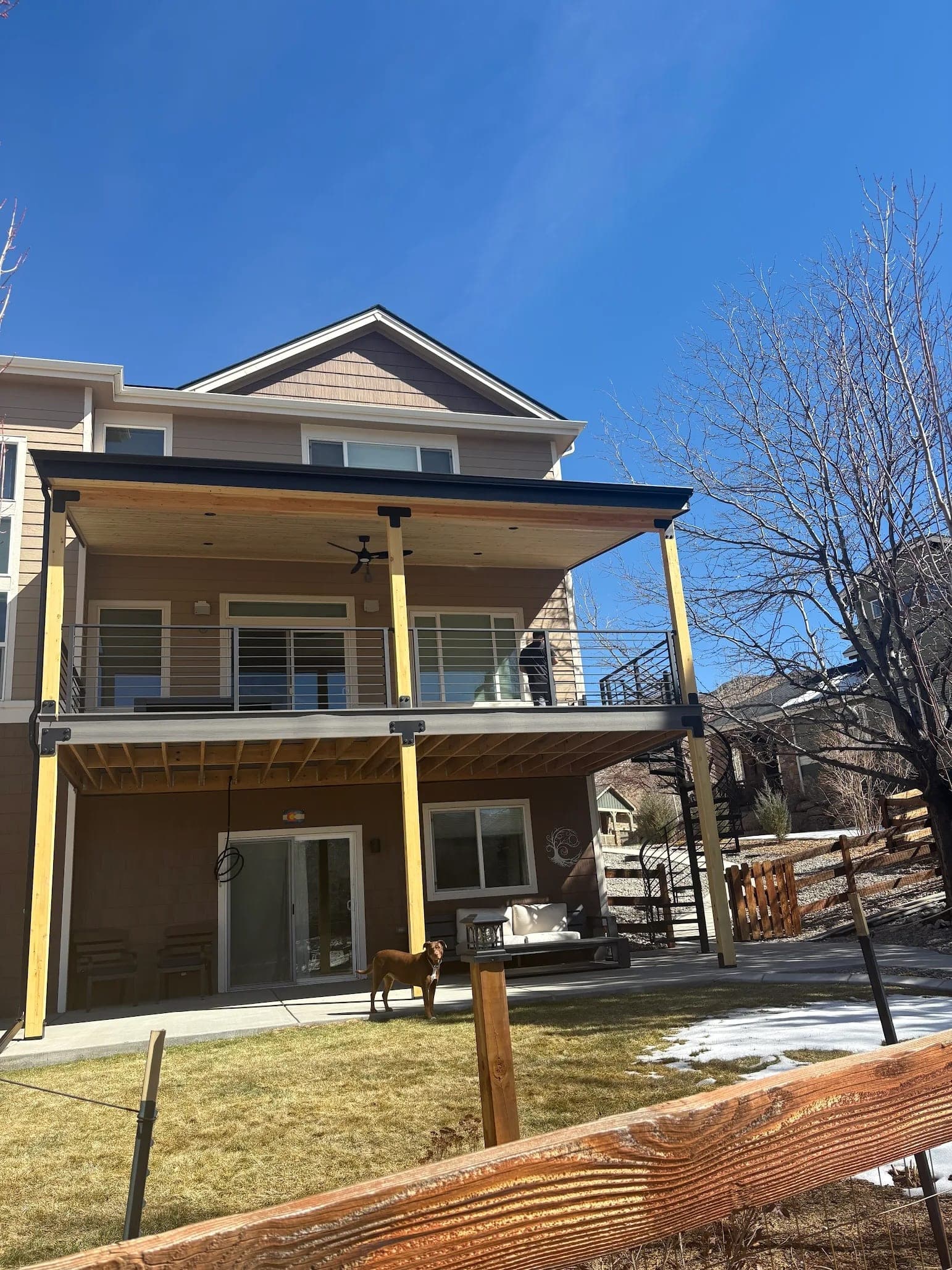
A deck on a mountain lot is one of the most ember-exposed parts of the house. Embers settle on the surface, drift into the framing bays underneath, and find whatever's been stacked down there over the years.
So the detailing is deliberate: composite or mineral-based boards instead of untreated softwood, framing bays closed or screened so embers can't nest below the deck, no combustible storage designed into the underside, and honest attention to what's growing in the first few feet around the structure. Where your parcel carries specific ignition-resistant requirements, we confirm them with Jefferson County and detail to them before drawing.
These choices won't make a deck fireproof, but they meaningfully reduce a known risk and cost far less to build in than to retrofit — the same approach we take on the foothills edge in Golden and Boulder, applied to steeper, more wooded ground.
Snow is the load that governs
On the plains, the design problem for a covered structure is wind pulling upward; up here it's the opposite — mountain snow loads run well above metro requirements, and a patio cover or roofed section has to carry a heavy accumulation that lingers for months. That means larger beams, more posts, and bigger footings than the same span would need in Denver — the most common thing builders get wrong on mountain covers, and it isn't cosmetic: it's the kind of error that fails under two feet of wet spring snow.
Rock, slope, and access
Shallow bedrock and decomposed granite show up regularly on Evergreen lots, so footings occasionally need drilling and pinning rather than augering. Steep sites mean materials get staged and often moved by hand where no machine can reach. Both affect the schedule and the labor, and both are things we'd far rather establish at the walkthrough than discover on day two.
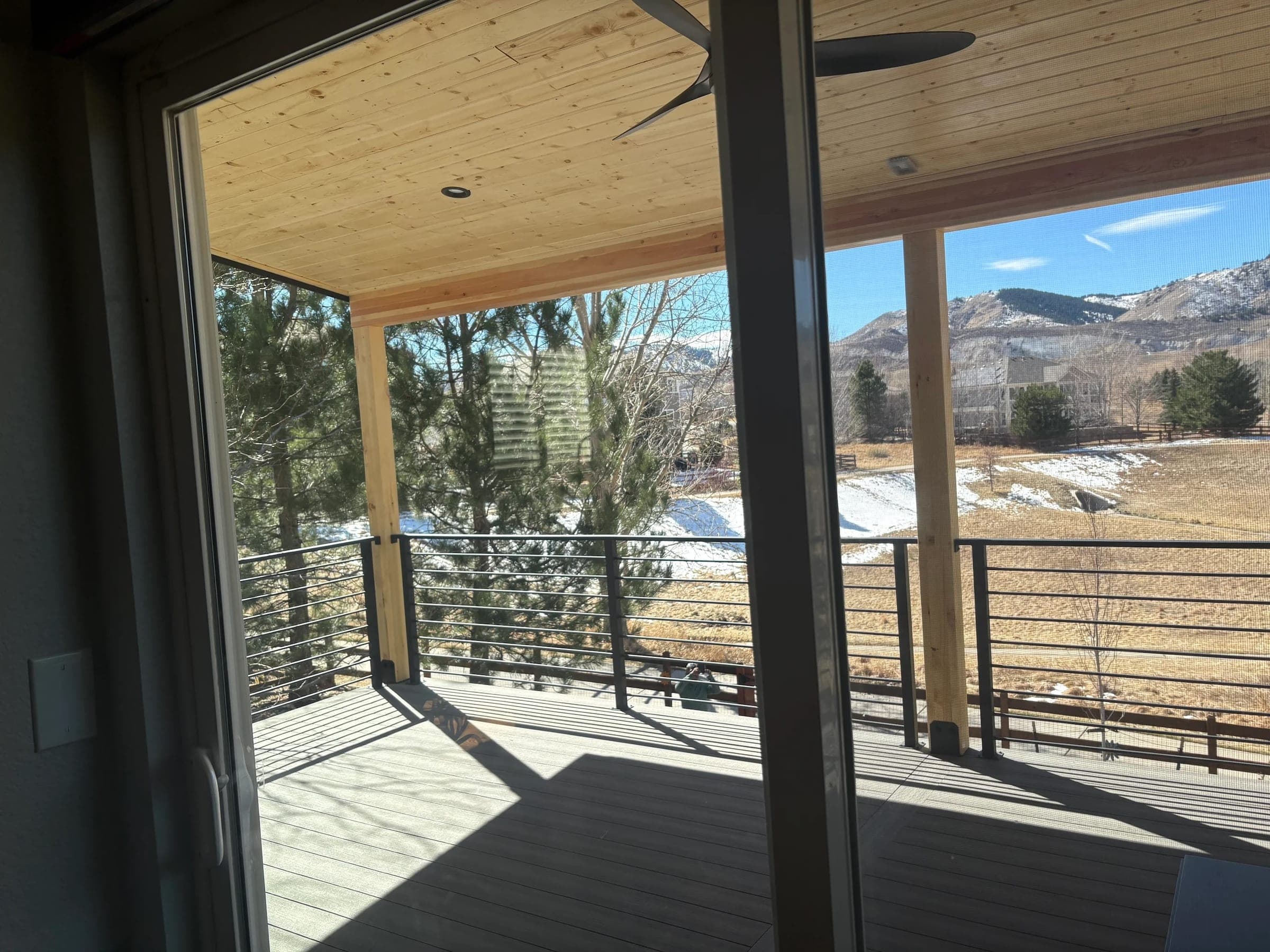
Elevated decks on mountain lots are the best rooms in the house, and railing choice — cable or slim aluminum — keeps the trees and ridgeline in view instead of behind a picket screen.
Aging mountain decks
Plenty of Evergreen homes carry a deck built decades ago, and mountain weather is harder on a structure than the calendar suggests — sun at elevation, snow sitting on it for months, and moisture cycling through the framing every spring. We inspect before quoting, starting at the ledger where the deck meets the house.
Sometimes the framing is genuinely sound and a re-deck in fire-wise composite is the honest, cheaper answer. Sometimes an old structure was never sized for the snow loads it's been carrying, in which case a full replacement isn't an upsell — it's the finding. We put either conclusion in writing.
Permits through the county
Evergreen is unincorporated Jefferson County, so there's no separate city counter — the county handles your permit, and its mountain requirements differ from what applies down on the plains. Some communities here also run covenants with architectural review.
We produce the drawings to the county's standard, file the permit, prepare any covenant packet, and manage inspections through final sign-off.
Up the hill from us
Evergreen is roughly forty-five minutes from our shop in Centennial, weather depending, so we plan mountain builds around the season rather than a fixed February-to-July schedule.
Everything we build carries our written guarantee. Start with the cost calculator or our composite deck cost guide for a planning range, then tell us about your lot — on mountain sites, walking it together is the only way to quote it properly.