
The high county
Teller County is the highest ground we build on. It starts where Ute Pass tops out at Woodland Park and runs west and south across 8,000 to 9,500 feet of pine and aspen — Divide, Florissant, and the mining towns of Cripple Creek and Victor. The housing is cabins, log homes, and 1970s–2010s custom builds on wooded, rocky 2–35 acre parcels. Long winters and deep snow shape every deck here.
Where we build in Teller County
Woodland Park is the county's biggest town and the heart of our Teller County work — 1970s–2000s mountain homes on pine lots with Pikes Peak views, plus newer subdivisions. Green Mountain Falls straddles the county line with El Paso County in a shaded valley just below the pass. West of Woodland Park, the Divide and Florissant country is acreage: cabins and custom homes where the deck is often the best room on the property. Cripple Creek and Victor are the far end, with a longer lead time. Coming up from the Springs, our Cascade work sits at the bottom of the same pass.
Permits: the county counter, and Woodland Park's two steps
The Teller County Building Division, at 800 Research Drive in Woodland Park, issues permits for unincorporated parcels — Divide, Florissant, and the acreage around them. It publishes a Deck Permit Application and Site Plan Requirements, and the county code adopts the 2021 IBC and IRC, 2018 IECC, and 2023 NEC with local amendments. Inside the City of Woodland Park, the city issues a Zoning Development Permit for setback review first, then the Pikes Peak Regional Building Department issues the building permit. Green Mountain Falls permits through PPRBD for the whole town, county line or not. Cripple Creek and Victor have their own arrangements. We confirm the right counter for your parcel, prepare one clean packet, and manage inspections through final.
Fifty-seven psf, thirty inches of frost
The 2023 Teller County Building Code sets ground snow load at 57 psf and roof snow load at 40 psf for all structures, with no reductions, and a minimum frost depth of 30 inches. Woodland Park, under PPRBD, uses the same 57/40 figures. Those numbers size every beam, post, and footing under a covered deck or patio cover. At this elevation, snow that lands in November stays until spring. Older cabin decks framed to lighter assumptions deserve a look before the next big storm.
Cabins, acreage, and composite
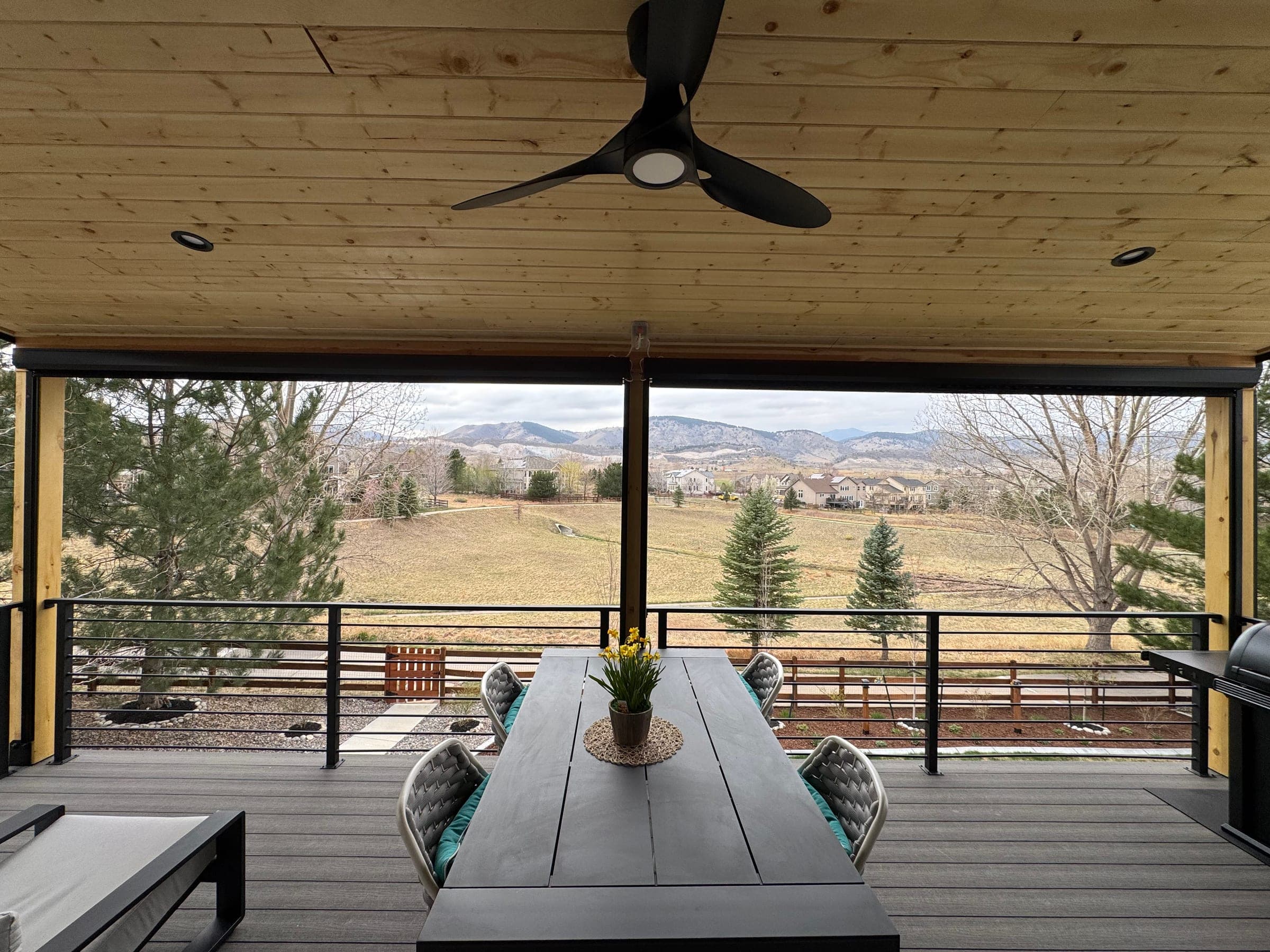
The most common Teller County project is replacing a cabin-era wood deck that has spent decades under snow, shade, and altitude UV. Where the frame is sound we say so and price a re-deck in capped composite at $20–$35 per square foot; where it is undersized for the snow tier or the footings never reached frost, a replacement built once beats repairing twice, and we put that in writing. Composite earns its place up here because it handles months of ice and thaw with soap and water. On acreage with a view, a slim aluminum or cable railing keeps it.
Ninety-five minutes and up, in blocks
From our shop in Centennial, Woodland Park is about ninety-five minutes and the Divide and Florissant country is further. Mountain work is scheduled in blocks, with site visits and build days run back to back. Price and the warranty do not change with the mile marker; lead time does, and the short season rewards planning early. Run the cost calculator for a planning range, then tell us what you are planning.