
Two ends, two different projects
Commerce City's two halves have almost nothing in common. The older southern end, near the river and the industrial corridor that gave the city its name, is compact and established — modest post-war housing on smaller lots with trees that have had time to grow. The northern end is barely twenty years old: Reunion, Buffalo Run, and the subdivisions that turned Adams County farmland into a grid of new rooftops, where the sky is enormous and the shade is theoretical.
Almost every project we quote here falls cleanly into one bucket or the other.
North: build the shade, engineer for the wind
New neighborhoods on former farmland have a problem. The decks that came with the houses are structurally fine and functionally unusable from mid-afternoon on, because there's no canopy, and won't be for decades. The same open ground that gives the view gives the wind a clear run.
So the work there is built shade that can take a beating: a pergola with slats sized to the sun angle you face, or a solid roof for protection from hail and storms that build over the plains. What makes it a northern Commerce City job is the engineering — an exposed-lot cover pulls upward in a windstorm, so post bases, connections, and footings get specified for it. It's the same detailing our Erie and Thornton builds get.
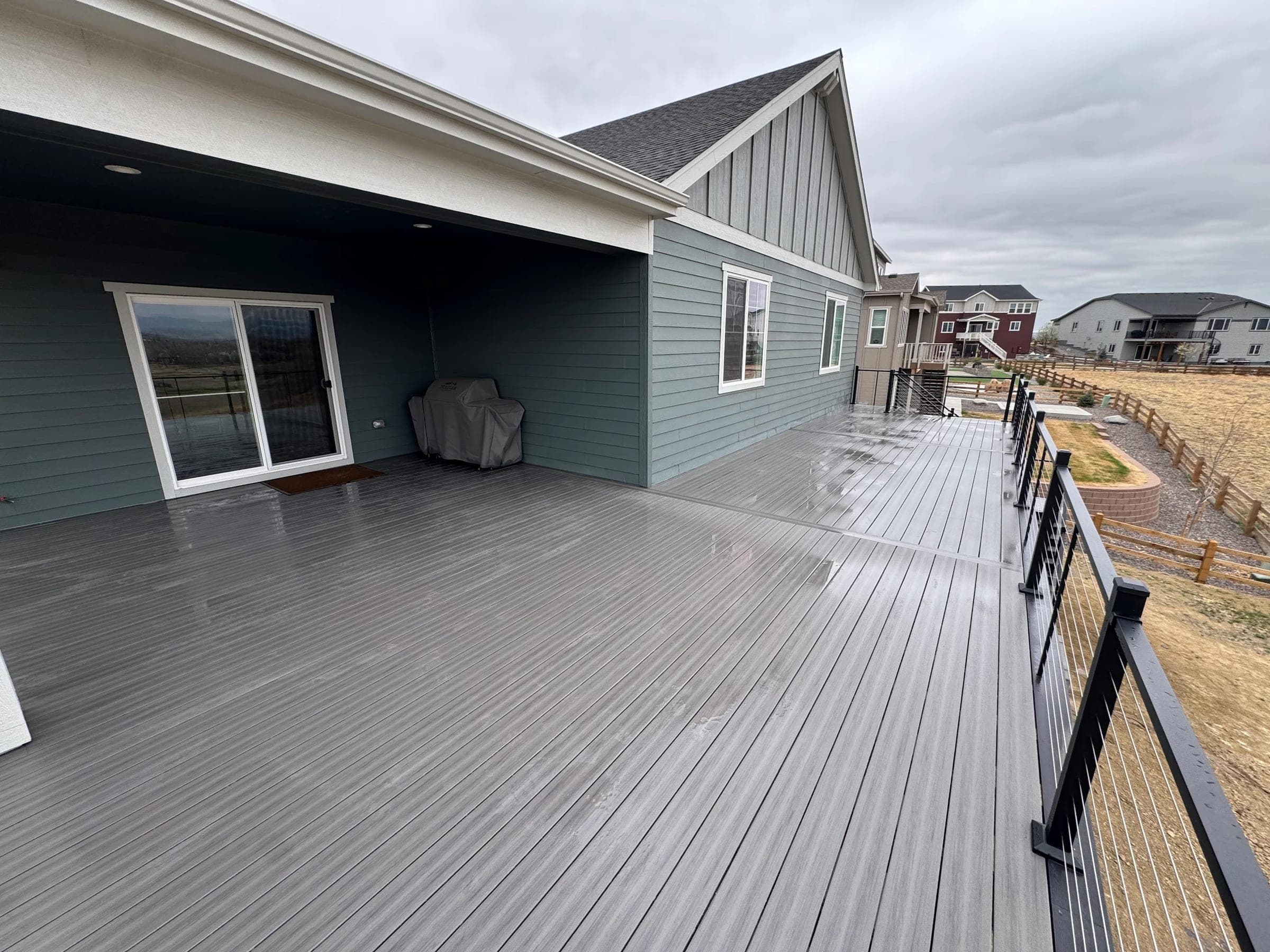
The other frequent request is simply a bigger deck. Production builders ship the minimum platform; five or ten years in, people want an outdoor room — extended footprint, built-in seating so nobody drags chairs around, lighting for the evening, and railing slim enough to keep the mountain line to the west intact.
South: honest inspection first
On the older side, the question is almost always whether an existing deck is worth saving. We answer it the same way every time: look at the structure before quoting the surface. The ledger connection where a deck meets the house is where the real failures happen, and on a home that's been through fifty Colorado winters it deserves a proper look.
If the framing is sound, we quote a re-deck — a new capped composite surface over the structure you already own, for meaningfully less than starting over. If it isn't, we quote a full replacement on code-current framing and explain exactly why. You get that in writing either way.
Permits and HOA review
Inside city limits, Commerce City's building division is your counter, including the northern growth areas. The planned communities there add architectural review with real standards for material and color, typically setting the schedule more than the permit does.
We produce the drawings, file both packets, and run inspections through final sign-off — included in the build, never a surprise. Our permit guide covers how the process works across the metro.
Getting there
From our shop in Centennial, most of Commerce City is a straight run north — roughly thirty-five to forty-five minutes depending on where you are and the hour. We plan crew days and deliveries around that, and it doesn't change your price or the guarantee.
The cost calculator takes about thirty seconds, our cost guide explains the math behind it, and then you can send us photos of the yard.