The simplest jurisdiction on the Front Range
Most of this job involves working out who your homeowner actually answers to. Postal addresses lie, city limits wander, and half the metro shares a name with a county that handles some permits and not others. Broomfield is the clean exception: one consolidated government, one counter, one set of submittal requirements, no ambiguity about jurisdiction.
That means the paperwork bottleneck here is almost always the HOA rather than the city — which we're just as used to solving.
High, open, and windy
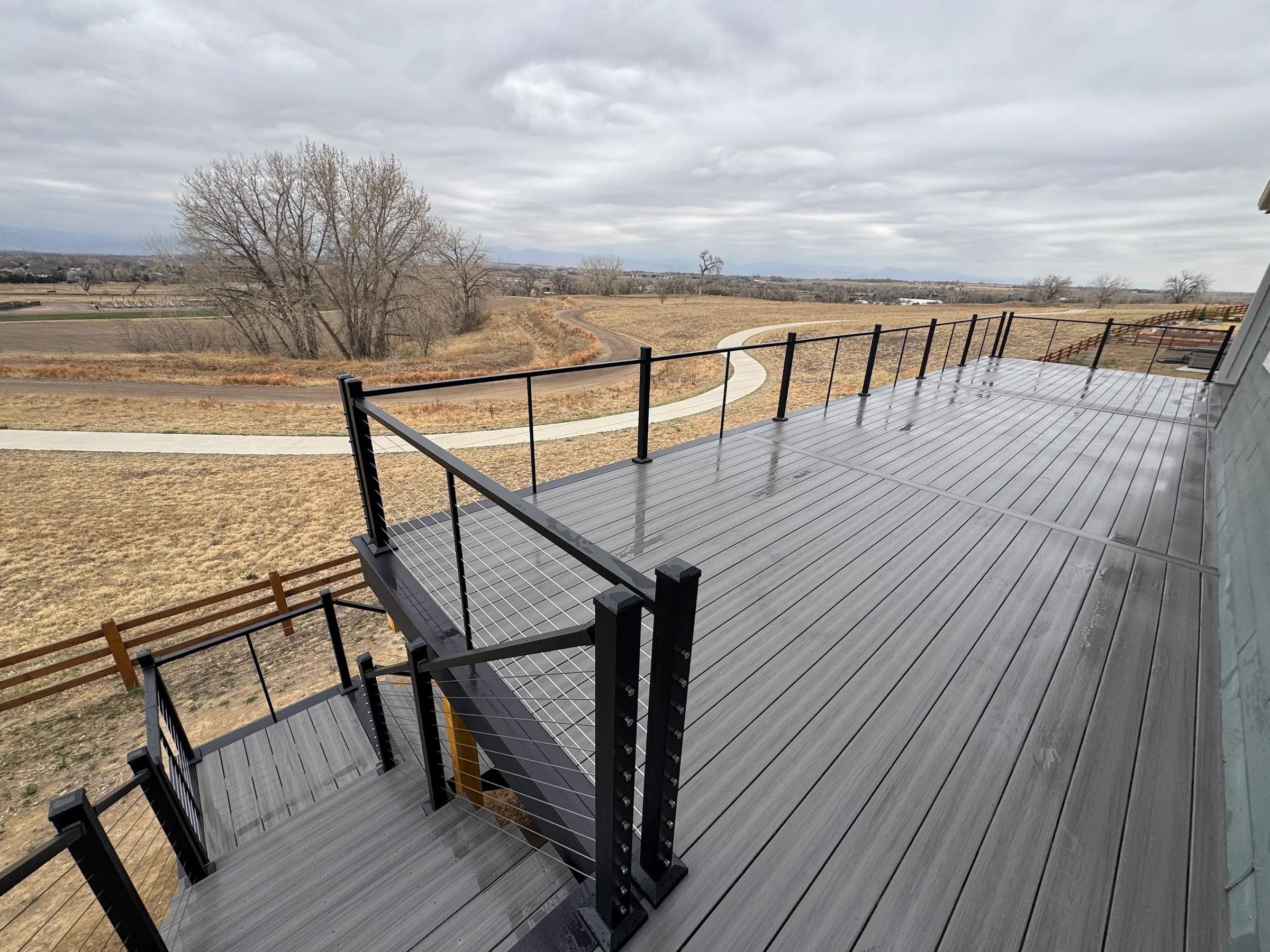
Broomfield sits on elevated open ground between Denver and Boulder with a clear line to the foothills, and the communities built across that high ground — Anthem, Broadlands, Wildgrass, the neighborhoods around Interlocken — pay for their views in wind.
For the deck itself that hardly matters; for anything with a roof it's the whole design conversation. A pergola or patio cover on exposed ground behaves like a wing: uplift governs, not snow pressing down. That means engineered post-base connections, sized footings, and matching hardware. It's the same approach we bring to Erie's prairie lots and Castle Pines ridgelines, and it's why our covers cost more than the cheapest bid — and why they're still standing afterward.
Design for the view, and for the sun
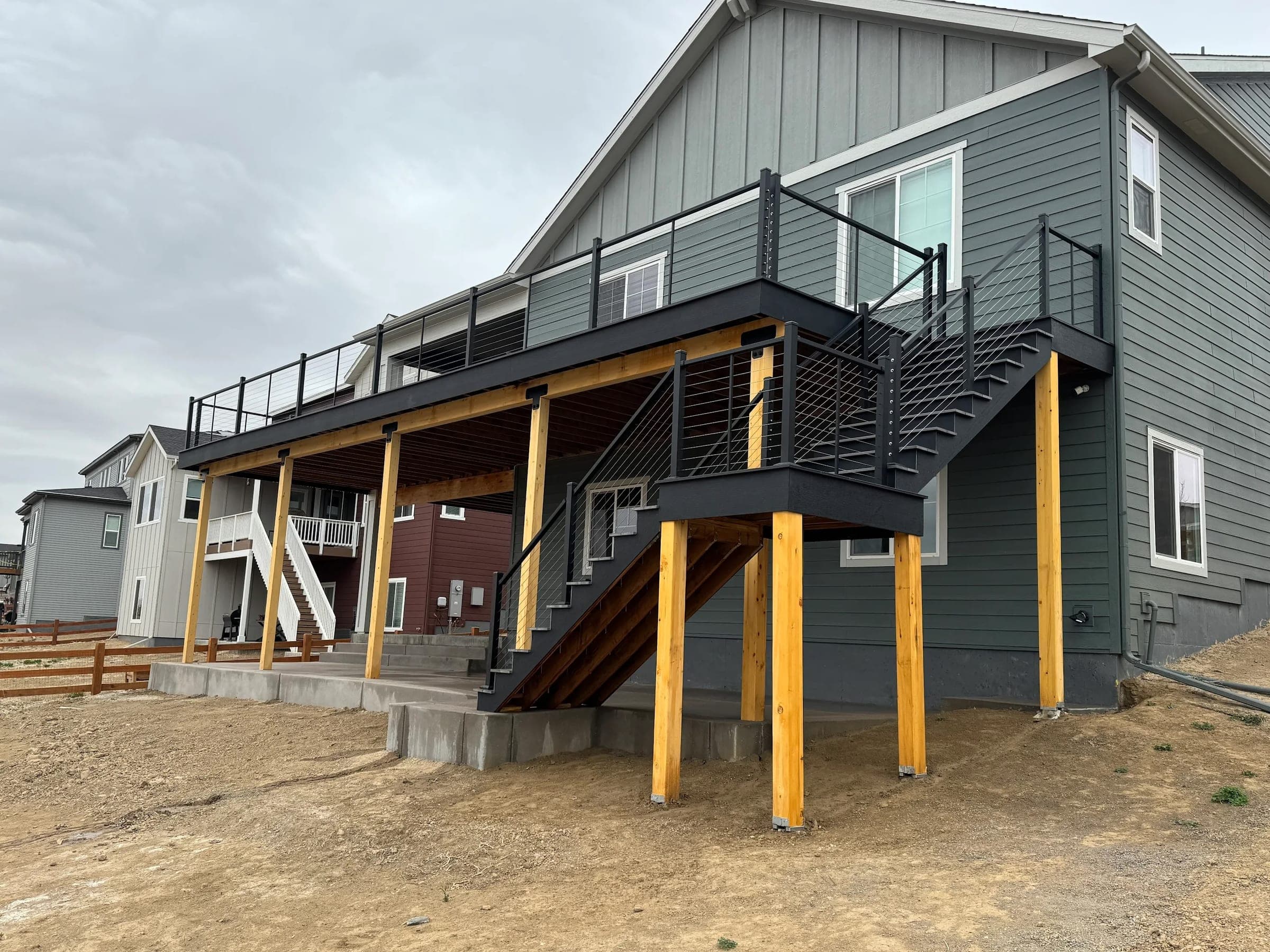
The western sightlines are why people buy on this side of the metro, so railing is a design decision here rather than a code checkbox. Cable and slim aluminum systems keep the Front Range where you can see it; traditional pickets cut it into strips. On walk-out lots — common across Broomfield's rolling terrain — that choice shapes the deck's feel more than the decking color does.
Shade is the other constant. These are young neighborhoods on former open ground, so there's no mature canopy and west-facing decks bake through the afternoon. Built shade is what makes them usable, and lighting extends the space into the evening, the best part of the day up here.
For the surface we lead with capped composite: high-altitude UV, hard hail seasons, and sharp freeze-thaw swings all hit an unshaded Broomfield deck at once, and composite's cap handles all three with soap and water where wood starts an annual refinishing clock. Our materials comparison lays out both sides honestly.
Newer homes, familiar projects
Because most of Broomfield's housing is recent, we do less teardown work here than in the older suburbs. The two jobs that dominate instead are the builder-grade upgrade — replacing the minimum platform a production builder shipped with something sized for how the house actually lives — and the addition, extending a small deck or adding a lower level beneath a walk-out. When an existing structure is sound enough to carry a new surface, we'll quote a re-deck rather than a full replacement; we inspect before we say which.
Distance, honestly
From our shop in Centennial, Broomfield is about forty minutes. That shapes deliveries and crew days — not your price, and not the guarantee behind the build. We work this corridor regularly, from Superior and Lafayette across to Westminster.
Start with the cost calculator or our Denver-area cost guide, then send us your rough idea and we'll come walk the lot.