A coal town that kept its bones
Lafayette started as a coal-mining town and never entirely erased the evidence. The original blocks around Old Town still hold small cottages on small lots with a century of settling behind them, and the newer neighborhoods spreading east are barely two decades old on ground that was farmland within living memory.
Building a deck in one is nothing like building in the other.
Old Town: scale and attachment
The historic side asks for restraint. Lots are small, setbacks are tight, and a deck sized for a modern suburban yard would swallow one of these properties whole. What works is precision — a deck proportioned to the lot with built-in seating instead of bulky furniture, detailed so it reads as though it belongs to the house rather than parked behind it.
There's a structural dimension too. Older homes have older framing, and how a deck ledger can be safely attached is a real question — on some of these houses the honest answer is a freestanding structure that carries its own load instead of borrowing the wall. We'd rather have that conversation during design than discover it mid-build.
East side: open ground, familiar problems
The newer neighborhoods have the north-metro pattern: sound decks that nobody can sit on after three in the afternoon. No canopy, no windbreak, unfiltered sun.
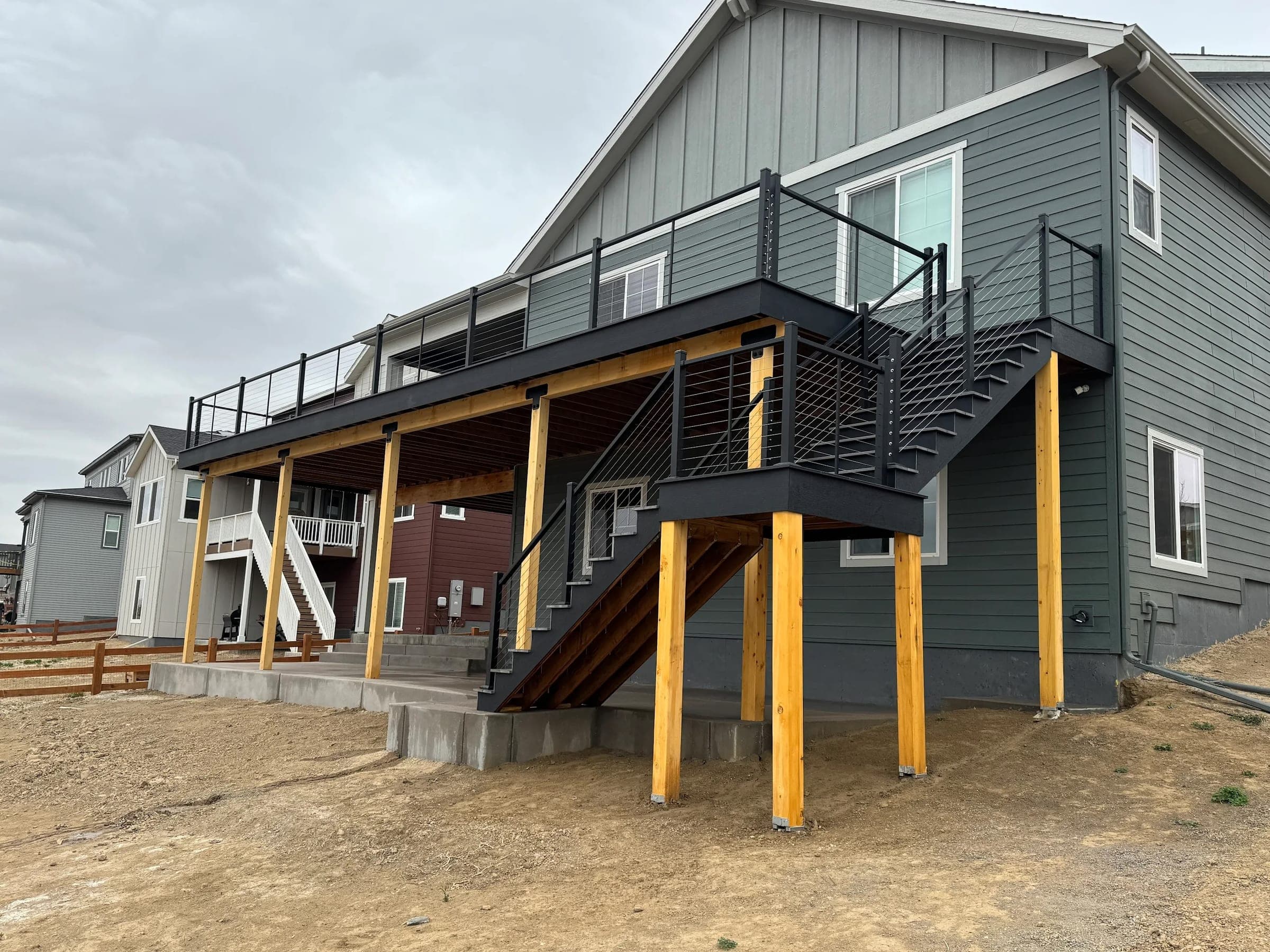
Built shade solves it — a pergola sized to the sun angle you actually face, or a solid roof when hail and afternoon storms are also on the list. On this ground it needs engineering for uplift, since an exposed cover is pulled upward rather than pressed down. That's the same detailing we bring to Superior and Erie, a few minutes away in either direction.
Boulder County holds a higher bar
Boulder County jurisdictions generally review more rigorously than the south metro. Drawings get read properly. Inspections are thorough. Requirements that are treated loosely elsewhere are enforced here.
That means realistic timelines rather than optimistic ones, and drawings produced to the level the reviewer actually expects. Contractors who work mostly in easier jurisdictions get caught out here, and the homeowner pays for it in delays. We produce the plans, file the permit, handle any HOA review the newer communities require, and manage inspections through sign-off.
Materials that suit the exposure
For the surface we lead with capped composite. Lafayette sits in the same high-UV, hail-prone, freeze-thaw band as the rest of the northern Front Range, and unshaded decks here age quickly in natural wood. That said, Old Town's character sometimes genuinely argues for real wood, and we build that too — with an honest account of the maintenance clock. Our materials comparison covers both without a sales pitch.
Where a deck already exists, we inspect before quoting: sound framing earns a re-deck, tired framing gets a proper replacement, and slim railing keeps the mountain views the west-facing lots were bought for.
The drive
Lafayette is about forty-five minutes from our shop in Centennial, and our prairie-view deck in neighboring Erie is ten minutes from town if you'd like to see the work in person. Distance changes our logistics, not your pricing or the written guarantee.
Start with the cost calculator or the composite deck cost guide, then send us your idea.