
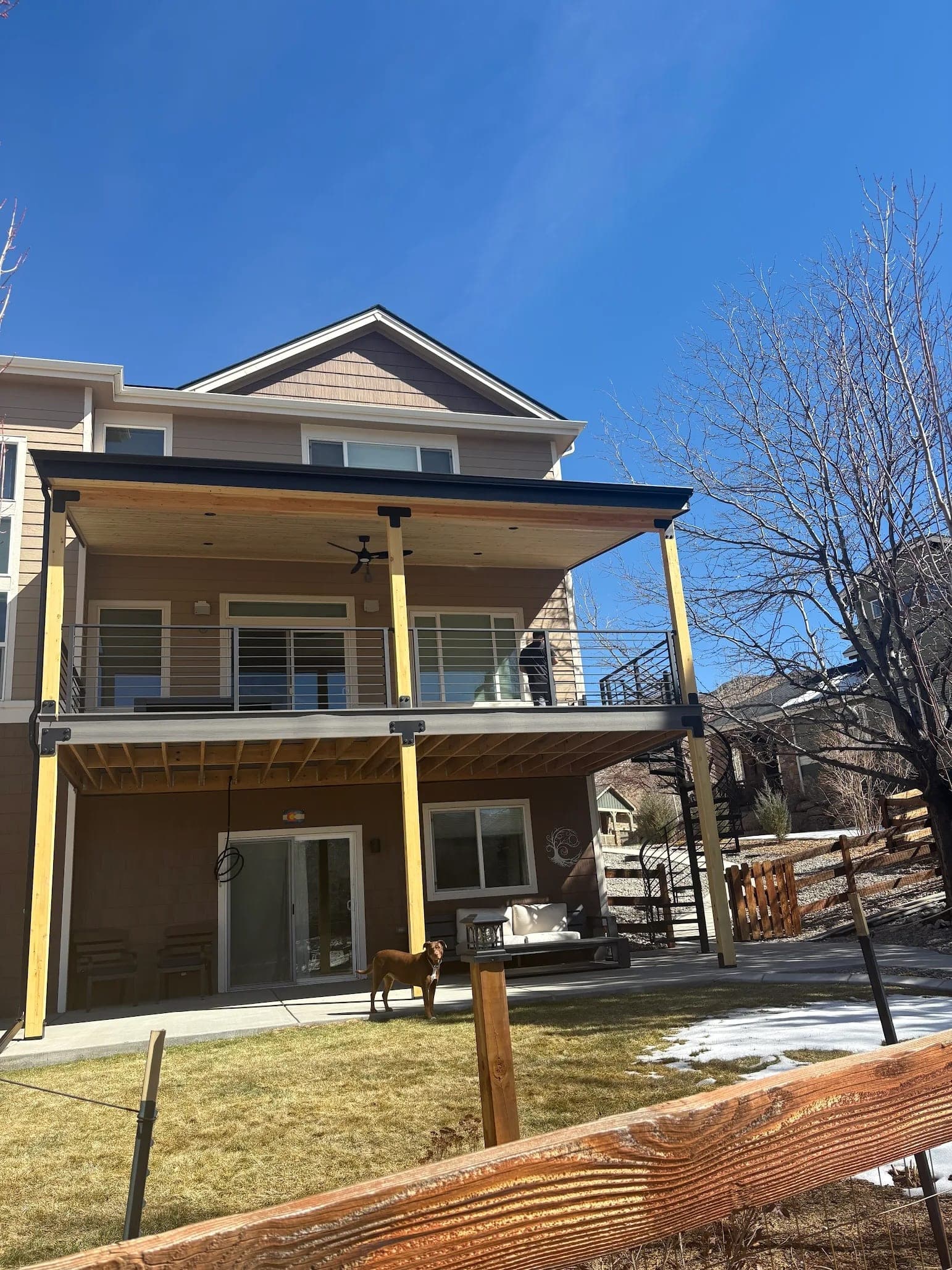
Where the plains stop being flat
Loveland has an enviable position and pays for it in weather. The city sits against the foothills with Lake Loveland in the middle of it and the mountains filling the western horizon — which is why so many decks here get designed around the view. The same geography delivers downslope wind and puts the city squarely in a hail corridor that treats wood decks harshly.
Those two facts, plus the split between Loveland's older core and its newer southern and eastern growth, cover most of what matters about building here.
Hail decides the material
On the northern Front Range, hail settles the material conversation: it pits finishes, dents softer boards, and starts a sand-and-refinish cycle on wood decks years before their time.
Capped composite meets that with a polymer cap engineered for exactly this abuse, backed by manufacturer warranties measured in decades, with real terms behind the brands we're certified to install. The same logic extends overhead: if you're covering the space, build the roof to survive a hailstorm rather than picking the cheapest panel available.
We still build in cedar or hardwood for people who want it, and our materials comparison treats both fairly — in this hail band, wood just needs an owner who enjoys maintaining it.
Wind on the west side
Closer to the foothills, wind becomes the structural question. A pergola or patio cover in downslope wind is loaded upward — uplift, not snow weight — so post bases, hardware, and footings all get specified for the exposure. It's the same engineering we apply on Golden's hillsides and along the foothills edge in Boulder.
Design for the view you bought
Between the lake and the mountains, many Loveland lots have something genuinely worth looking at. That elevates railing from a code requirement to a design decision — cable and slim aluminum keep the horizon intact where traditional pickets shred it into strips. On sloped and walk-out lots, that single choice does more for the finished feeling than the decking color ever will.
Loveland's older core, meanwhile, has the mature-neighborhood profile: established trees, decades-old decks, and structures that deserve inspection before anyone quotes a surface. We look at the ledger connection first, because that's where old decks fail expensively, then quote a re-deck when the framing is genuinely sound or a full replacement when it isn't.
Permits and review
Inside city limits, the City of Loveland is your building counter; parcels outside run through Larimer County instead. We confirm which applies before drawing, produce the plans, pull the permit, prepare any HOA architectural packet, and manage inspections through final sign-off.
Straight about the distance
Loveland is about an hour north of our shop in Centennial — genuinely outside our home turf. We take Loveland projects that justify the trip: full builds and covered structures rather than small repairs we couldn't properly service from that far. Logistics get planned before we quote, so travel never gets bolted onto your invoice.
What doesn't change with distance: the engineering, the certifications behind the materials, and the written guarantee behind the work. Start with the cost calculator or our cost guide, then tell us about the project and we'll tell you whether we're the right builder for it.