
Haka DecksHaka Decks
All service areas

Colorado Springs, Colorado

Custom Deck Builder in Colorado Springs, Colorado

Colorado Springs sits higher, gets hailed on harder, and looks at a better mountain than anywhere else we build. We travel for these projects, and we're straight with you about what that means.

  • Hail-hardened composite for the Front Range's worst hail belt
  • Pikes Peak Regional Building Department permits handled
  • View-first railing for Pikes Peak sightlines
  • Full builds, quoted honestly for the travel
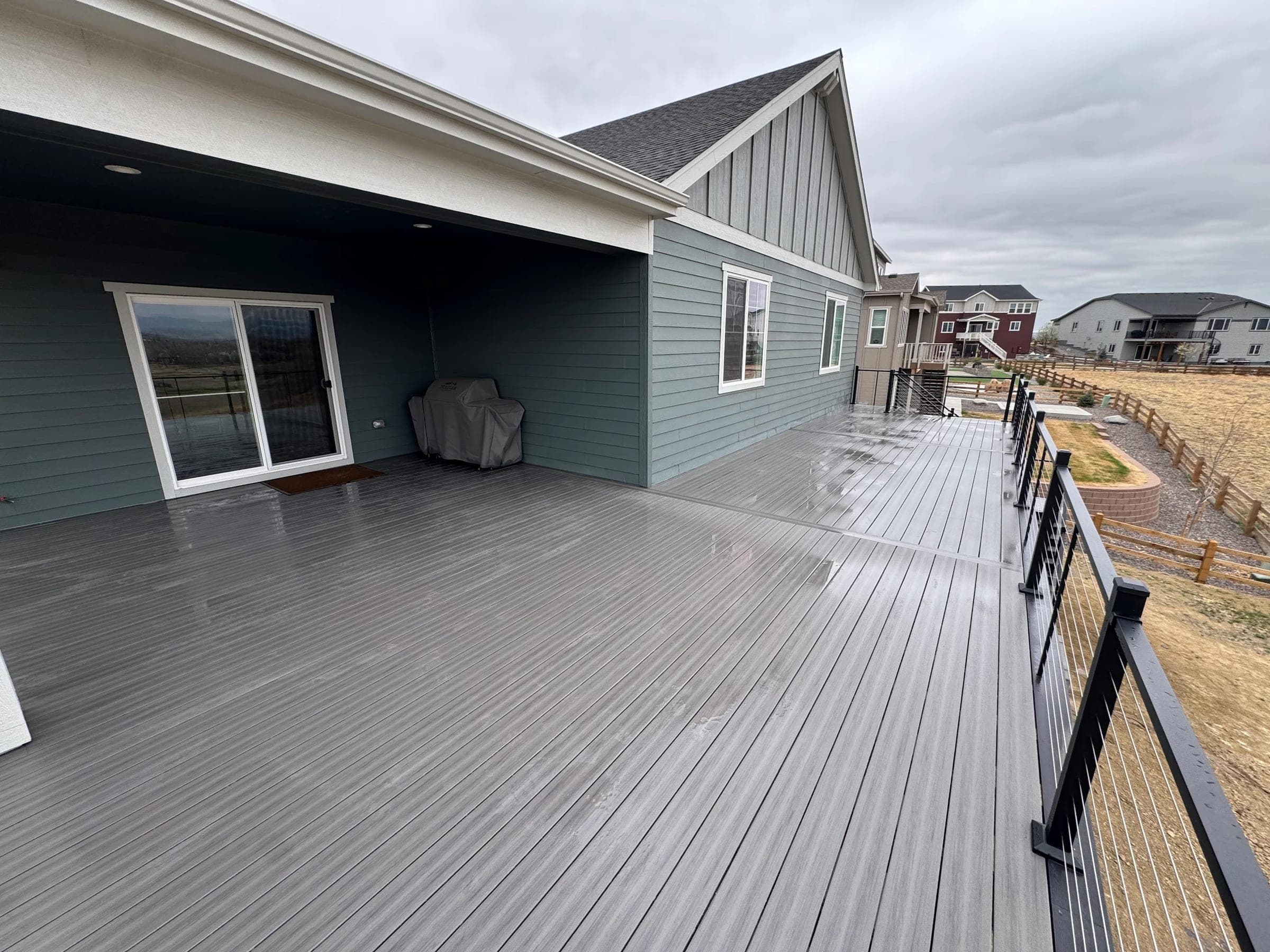
Capped composite deck with open Front Range views, built by Haka Decks in Colorado

Higher, harder weather, better mountain

Colorado Springs is the southern end of our range and, in some ways, the most demanding place we build. At roughly 6,035 feet it sits a few hundred feet above Denver, with stronger UV, sharper freeze-thaw swings, and the Palmer Divide overhead generating weather that behaves like nowhere else on the Front Range. Then there's the hail, which arrives often enough and hard enough to run an entire regional roofing industry.

And it has Pikes Peak. Whatever else a deck here needs to do, it needs to not get in the way of that.

Hail is the material argument

Every region has a climate problem that decides the material conversation. Up in the metro it's altitude UV. Here it's hail, and it isn't close.

Hail is brutal on stained and painted wood — it pits the finish, dents softer boards, and sends a deck into a sand-and-restain cycle years earlier than it should. A capped composite board takes those strikes on a polymer cap engineered for exactly this kind of abuse, and the brands we're certified to install warranty the surface for decades. The same logic applies overhead: if you want a patio cover, build the roof to take a hailstorm rather than picking the thinnest panel on the shelf.

We'll still build in real wood for homeowners who want it — our materials comparison plays both sides straight — we're just honest about the maintenance clock that starts at this elevation, in this hail belt.

Permits run through Pikes Peak Regional

Here's the local mechanic that surprises anyone who's built in Denver: Colorado Springs doesn't run its own separate building counter the way metro cities do. Permits for the city and the surrounding parts of El Paso County go through the Pikes Peak Regional Building Department, a shared regional authority. It's a different system with different submittal expectations, and many neighborhoods — Flying Horse, Wolf Ranch, Cordera, Briargate and the newer communities especially — layer HOA architectural review on top.

We produce the drawings, run the submittal through PPRBD, prepare the HOA packet where one applies, and manage inspections. You never work out who to call. If you want the general shape of how deck permitting works, our permit guide covers the process, and the Springs-specific handling is ours.

Fire-wise where the trees start

On the wooded edges — Black Forest, the western foothill neighborhoods, anywhere the tree line meets the subdivision — a deck is one of the most ember-exposed parts of a house. We detail for that: non-combustible or ignition-resistant surfaces, framing bays closed or screened so embers can't nest underneath, and an underside that isn't designed as kindling storage. Where your parcel carries specific requirements, we confirm them before detailing. It's the same approach we take on foothills lots in Golden.

Design around the Peak

The best Colorado Springs decks are organized around a sightline. That makes railing a real design decision — cable and slim aluminum systems keep Pikes Peak in view where traditional pickets chop it into slices — and it makes orientation worth arguing about at the design stage. Add built-in seating and lighting and the deck becomes the room the house is actually organized around, which at this elevation is usable far more of the year than newcomers expect.

Straight about the distance

We're in Centennial, about seventy miles and a bit over an hour up I-25. We'd rather be plain about that than pretend we're local: we take Colorado Springs projects that justify the trip — full decks, covered structures, and outdoor living builds rather than small repairs we couldn't service properly from that far. We plan logistics before quoting rather than discovering them mid-build, and the travel doesn't appear as a surprise line on your invoice.

What doesn't change with distance is the written guarantee behind the work, the manufacturer certifications behind the materials, or the fact that Pete walks every project. Browse the portfolio to see what we build, run your numbers in the cost calculator, then tell us about your yard and we'll tell you honestly whether we're the right builder for it.

Questions

Deck questions Colorado Springs homeowners ask.

Who issues deck permits in Colorado Springs?

Not the city directly — permits in Colorado Springs and across El Paso County run through the Pikes Peak Regional Building Department, a shared regional authority that serves the city and surrounding jurisdictions. It catches people out, because it works differently from the city-by-city counters up in the Denver metro. We handle the submittal and inspections through PPRBD as part of the build, and confirm any additional HOA or district review your neighborhood layers on top.

Is hail really worse down here?

The Colorado Springs area sits in one of the most hail-punished corridors in the country, and it shows up on decks as pitted finishes, dented soft boards, and stain that fails years early. It's the strongest single argument for capped composite here: the polymer cap takes strikes that scar a wood deck permanently. If you want a covered structure, it's also worth building the roof to take hail rather than choosing the thinnest panel available.

Do you actually travel to Colorado Springs for deck work?

Yes, with a straight answer attached: we're a Denver-metro builder about seventy miles up I-25, so we take Colorado Springs projects that justify the trip — full decks, covered structures, and outdoor living builds rather than small repairs we couldn't service well from that distance. We plan the logistics before quoting, not after, and travel doesn't get bolted onto your invoice as a surprise.

What does elevation do to a deck at 6,000 feet?

Everything the Denver metro deals with, turned up. Colorado Springs sits around 6,035 feet, so UV exposure is stronger, the freeze-thaw swings are sharper, and the Palmer Divide generates its own aggressive weather. Wood finishes fail faster here than almost anywhere on the Front Range. It's why we lead with capped composite and engineer covers for wind uplift rather than snow load alone.

Where we are

A short drive from Colorado Springs.

Haka Decks · 9707 E Easter Ln, Centennial, CO 80112

720-589-5680

More service areas

Everywhere else we build.

We took several bids but Pete the owner stuck out the best — not from a pricing standpoint but just overall as a person. He gave us many options to think about.
Josh U. · Google review
Pete did an excellent job and we are very happy with his work. Pete communicated with us throughout the whole project and made sure we were satisfied and comfortable with all the work completed.
Shelly S. · Google review

Ready to Talk About Your Deck?

Tell us what you're thinking — even if it's just a rough idea. We'll come take a look, talk through options, and give you an honest estimate. No pressure, no sales pitch.