
A mining town in a canyon
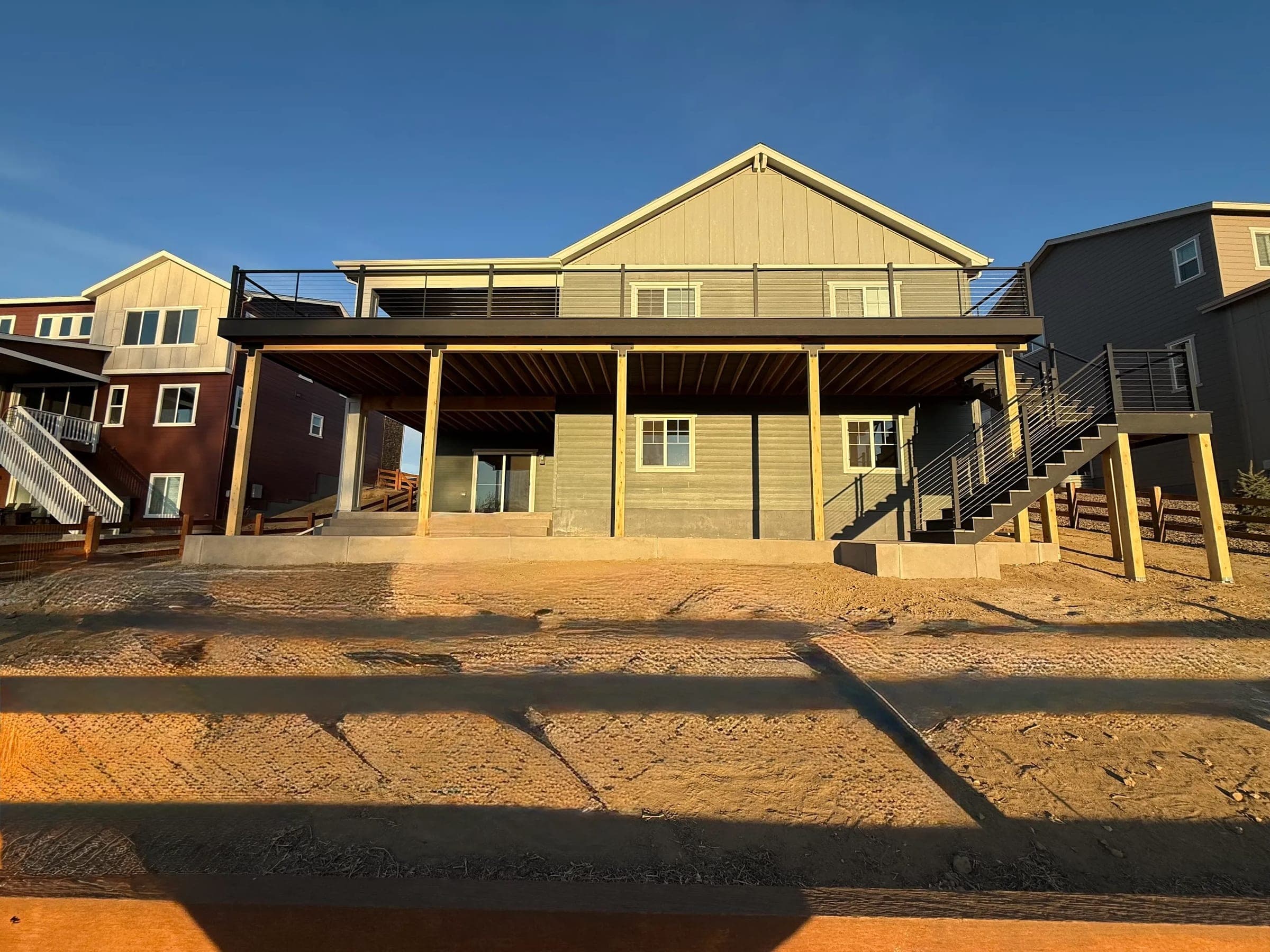
Idaho Springs sits at 7,526 feet where Clear Creek squeezes between canyon walls, with I-70 running straight through town. The housing is what a gold-rush town leaves behind: Victorian-era miners' cottages and small frame houses on narrow valley lots along the creek and Miner Street, mixed with newer homes on steep canyon-side parcels up Virginia Canyon, Chicago Creek Road, Spring Gulch, and Saxon Mountain Road. Flat yards are rare. Most decks here are elevated over sloping grade, which makes them structural projects first — taller posts, stepped footings, railing at height — and outdoor rooms second.
Permits go through City Hall, with SAFEbuilt behind the counter
Inside city limits, the Idaho Springs Building Department issues the permit. The process starts at City Hall on Miner Street, applications go to the City Clerk, and SAFEbuilt, the city's contract building official, handles plan review and inspections. Idaho Springs requires every contractor to hold a city contractor license, and it has adopted the 2024 building codes and the 2023 NEC. The city's one-stop permits often issue within a day, but a deck needs plan review, typically one to three weeks. Addresses outside city limits are unincorporated Clear Creek County, a different counter with its own defensible-space requirements.
Sixty pounds of snow, 130 miles an hour of wind
The city publishes its design values plainly: 60 psf ground and roof snow load, 130 mph wind, Exposure C. Those are the numbers that size every beam, post, and footing under a covered deck or patio cover here, and they are well above a Denver-suburb detail. Clear Creek County's design criteria set frost depth at a 42-inch minimum, with deck piers at least 36 inches below grade — deeper than the 30 inches most of the metro builds to. Add altitude UV and a freeze-thaw cycle that runs from October into May.
Composite, because the sun and the snow say so
At this elevation an untreated wood surface starts an annual refinishing clock the first summer. Capped composite shrugs off the UV, does not absorb the spring melt before a freeze, and keeps its color under a snow shovel. The county's Wildfire Resiliency Code and defensible-space plan apply to county permits; we confirm with City Hall whether they reach your address inside town, and we detail for embers either way — framing bays screened, undersides kept clear of stored fuel. On canyon lots the view is the point, so we usually pair the deck with slim aluminum or cable railing rather than pickets.
Deck repair in Idaho Springs starts with an honest inspection
Plenty of Idaho Springs decks were added to century-old houses decades ago, framed to lighter loads and hung on ledgers that were never flashed. We inspect the structure before quoting anything — often finding the whole job: a ledger to re-flash and re-bolt, a rotted post, or a railing that no longer holds. Sound framing earns a re-deck in composite for far less than a teardown; an undersized or rotted frame gets a straight replacement recommendation on current-code structure, in writing either way.
About an hour up I-70, scheduled in blocks
Idaho Springs is roughly an hour from our shop in Centennial — up I-70 into the canyon, with Evergreen off to the south and Georgetown a few exits further west. We group mountain-corridor projects into blocks so a crew works consecutive days on site rather than commuting for half-days. Run the cost calculator for a planning range, then tell us what you are planning and we will come walk the lot.