
A relocated town on the reservoir
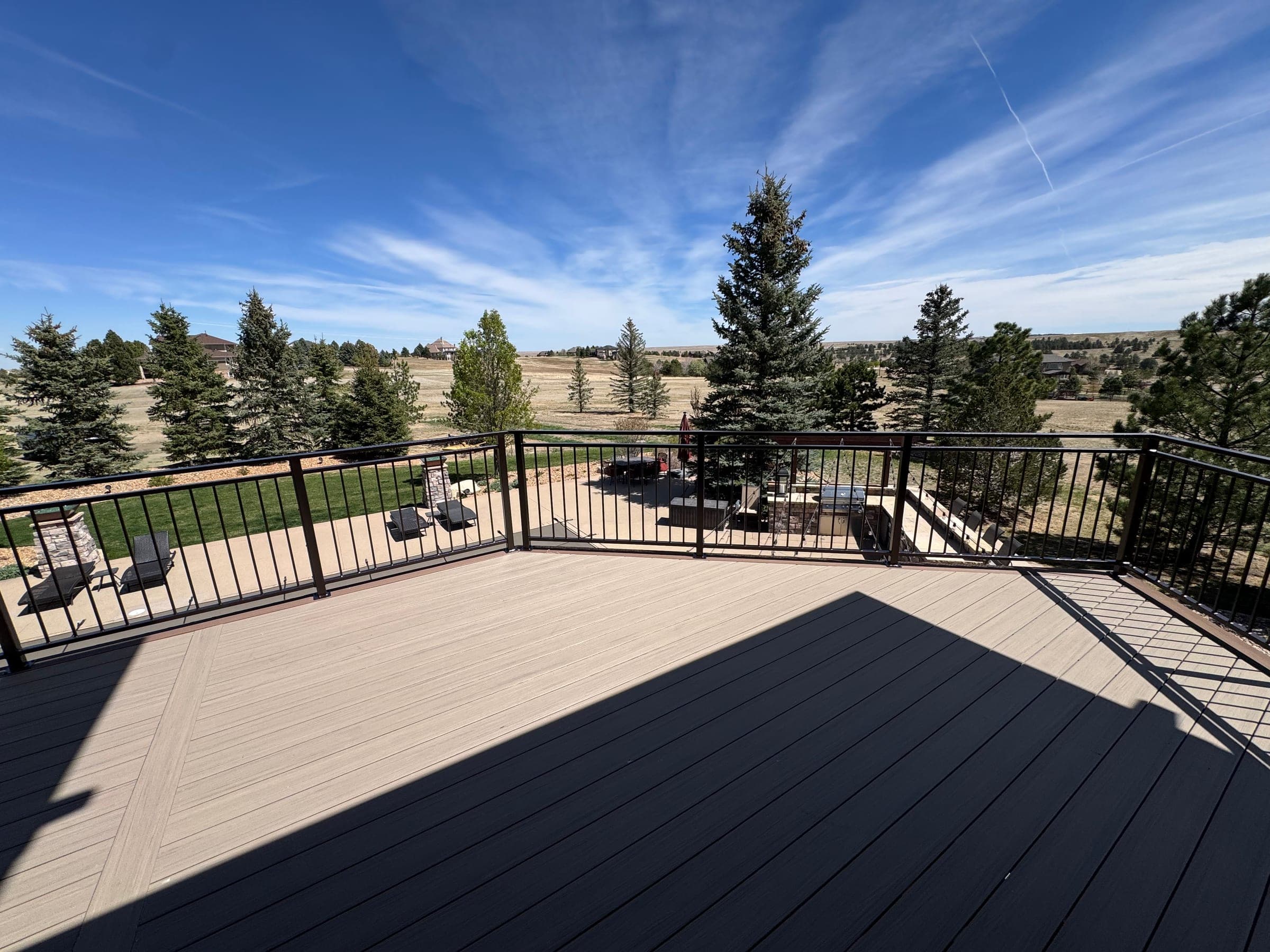
Dillon was moved to make room for the water it now overlooks; the shoreline town is mostly 1960s-to-80s construction: condos and townhomes in the Town Core and along the lakefront, ranch and split-level homes in Dillon Valley, and view-lot homes climbing Corinthian Hill. At 9,111 feet with Lake Dillon in front and the Tenmile Range behind, the deck is why people bought the place.
That view comes with a design brief most Front Range decks never see: roof snow loads of 70 psf and up, a 40-inch frost line, and a permit process that runs through two offices. We build to all three.
Two permits, one packet
Dillon permits in two steps. The Town of Dillon Planning Department issues a development permit first — required for decks, additions, and hot tubs — and the Summit County Building Inspection Department, which handles the town's structural review and inspections, issues the building permit after that. The county counter sits at the County Commons in Frisco and runs on the eTRAKiT portal. Most Dillon housing also belongs to a condo or townhome association with its own exterior-alteration approval, which we get signed first.
The Town of Dillon lists the 2025 Wildfire Resiliency Code among its adopted codes, and Summit County applies the Colorado Wildfire Resiliency Code — Class 2 hardening, ignition-resistant deck surfaces — to permits applied for after May 4, 2026. We confirm which requirements attach to your parcel first. The Summit County page has the county-wide picture.
Seventy pounds of snow per square foot
Summit County's Building Inspection matrix puts the Town of Dillon at a 70 psf roof snow load and Dillon Valley at 75, with a 115 mph design wind and Seismic Zone B. Those figures size every beam and post under a covered deck or patio cover, and footings go 40 inches below grade, not the 30 to 36 we dig in the metro. That number is not negotiable at this elevation.
Composite for a lake at 9,100 feet
High-altitude UV, deep freeze-thaw, a long snowpack sitting on the surface, and reflected light off the water: this is what capped composite was built to survive, and why we lead with it over wood. Where that rule applies, composite is the code-aligned path. On lakefront and Corinthian Hill lots, slim aluminum or cable railing keeps the reservoir in view instead of behind pickets.
Repair or replace on a 1970s deck
A lot of Dillon's original decks were framed to snow assumptions the county no longer accepts. We inspect the structure before quoting: sound framing earns a repair or re-deck in composite, and an undersized frame gets a straight replacement recommendation, in writing. We photograph what we find under a deck that has carried twenty winters.
An hour and forty minutes, scheduled in blocks
From our shop in Centennial, Dillon is about an hour and forty minutes via I-70 and the Eisenhower Tunnel, past our Georgetown work — distance that shapes scheduling, not price or the guarantee. We schedule mountain work in blocks for consecutive on-site days and coordinate directly with your property manager for second-home access and updates, the same as our neighbors in Silverthorne and Frisco.
Run the cost calculator for a planning range, then tell us what you are planning and we will bring the snow-load figure for your subdivision.